Explore Beijing / Eating Street Food in Beijing Safely: A First-Timer's Guide
Eating Street Food in Beijing Safely: A First-Timer's Guide
Beijing's street food is one of the city's great pleasures — here's how to enjoy it while keeping your stomach happy, from spotting busy stalls to handling spice, oil, and hygiene.
5 min read · KOULING's Beijing Travel Guide
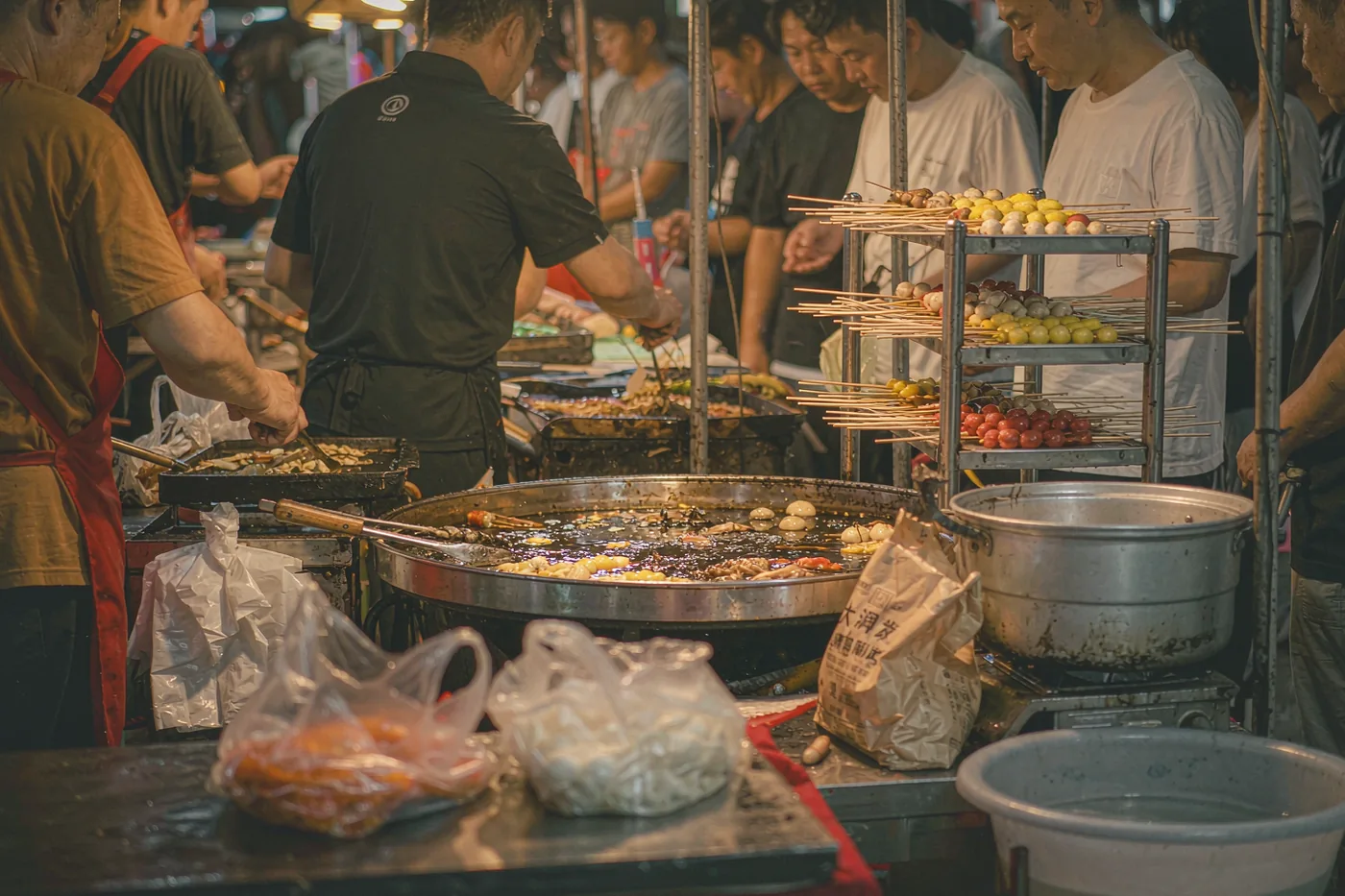
Street food in Beijing is genuinely excellent — think jianbing (savory crepes) off the griddle, lamb skewers kissed with cumin, and steaming baskets of baozi. The good news: food safety standards in Beijing have improved dramatically in recent years, and millions of locals eat this way daily. The bad news: your unaccustomed stomach doesn't know that yet. This guide helps you eat adventurously and stay well.
How to Pick a Stall That Won't Wreck Your Trip
The single most reliable rule in street-food safety worldwide applies doubly in Beijing: follow the crowds. A stall with a long line of locals is turning over ingredients fast and has a reputation to protect. Watch how the vendor works before you commit your 15 CNY (about $2 USD).
High turnover — Busy stall = fresh ingredients. Empty stalls with pre-cooked food sitting out are the biggest risk.
Cooked to order — Prioritize food cooked fresh in front of you at high heat — grilled, fried, or boiled. Heat kills most pathogens.
Watch the hands and money — Ideal vendors handle money with one hand and food with the other, or wear gloves. Most people handle cash via mobile payment anyway.
Oil condition — Deep-fried items from a stall with dark, smoking oil are best skipped. Fresh oil looks light golden.
Refrigeration for raw items — Be wary of cold dishes, raw seafood, or anything with mayonnaise or cream sitting at ambient temperature on a summer day.
Your First Week: Ramp Up Gradually
Even perfectly safe food can upset a traveler's stomach simply because the oil, spice levels, and bacteria profile are unfamiliar. Think of your first days as training. Start with well-cooked, mild items and work up to the adventurous stuff once your system has adjusted. Drink bottled water (about 2–3 CNY / $0.30–0.40 USD per bottle) rather than tap water, and go easy on ice in drinks from questionable vendors — most shops use filtered or bottled water for ice, but you can't always tell [verify before travel].
Days 1–2 — Steamed buns, noodles in broth, congee — fully cooked, mild, low risk.
Days 3–4 — Add jianbing, dumplings, grilled skewers from busy stalls.
After that — Cold dishes, exotic snacks, and more aggressive spice — if your stomach has been cooperative.
Hand hygiene — Public restrooms may lack soap; carry hand sanitizer or wet wipes and use them before eating with your hands.
Wangfujing Snack Street Area
The famous snack street near Wangfujing has shifted over the years, and some stalls cater heavily to tourists with novelty items (the scorpion-on-a-stick era is largely gone). It's still a convenient, well-lit first stop — prices are higher than neighborhood stalls, and quality is variable. Treat it as an introduction, not the finale [verify before travel].
Metro
Line 1 to Wangfujing Station, follow signs for the pedestrian street; confirm exits on arrival
Opening hours
Stalls generally operate afternoon to late evening; individual hours vary [verify before travel]
Tickets
Free to enter; budget roughly 20–60 CNY ($3–9 USD) per person for snacks
How long
1–2 hours
Huguosi Snack Street
A more local-flavored option northwest of the city center, known for traditional Beijing snacks like lu zhu (offal stew) and pea-flour cakes. Hygiene at established shops here is generally solid, but some dishes (organ meats, fermented flavors) are challenging for uninitiated stomachs — pace yourself.
Metro
Reachable via Line 4/6 to Ping'anli area, then a short walk; confirm the current station and exit [verify before travel]
Opening hours
Shops typically open late morning through evening; hours vary by shop [verify before travel]
Tickets
Free to explore; expect 20–50 CNY ($3–8 USD) per person
How long
1–2 hours
Gui Jie (Ghost Street)
A famous strip of restaurants open late into the night, best known for spicy crayfish (ma xiao) and hotpot. Not street food strictly speaking, but the open-fronted restaurants give you street energy with kitchen standards. Spiciness here is serious — ask for less chili (shao la) if you're unsure.
Metro
Near Dongzhimen, served by Lines 2 and 13 and the Airport Express; confirm transfers before travel [verify before travel]
Opening hours
Restaurants famously open very late, many past midnight [verify before travel]
Tickets
Free to stroll; a meal runs roughly 80–200 CNY ($12–30 USD) per person
How long
2–3 hours
Related Beijing guides
If you found this useful, these cover the next question most visitors ask:
Hydrate first — Oral rehydration salts and bottled water or electrolyte drinks; pharmacies (drugstores) are everywhere and staff are helpful.
Bring familiar medicine from home — Pack loperamide (Imodium) and your usual remedies; brand availability in China differs, and labels are in Chinese.
Pharmacy help — Larger chain pharmacies can be found citywide; some have English-speaking staff. Rough cost of common remedies: 10–40 CNY ($1.50–6 USD) [verify before travel].
When to see a doctor — High fever, blood, symptoms beyond 48 hours, or severe dehydration warrant a clinic visit. International-style hospitals in Beijing see many foreign patients [verify before travel].
Insurance — Keep your travel insurance details handy and check whether it covers outpatient visits before you go.