Which section of the Great Wall to visit from Beijing, how to get there, what it costs and how to avoid the crowds.
Several sections of the Great Wall are reachable from Beijing, and they are not remotely the same experience. Choosing right matters more than most visitors realise: one section is a crowded staircase, another is a near-empty ridge walk.
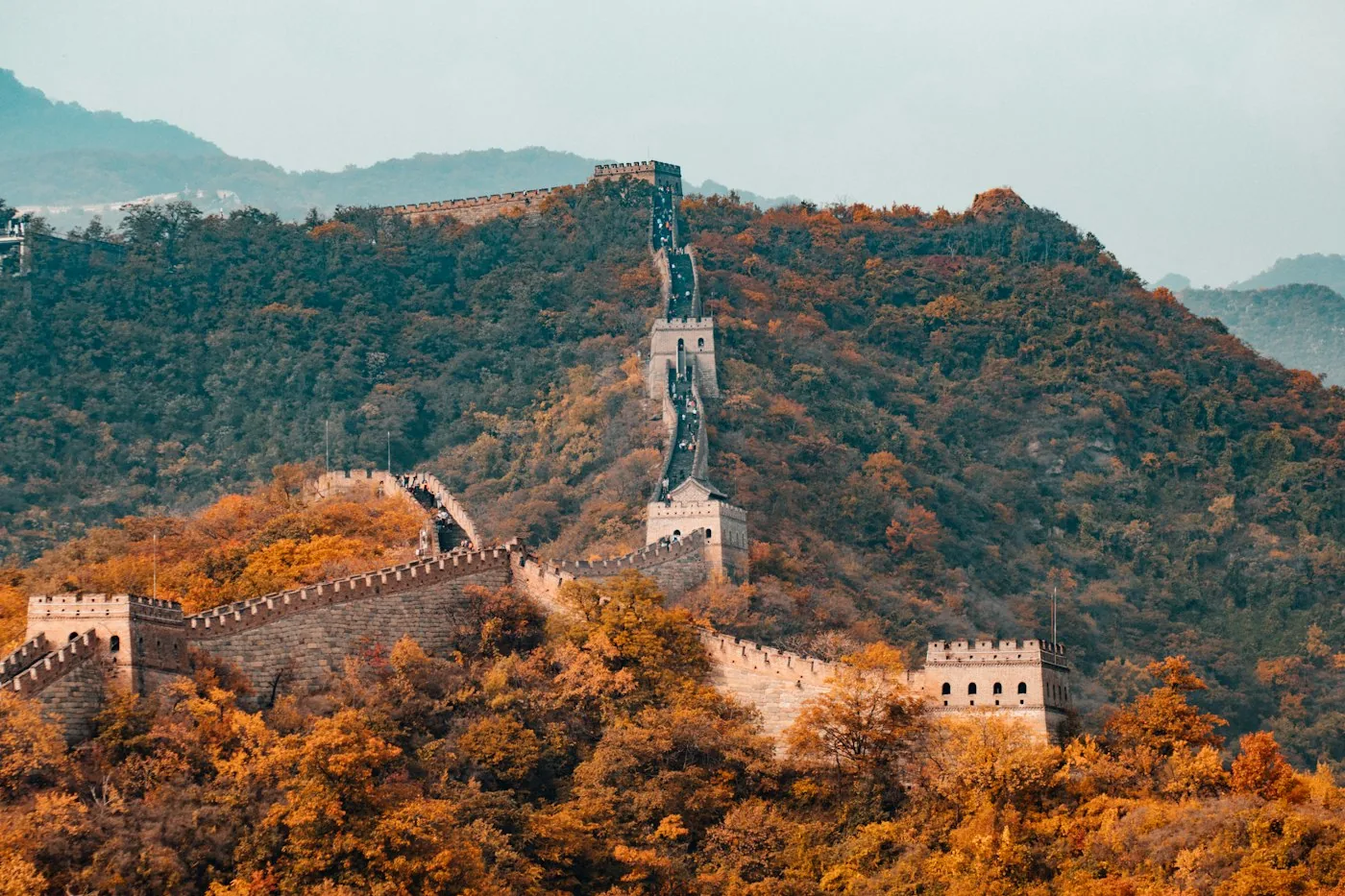
Restored, scenic, and significantly quieter than Badaling. The cable car takes you straight to a good stretch of wall, and the toboggan ride down is genuinely fun.
The most famous and most restored section, and the one most tour buses go to. It has a direct train link, which is its main advantage.
Part-restored, part-wild, roughly two hours from the city. The best option if you want a long walk with genuine solitude and dramatic scenery.
A base entrance ticket is separate from transport up the wall, and this catches people out at every section. At Mutianyu, the entrance fee does not cover the cable car or the toboggan ride down — expect to pay for each separately at the gate, roughly ¥40 for entry plus ¥100-140 for a cable car return, less if you ride the toboggan down one way. Badaling charges separately for its cable car and pulley systems too, and its entrance ticket now uses real-name booking with your passport. Jinshanling's ticket is closer to all-inclusive since most visitors walk rather than ride, though a shuttle from the ticket office to the trailhead costs extra. Cash is largely useless at the gates; set up Alipay or WeChat Pay before you go, or buy through the official mini-programs with a foreign passport linked. Check prices on the official sites, as they change seasonally.
The single biggest variable you control is arrival time. At Mutianyu, tour groups land between 10:30 and 14:00; arriving when the gate opens around 7:30-8:00 gives you two or three nearly empty hours, and weekday mornings in shoulder season can feel almost private. Badaling receives the largest tour volume, peaking late morning — before 9:00 on a weekday is tolerable, weekends and national holidays (especially the first week of October) are best avoided entirely. Jinshanling thins out dramatically after 15:00, when day-trippers leave; some photographers deliberately arrive late and stay overnight at nearby guesthouses for sunset and an empty wall at dawn. Winter is the wildcard: crowds vanish from November to March, the light is superb after snow, but cables occasionally close in high winds and the brickwork gets treacherously icy, so microspikes are worth packing.
The most frequent errors are logistical. Visitors book a Badaling train ticket but assume the wall entrance is at the station — it is a 15-minute walk plus security queues, so leave slack. People also confuse the two Badaling cable systems: the cable car and the pulley (吊车) drop you at different points on the wall, which matters if you have a meeting point or a one-way plan. At Mutianyu, some assume the toboggan runs in all weather; it closes in rain and high winds, leaving the chairlift or gondola as your only way down. Others buy through unofficial 'skip-the-line' resellers that charge triple for tickets freely bookable on official channels. Finally, many try to squeeze Jinshanling into a half-day — with two hours' drive each way, it genuinely needs a full day, and the honest trade-off is arriving back in Beijing around 19:00-20:00.
If you found this useful, these cover the next question most visitors ask: