A practical Beijing food guide for visitors — Peking duck, street breakfast, hotpot, noodles, lamb skewers, and tips for eating alone and paying without cash.
Beijing's dining table is where the city's history sits down with you. From imperial roast duck to a few-yuan street crepe, this guide helps you eat well, eat cheaply, and avoid the common traps.
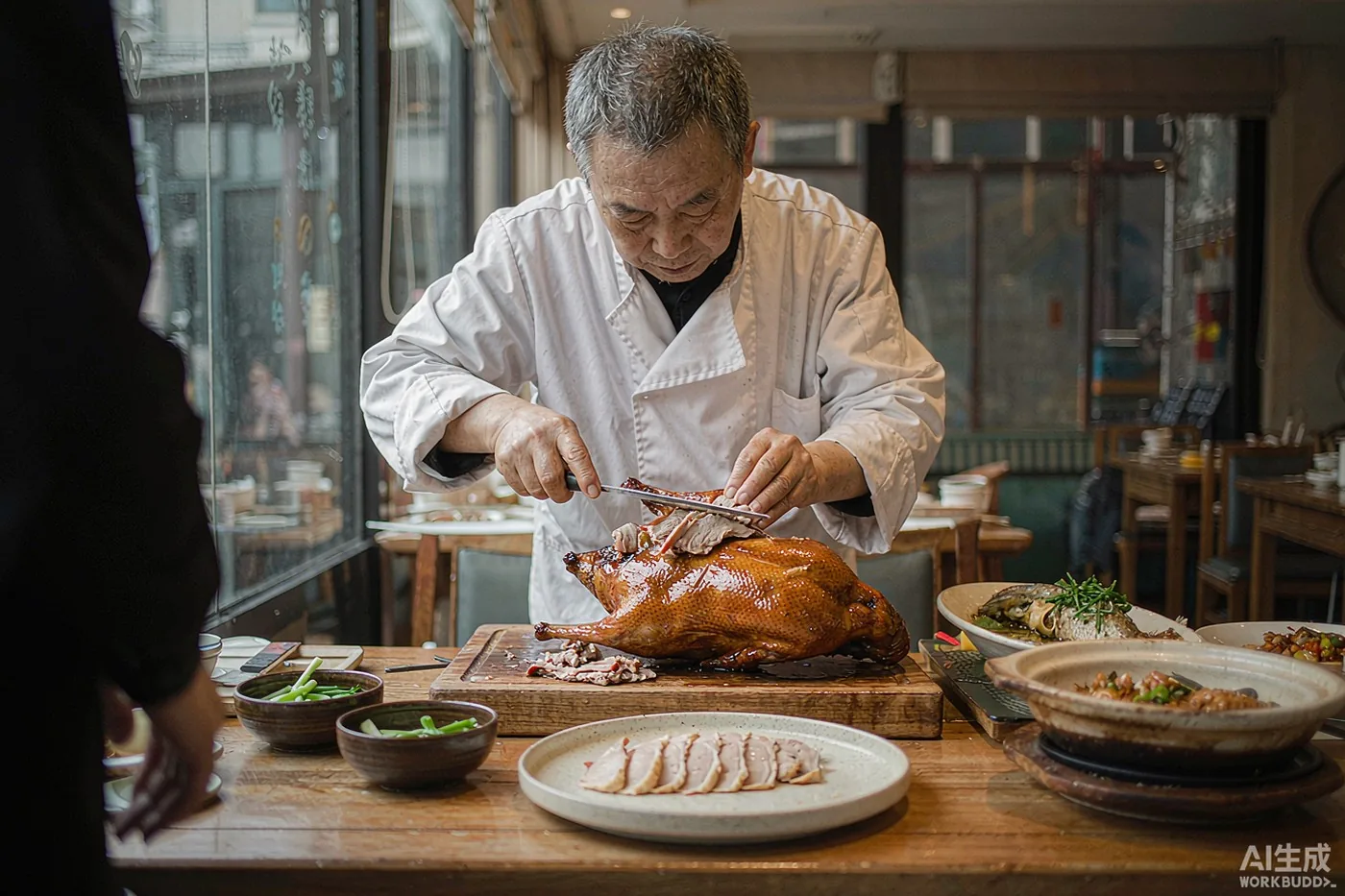
Crisp-skinned duck carved at the table, wrapped in a thin pancake with spring onion, cucumber and sweet bean sauce. It is a meal and a ritual. Restaurants range from century-old names to modern roast specialists; expect to pay roughly ¥150 to ¥300 per person at a well-known place, though prices vary widely — confirm before you sit down.
Start the day the local way. A jianbing is a savoury folded crepe with egg, crispy wonton cracker, scallion and sauce, bought from a cart for a few yuan. Pair it with warm soy milk (doujiang) or a youtiao (fried dough stick). Breakfast stalls appear on street corners from early morning.
A simmering broth in the middle of the table, into which you dip thin slices of meat, vegetables and tofu. Haidilao is the famous chain known for over-the-top service — free snacks, phone holders, even a noodle dance. Spice levels are adjustable, and solo diners are welcomed with a single pot, sometimes with a teddy bear seated opposite you.
Zhajiangmian — wheat noodles topped with a savoury fermented soybean paste, cucumber and beans — is a Beijing staple. Jiaozi (dumplings), boiled or pan-fried, turn up at any time of day and especially around festivals. Both are cheap, filling and everywhere.
Yangrou chuan — cumin-and-chilli lamb skewers grilled over charcoal — are the soundtrack of a Beijing night, sold by the bundle in hutong alleys and night markets. Wash them down with a local beer.
Travelling solo? No problem. Food courts, mall basements and noodle counters are built for one. Haidilao will seat you at a single pot, and many noodle shops have counter seating. You will not be the only person dining alone.
Nearly everything in Beijing runs on QR codes. Locals pay with Alipay or WeChat Pay, and both now let you link a foreign credit card after a short in-app verification — set this up before you land, because some small stalls won't take cash change easily. In a sit-down restaurant, scan the QR code on the table to order in Chinese; if there's no English menu, point at neighbouring tables or ask staff to select for you — 'zhege' (this one) works wonders. Realistic budgets: a jianbing and soy milk breakfast costs 10–15 yuan; a bowl of noodles or dumplings 20–35 yuan; street skewers 3–10 yuan each; shared hotpot 100–150 yuan per person; and proper Peking duck 150–300 yuan per person at a mid-range house. Carry about 100 yuan in small notes as a fallback for markets and older vendors, and check current Alipay card-linking rules before travel, as verification steps change.
Timing matters more in Beijing than in most Western cities. Lunch runs from about 11:30 to 13:00 and dinner from 18:00 to 20:00 — arrive half an hour before either wave and you'll usually walk straight in. The famous duck houses near Qianmen and in Guozijian can have 30–60 minute waits at weekend peak; book by phone or through Dianping (a Chinese app where many restaurants take reservations, English not always available) or go for a late lunch around 14:00. Hotpot chains like Haidilao take queue numbers in-app, so you can register remotely and shop nearby until your table is ready. Breakfast street stalls peak 7:00–8:30 and often pack up by 9:30, so go early. On national holidays — especially the first week of October — even modest restaurants see two-hour waits; that's the week to eat in hotel-adjacent side streets rather than at famous addresses.
If you found this useful, these cover the next question most visitors ask: