Explore Beijing / Eating in Beijing When Your Phone Dies: Cash, Cards, and Offline Food Plans
Eating in Beijing When Your Phone Dies: Cash, Cards, and Offline Food Plans
Almost every Beijing restaurant assumes you'll pay by phone. Here's how to still eat well when your eSIM fails, your QR code won't load, or your battery is at 2%.
5 min read · KOULING's Beijing Travel Guide
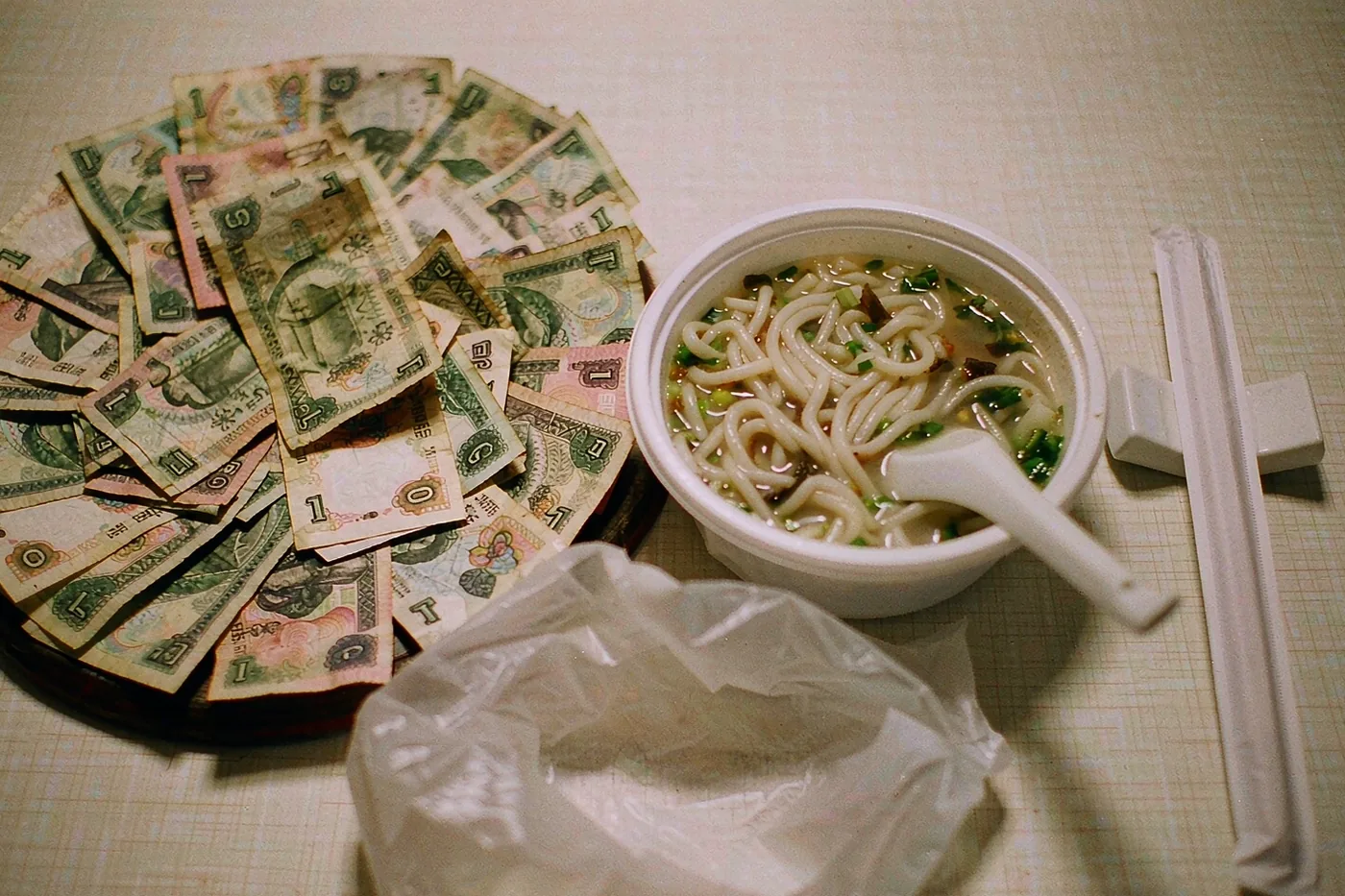
Beijing runs on smartphone payments. WeChat Pay and Alipay cover everything from Michelin dining rooms to a 10-yuan (about $1.50) bowl of noodles, and plenty of small eateries genuinely never see cash anymore. That's fine until your data stops working, your QR code won't refresh, or your phone dies on a cold evening. The good news: with a small amount of preparation, you will not go hungry. This guide gives you concrete backup plans — what cash to carry, which cards work where, how hotel front desks can rescue you, and which kinds of restaurants are friendliest to travelers offline.
Why Payments Fail for First-Time Visitors
Most payment problems fall into a few predictable buckets, and each has a different fix. Knowing which one you're facing saves panic.
No data connection — Your eSIM or roaming plan has a gap, or you're underground on the metro. Payments need internet — download offline maps and note restaurant names in advance.
Foreign card won't link — Some Western cards fail when added to Alipay or WeChat Pay [verify before travel]. Bring two different cards from different networks (e.g., Visa and Mastercard) so one failure doesn't strand you.
Verification or SMS problems — If your US/UK/EU number can't receive SMS codes, app features may lock. Keep your hotel's Wi-Fi as a fallback and ask the front desk for help early, not at midnight.
Dead battery in the cold — Beijing winters (often -5°C to 5°C / 23°F to 41°F) drain phone batteries fast. Carry a power bank — they're sold at convenience stores for roughly 50-150 CNY ($7-21) [verify before travel].
Your Cash and Card Safety Net
Even in a phone-first city, a layered backup strategy keeps meals on the table. Treat this as insurance you'll hopefully never use.
Carry small cash — Keep 100-200 CNY (about $14-28) in small notes (10s, 20s, 50s). Mid-range and older neighborhood restaurants more readily accept cash than trendy cafes [verify before travel].
Know where ATMs are — Bank of China and ICBC ATMs accept many foreign cards [verify before travel]; daily withdrawal limits and fees vary by your home bank. Withdraw during daylight, not at 10pm.
International cards at larger venues — Hotel restaurants, department-store dining floors, and chain restaurants in malls increasingly accept foreign credit cards directly [verify before travel]. Always ask: 'Shuākǎ xíng ma?' (Can I pay by card?)
Screenshot everything — Screenshot your hotel's address in Chinese, its map pin, and your payment QR codes while you still have internet. A screenshot of a payment code does not work offline, but a photo of your hotel name in Chinese characters can get a taxi driver to rescue you.
Hotel Front Desk: Your Human Rescue Service
Before you ever hit a payment wall, ask your hotel concierge or front desk two things: whether they'll exchange a small amount of cash [verify before travel], and whether they can point you to nearby restaurants that take cash or foreign cards. Chinese hotel staff routinely help guests scan-and-pay on their behalf — you hand them cash, they scan — which is a completely normal, polite request for a Western guest, especially at service-oriented hotels.
Metro
N/A — use your own hotel; front desks typically staffed 24 hours [verify before travel]
Opening hours
24/7 at most full-service hotels [verify before travel]
Tickets
Free — bring your room card and cash for any informal exchange [verify before travel]
How long
5-10 minutes to sort out a payment plan
Wangfujing Snack Street & Mall Dining Floors
Tourist-heavy areas are your best bet when offline: staff are used to foreigners, larger venues more often accept cards or cash, and mall food courts have staffed counters where pointing at a menu works perfectly. Department-store dining floors (like those around Wangfujing) also have ATMs inside the building [verify before travel]. Expect higher prices and more touristy food — this is a fallback, not a food-pilgrimage destination.
Metro
Line 1 to Wangfujing station — confirm current exits on arrival
Opening hours
Restaurants generally 10:00-22:00, food courts often open later [verify before travel]
Tickets
No entry fee; individual dishes roughly 15-60 CNY ($2-9) [verify before travel]
How long
1-2 hours
Huguosi Snacks (Hùguósì Xiǎochī)
A beloved old-school chain serving traditional Beijing snacks — fried dough rings (paicha), pea-flour cakes, sweet pastries — at neighborhood prices. Locations are simple counter-service shops where cash acceptance is more common than at trendy spots, and menus have photos or labeled cases so you can point. A filling snack run should cost well under 30 CNY (about $4) [verify before travel]. Have your hotel write the branch name in Chinese if you can't access maps.
Metro
Multiple branches; the original area is near Line 4/6 Ping'anli — confirm current line and station name
Opening hours
Roughly 06:00-20:00 for breakfast-through-evening snack service [verify before travel]
Tickets
No entry fee; snacks typically 3-15 CNY ($0.50-2) each [verify before travel]
How long
30-60 minutes
Related Beijing guides
If you found this useful, these cover the next question most visitors ask:
Eat where there are staff, not machines — Skip self-ordering kiosks and vending setups. A human at a counter can take cash, call the hotel for you, or accept payment on your behalf.
Learn three phrases — 'Wǒ yào zhège' (I want this, while pointing), 'Duōshao qián?' (How much?), and 'Xièxie' (Thank you). That's a full transaction.
Keep the hotel card on you — Physical hotel business cards have the address in Chinese — hand it to any taxi driver if you're lost and offline.
Charge before dinner, not after — Top up your battery every evening. Payments, maps, and translation all die together when the phone does.
Tell someone your plan — If you're heading out phoneless, mention it at the front desk. It sounds excessive; it's simply what a sensible traveler does in an unfamiliar city.