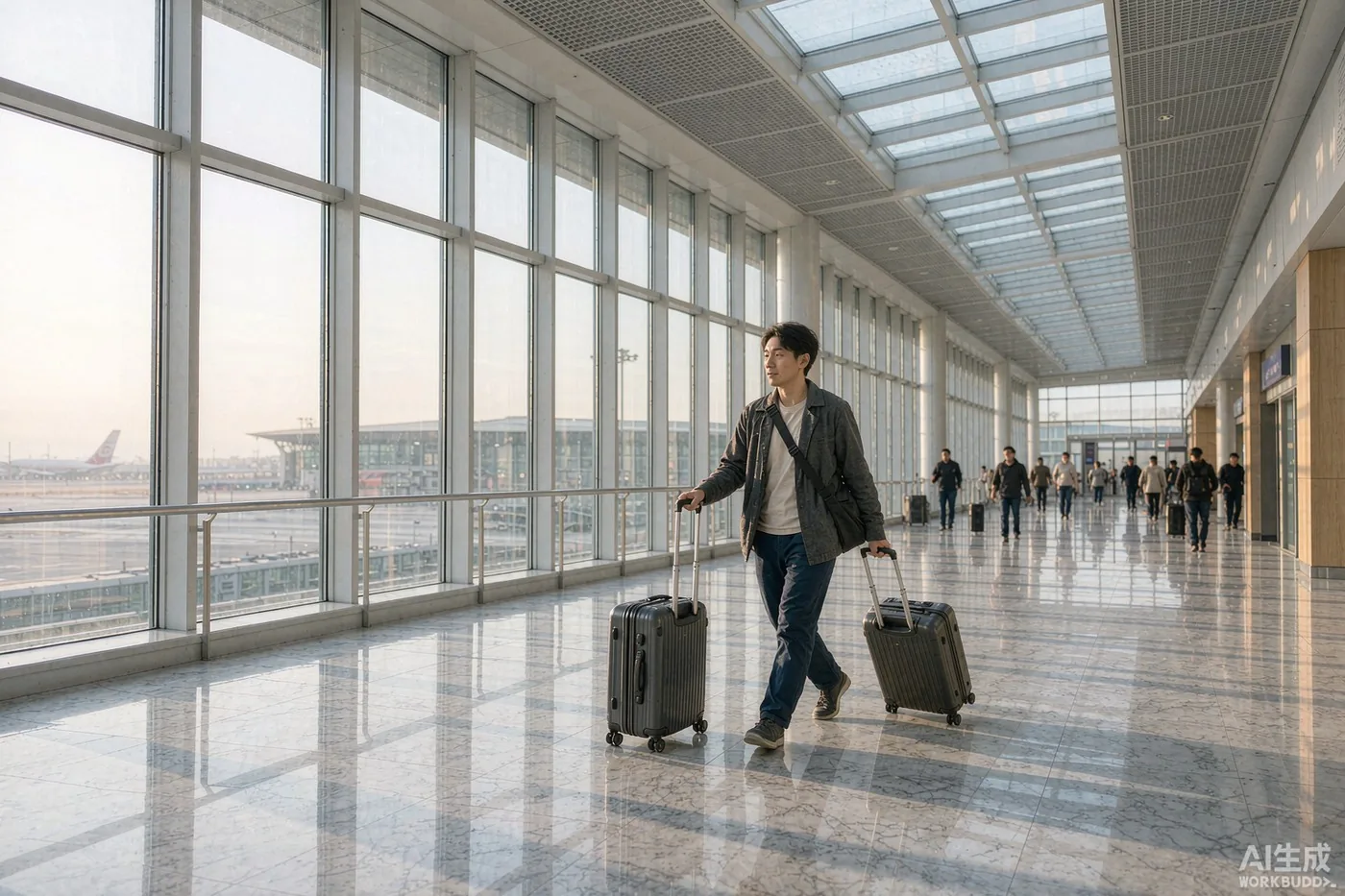
How early to leave, which airport you are actually flying from, what Chinese security confiscates, and how to fit a tax refund into the schedule.
Departure day is the one day in Beijing you cannot improvise. Turning up at the wrong airport, packing a power bank into your checked bag, or discovering that a tax refund needs another forty minutes can each cost you the flight. This is the mirror image of our arrival guide: how to work out which airport you are actually leaving from, how early to go, what Chinese security really takes off you, and what is worth settling the night before.
The usual rule for international departures from Beijing is to be at the terminal two and a half to three hours before the flight, and about two hours for domestic. But that clock starts at the terminal, not at your hotel door, so the real calculation is terminal time + the ride + a buffer. From central Beijing the ride to PEK is roughly 40 to 60 minutes by car in normal traffic and 60 to 90 minutes in the morning or evening rush. PKX sits far to the south, so add another 20 to 40 minutes from most central locations. Then add a buffer: 30 minutes is the minimum, an hour if you have a tax refund to claim or you are leaving during a holiday peak. A 14:00 international flight out of PEK realistically means leaving the hotel around 10:00, not 11:30.
The Airport Express is the most predictable option. Trains run from Dongzhimen and Sanyuanqiao to Terminals 2 and 3, take about 30 minutes end to end from the city, and cost roughly ¥25 to ¥35 (check the fare posted on the day). First and last trains run around 06:00 to 23:00, so it does not help with very early or late flights. It is comfortable with luggage and immune to traffic, but you still have to reach Dongzhimen or Sanyuanqiao first. A taxi or Didi is door to door and is the only sensible choice before about 06:30 or with heavy bags — expect roughly ¥100 to ¥160 from central and eastern Beijing depending on traffic. Book it the night before if you fly before 08:00.
Daxing is a long way south of the old centre, which makes the express train genuinely quick and the road journey genuinely long. The Daxing Airport Express reaches Caoqiao on Line 10 in about 19 minutes for roughly ¥35, and from there it is a normal metro ride to the rest of the city. By road, allow 60 to 90 minutes from central Beijing and more in rush hour. If you are based in the south — including KOULING Donggaodi — PKX is often the nearer of the two airports and the drive can come in under an hour.
Four options, and the right one depends on your flight time, how much you are carrying and where you slept:
Working backwards from the flight, this is roughly how the morning should look:
Two things catch visitors out. The first is batteries: Chinese security is stricter about them than most countries. Power banks must travel in the cabin and never in checked luggage, and they need a legible capacity marking in Wh or mAh. Anything above roughly 100 Wh normally needs airline approval and larger units are refused outright, so read the number printed on yours before you pack it. The second is liquids: the standard 100 ml per container rule applies, and they go in a resealable bag. After that the process is familiar — passport and boarding pass at security, then exit border control, where you may be asked a brief question about where you stayed and how long you visited.
If you remember one list, remember this one:
If you bought from Tax Free shops and plan to reclaim VAT, this is the most underestimated step of the day. You need the refund forms, your passport, your boarding pass and — critically — the goods themselves, because staff may ask to see them before they stamp anything. Travelling with them unworn, unpacked and in your cabin bag is the safe way. The desk is usually before security, and the refund itself is then collected airside or paid out later depending on the scheme, so add 30 to 60 minutes on top of everything else. Our tax refund guide covers the rates and minimums; the point here is simply that a refund does not fit inside a tight schedule.
Both airports have staffed left-luggage counters and, in places, self-service lockers, so spending your last afternoon in the city is realistic if you can drop your bags first — prices are posted at the counter and scale with size and hours. If you are buying tea, silk or liquor, do it after security: liquids bought airside are sealed in a tamper-evident bag and are exempt from the 100 ml rule, while the same bottle bought in the city will be taken from you at the checkpoint. Keep receipts for anything valuable in case exit customs asks.
Nearly everything that goes wrong on departure day was fixable the previous evening. Confirm the airport code on your ticket — PEK and PKX are around 60 km apart and flights are not interchangeable. Charge every device and check that your power bank still has a legible capacity label. Screenshot your booking reference, your hotel address in Chinese, and the airline check-in page. Weigh your suitcase, move anything fragile or dutiable into your cabin bag, and set two alarms. Then ask the front desk to book your car for the morning, because arranging a Didi at 5am is the last thing you want to be doing on departure day.
If you found this useful, these cover the next question most visitors ask: