Explore Beijing / Gentle Eating in Beijing: A Soft-Food & Mild-Flavour Guide for Older Travellers
Gentle Eating in Beijing: A Soft-Food & Mild-Flavour Guide for Older Travellers
Where to find soft, mild, easy-to-chew food in Beijing, how to order it without speaking Chinese, and what to carry in case a meal turns spicy.
5 min read · KOULING's Beijing Travel Guide
Beijing food has a reputation for bold flavours, but the city is genuinely kind to travellers who need soft textures and gentle seasoning. Steamed dishes, congee, tofu, dumplings, and slow-simmered soups appear on nearly every menu. This guide explains what to order, how to ask for less salt, oil, and chilli, and where to eat comfortably — whether you are staying a weekend or a month.
Dishes That Are Naturally Soft and Mild
You do not need special 'senior meals' in Beijing — much of the cuisine is already soft by design. These are safe, widely available choices that most older diners find easy to eat. Prices are for a typical casual restaurant; expect roughly CNY 20–60 (USD 3–9) per dish.
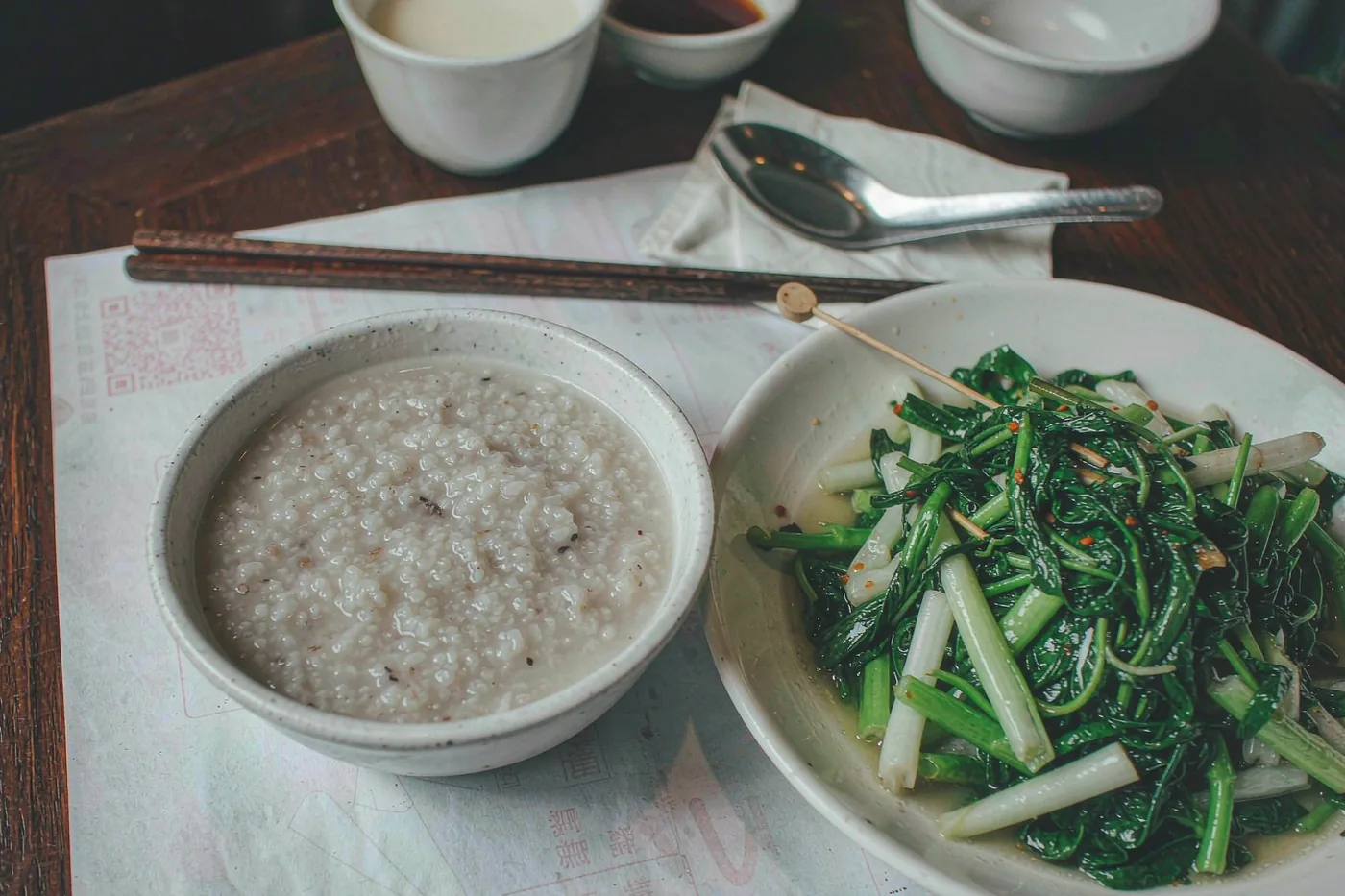
Congee (zhou, 粥) — Rice porridge, often served at breakfast. Smooth, warm, and easy on digestion. Plain white congee is the mildest; ask for 'baizhou' (白粥).
Steamed egg custard (zheng dan, 蒸蛋) — Silky, savoury, spoon-soft. A reliable protein source for anyone avoiding chewy meat.
Tofu dishes (doufu, 豆腐) — Mapo tofu can be very spicy — request it 'bu la' (不辣, not spicy) or choose home-style or braised tofu instead.
Steamed dumplings (zheng jiaozi, 蒸饺子) — Softer than pan-fried versions. Vegetable, pork-and-cabbage, or egg-and-chive fillings are all gentle choices.
Slow-simmered soups (tang, 汤) — Winter melon soup, tomato-egg soup, and chicken soups are mild and hydrating. Confirm they are not peppery.
Steamed fish (qingzheng yu, 清蒸鱼) — Lightly seasoned and flaky, though it contains small bones — best if you are comfortable picking them out, or ask a companion to help.
How to Order Gently: Phrases and Tactics
A few spoken phrases go a long way, and hotel staff can write requests in Chinese on a card you can show. Most restaurant staff are patient with visitors. Handing over a written note is often easier than speaking.
"Bu la" (不辣) — Not spicy. The single most useful phrase for mild dining.
"Shao yan" (少盐) / "Shao you" (少油) — Less salt / less oil. Many kitchens will accommodate if asked before cooking.
"Ruan yi dian" (软一点) — Cooked a bit softer. Works well for noodles and vegetables.
Show a photo — Pointing at a picture menu, or showing a photo of a similar dish on your phone, avoids confusion entirely.
Ask the hotel front desk — Staff can write 'my parent needs soft, non-spicy food' in Chinese for you to carry. Staff at Ruiyue hotels can help prepare such a card [verify before travel].
Translation apps — Google Translate is unavailable without a VPN in mainland China [verify before travel]; Baidu Translate or Apple's built-in translation works offline and is a dependable backup.
Convenience and Comfort: Where Older Diners Eat Well
You do not need a formal restaurant for every meal. Beijing's everyday eating options are inexpensive, soft-food-friendly, and easy on the feet.
Hotel breakfast buffets — Usually include congee, steamed eggs, boiled eggs, soft bread, fruit, and soy milk — the most stress-free soft meal of the day.
Convenience stores (7-Eleven, Bianlifeng) — Steamed buns (baozi), custard buns, soy milk, yoghurt, and puddings. A steamed bun costs roughly CNY 3–8 (USD 0.50–1).
Shopping-mall food courts — Found in almost every large mall; clean seating, elevators, accessible restrooms, and picture menus. Ideal midday stops while sightseeing.
Cantonese dim sum / teahouse restaurants — Cantonese cooking is milder than northern fare — steamed rice rolls, shrimp dumplings (har gow), and soups are all soft and gentle. Confirm locations and opening hours before visiting [verify before travel].
Hotel Breakfast Buffets
For older travellers, the hotel breakfast is the anchor meal: congee, steamed eggs, soft steamed buns, fruit, and tea or soy milk, all in a seated, unhurried setting. Western staples like toast and porridge are also usually available. Confirm breakfast hours with your hotel [verify before travel].
Metro
N/A — on-site at your hotel
Opening hours
Typically 06:30–10:00; confirm with the hotel [verify before travel]
Tickets
Usually included in the room rate or around CNY 80–150 (USD 11–21) per person [verify before travel]
How long
45–60 minutes
Din Tai Fung (mall locations)
The Taiwan-based dumpling chain has branches in several Beijing shopping malls and is a superb choice for gentle dining: steamed soup dumplings, soft braised dishes, clear soups, and English-language picture menus with table service. It is pricier than local restaurants but calm, clean, and predictable.
Metro
Mall locations vary — check the branch nearest you and confirm the current line and station [verify before travel]
Opening hours
Roughly 11:00–21:00; varies by branch [verify before travel]
Tickets
Around CNY 100–180 (USD 14–26) per person [verify before travel]
How long
60–90 minutes
Huguosi Snacks (护国寺小吃)
A long-standing Beijing snack institution serving soft traditional foods — pea-flour cakes, congee, steamed buns, and mild soy-based desserts. It is casual and busy at peak times, so go mid-morning or mid-afternoon. The flavours are authentic but gentle, and prices are very low.
Metro
Huguosi Snack Bar is near Ping'anli station — confirm the current line and exit before travelling [verify before travel]
Opening hours
Typically early morning to evening; confirm current hours [verify before travel]
Tickets
Roughly CNY 15–40 (USD 2–6) per person [verify before travel]
How long
30–45 minutes
Related Beijing guides
If you found this useful, these cover the next question most visitors ask:
Chilli oil is everywhere — Even 'mild-looking' noodle dishes may arrive with chilli oil on top. Ask for it 'bu la' when ordering, or push toppings aside.
Carry a written card — A card saying 'I need soft, non-spicy, low-salt food' in Chinese solves most problems at a glance.
Hot water and tea are free — Restaurants serve hot water or tea at no charge; cold tap water is not served and tap water should not be drunk untreated.
Bring oral rehydration or familiar snacks — Supermarkets (Hualian, Walmart, Sam's Club) stock yoghurt, bananas, biscuits, and oat milk if a day of sightseeing leaves little appetite.
Eat early — Restaurants are quietest and least smoky between 11:00–11:30 and 17:00–17:30, before the local rush begins around 12:00 and 18:30.
Watch dental considerations — Avoid crispy Peking duck skin, fried dough sticks (youtiao), and hard candies if chewing is difficult — duck meat itself, served with soft pancakes, is usually fine.