Explore Beijing / Supplier Hunting in Shenzhen: A 2–3 Week Business Stay Guide
Supplier Hunting in Shenzhen: A 2–3 Week Business Stay Guide
Planning 2–3 weeks of factory visits and trade market crawls in Shenzhen? Here's how to base yourself, get around, pay for things, and stay sane on an extended sourcing trip.
6 min read · KOULING's Beijing Travel Guide
Shenzhen is the world's biggest electronics workshop, and most Western buyers fly in for exactly one reason: suppliers. A 2–3 week trip lets you do it properly — walk the Huaqiangbei markets, visit factories in Bao'an and Dongguan, and negotiate face to face. This guide covers the logistics of an extended stay: visas, bases, transport, payments, and daily rhythm. Book accommodation early if your trip overlaps the Canton Fair (mid-April and late October), when hotels across the Pearl River Delta fill up [verify before travel].
Sort Your Visa and Entry First
Most US, UK, and EU passport holders need a visa for mainland China. For business meetings and factory visits, apply for an M (business) visa — you'll typically need an invitation letter from a Chinese company, which your suppliers can issue [verify before travel]. Tourist (L) visas are easier but formally don't cover business activities. Apply several weeks ahead through the Chinese embassy/consulate or an authorized visa service; fees and processing times vary by nationality and change often [verify before travel]. Note that many nationalities currently benefit from visa-free transit or trial visa-free entry policies for short stays, but rules change frequently — confirm the current policy for your passport before booking [verify before travel].
Where to Base Yourself
For a 2–3 week stay, pick one base near the metro rather than hopping hotels. Two districts work best for sourcing trips:
Futian (CBD) — Best all-rounder: upscale hotels and serviced apartments, walking distance to the Convention & Exhibition Center, one metro stop or so from Huaqiangbei. Expect roughly CNY 400–900 (about USD 55–125) per night for a solid four-star [verify before travel].
Nanshan — Closer to tech companies, startups, and Shenzhen Bay; good if your suppliers are more corporate than market-stall. Long-stay serviced apartments here often run CNY 350–800 (USD 50–110) per night, cheaper by the week [verify before travel].
Near Huaqiangbei (Luohu/Futian border) — If electronics components are your game, staying walkable to the markets saves an hour a day. Hotels are more basic; CNY 250–500 (USD 35–70) is typical [verify before travel].
Booking for weeks, not nights — Ask hotels directly for weekly or monthly rates — often 20–40% below the online nightly price [verify before travel]. Apartments on Booking, Trip.com, or Airbnb-style platforms also discount for 2+ week stays.
Huaqiangbei Electronics Markets
The densest electronics market area on Earth: dozens of connected malls selling components, phone parts, LEDs, drones, and finished goods. Come with a list, bring a translator app, and expect bargaining. Many 'trading companies' here are middlemen — ask for the actual manufacturer if you're after factory pricing.
Metro
Huaqiangbei Station (Lines 1, 2, 3, 7) — confirm current exits and line transfers
Opening hours
Most stalls roughly 10:00–18:00; weekdays are best, many stalls quiet or closed on weekends [verify before travel]
Tickets
Free to enter the markets
How long
Half a day per building; plan 2–3 days total for a serious sweep
Shenzhen Convention & Exhibition Center (Futian)
Home to major trade shows year-round — if your trip coincides with an electronics, LED, or hardware expo, you can meet dozens of vetted suppliers in one building. Check the show calendar months ahead and pre-register online (often free or a small fee) [verify before travel].
Metro
Convention & Exhibition Center Station (Lines 1 and 4) — confirm the correct station and exit
Opening hours
Show days typically 09:00–17:00 or so [verify before travel]
Tickets
Usually free with online pre-registration; some shows charge [verify before travel]
How long
Half a day to a full day per show
Factory Districts: Bao'an, Guangming, and Beyond
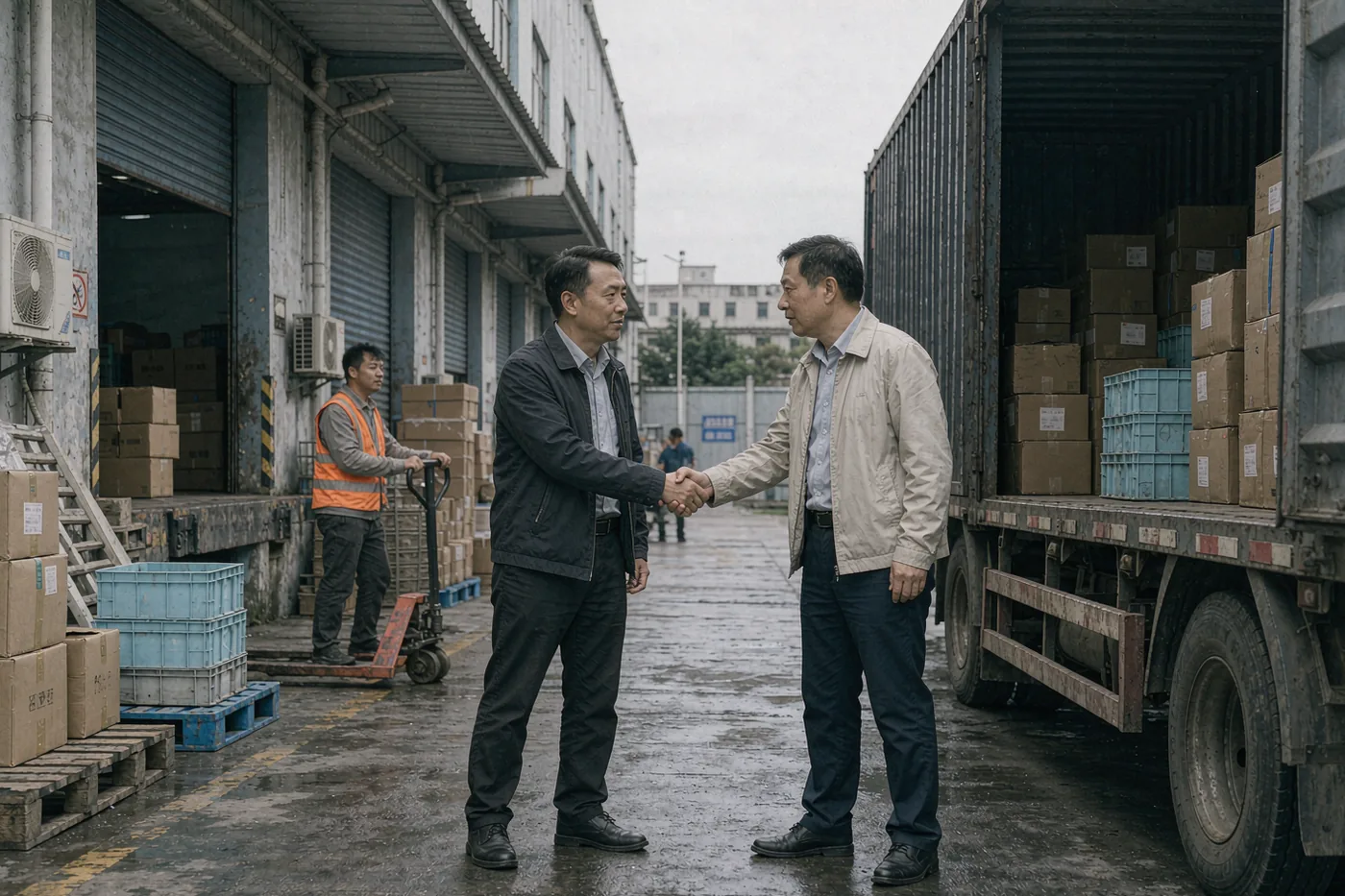
Real manufacturing sits outside the city center — Bao'an (west Shenzhen) for hardware and molds, Guangming for machinery, and Dongguan or Huizhou an hour-plus away for larger plants. Factory visits are arranged by appointment only; your supplier will usually send a car or give you an address for a ride-hailing trip. Budget 45–90 minutes each way from Futian depending on traffic.
Metro
Some Bao'an factories are reachable by metro; many require a DiDi ride — confirm the exact address and allow extra time
Opening hours
By appointment, typically weekdays 09:00–17:00 [verify before travel]
Tickets
No entry fee; bring passport and business cards
How long
Most visits take 2–4 hours including travel each way
Payments, SIM, and Connectivity
China is effectively cashless, but foreigners are well catered for now. Set these up before or immediately after landing:
Alipay and WeChat Pay — Both accept international Visa/Mastercard linked to your foreign card. Download and verify before departure; you'll use these for metro rides, DiDi, food stalls, and market stalls. Some vendors still prefer cash for small amounts [verify before travel].
SIM card / eSIM — Buy a China Unicom or China Mobile tourist SIM at the airport (roughly CNY 100–200 for 2–4 weeks of data, about USD 15–30) or arrange an eSIM with roaming before departure [verify before travel]. Your passport is required for registration.
Your VPN — Google, WhatsApp, Instagram, and many Western sites don't load on the mainland internet. Install a reputable VPN before you fly — it can't be downloaded from within China easily [verify before travel].
Business cards and WeChat — Suppliers exchange WeChat contacts, not emails. Have a QR code for your WeChat ready and translate your product terms — the WeChat built-in translator is a lifesaver during negotiations.
A Sample Sourcing Day
08:00
Breakfast and prepHotel breakfast or a noodle shop (CNY 15–30 / USD 2–4). Review supplier list and print sample-request specs.
09:00
Metro to HuaqiangbeiFutian hotels put you there in 10–20 minutes. Start at the buildings matching your product category.
12:30
Lunch with a supplierBusiness lunches are normal and usually cheap — CNY 50–100 (USD 7–14) per person. It's fine to let the supplier choose the restaurant.
14:00
More market meetings or DiDi to a factoryCollect samples, snap photos, and get WeChat contacts. Compare like-for-like — the same item can vary 30% in quoted price between stalls.
18:30
Dinner and notesLog every quote, MOQ, and contact the same evening — after a week the stalls blur together. Round out the night with a walk in Lianhuashan Park or a cheap massage (CNY 100–200 / USD 14–28) [verify before travel].
Related Beijing guides
If you found this useful, these cover the next question most visitors ask:
Get samples, not promises — Pay for samples (often CNY 50–500 each) and photograph everything. Serious suppliers welcome this; middlemen resist.
Learn ten phrases of Mandarin — 'Duo shao qian?' (how much?) and 'Tai gui le' (too expensive) go a long way. English is limited outside the big markets — a translation app is essential.
Carry your passport — Hotels, trains, and even some attractions require it. Keep a photo copy on your phone as backup.
Watch the weather and timing — Shenzhen is humid subtropical: June–September is hot (30–35°C / 86–95°F) with typhoon risk; October–December is the pleasant window. Chinese New Year (late January–February) shuts factories for up to two weeks [verify before travel].
Use DiDi, not street taxis — The DiDi app works in English, links to Alipay/WeChat Pay, and removes haggling. A cross-city ride to a factory might run CNY 60–150 (USD 8–20) [verify before travel].