Explore Beijing / Street Food Safety in Beijing: How It Compares to Hong Kong and Singapore Hawker Centers
Street Food Safety in Beijing: How It Compares to Hong Kong and Singapore Hawker Centers
Is Beijing street food safe for first-time visitors? A practical, honest guide to choosing stalls, understanding hygiene differences between Beijing, Hong Kong, and Singapore, and eating boldly without regret.
5 min read · KOULING's Beijing Travel Guide
If you've eaten at a Singapore hawker center or grazed your way through Hong Kong's dai pai dongs, you might assume all Asian street food operates under similar hygiene standards. The honest answer: Beijing's street food scene is different — less regulated, more variable, and, with a bit of street smarts, still absolutely worth eating. This guide explains what to expect, how to pick a safe stall, and where to start.
How Beijing, Hong Kong, and Singapore Actually Differ
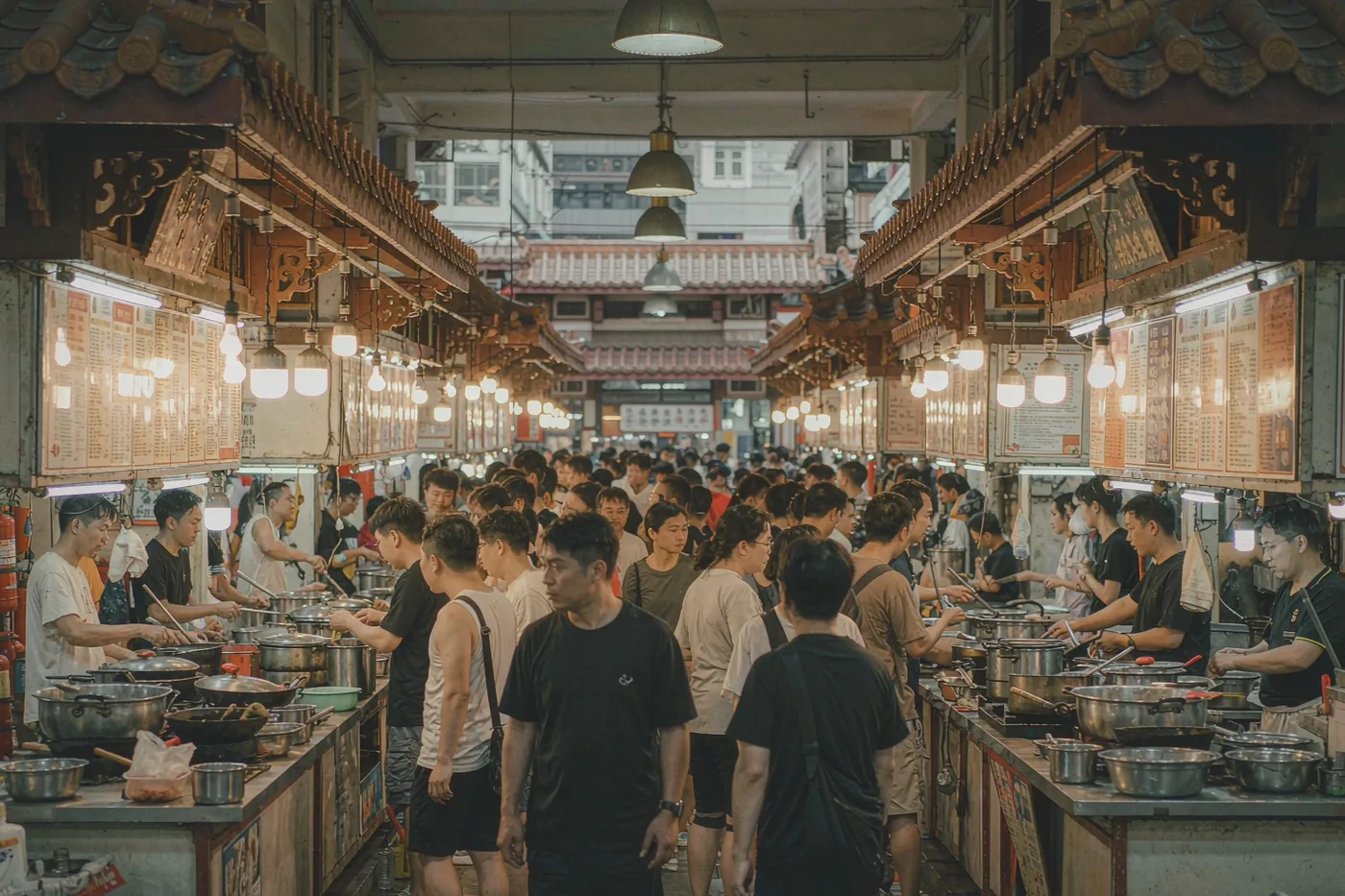
The three cities sit at noticeably different points on the food-safety spectrum. Singapore's hawker centers are government-managed, graded publicly, and widely considered the gold standard for street food hygiene in Asia. Hong Kong sits in the middle: cooked-food premises are licensed and inspected [verify before travel], and most established restaurants and food stalls are reliable, though older dai pai dongs vary. Beijing is the most variable of the three. Enforcement has tightened considerably in recent years — most unlicensed street carts were cleared from central districts, and many famous snack streets have been formalized into licensed indoor food courts [verify before travel]. What survives ranges from immaculate, high-turnover shops to casual stalls where hygiene is best described as 'rustic.'
Singapore — Government-run hawker centers with public hygiene grades; the safest street-food environment you'll find anywhere in Asia.
Hong Kong — Licensed cooked-food stalls and cha chaan tengs; generally very safe, especially busy spots in Mong Kok, Sham Shui Po, and Central.
Beijing — Street vending is much more restricted than it used to be; most reliable eating now happens in licensed shops and food halls rather than carts [verify before travel].
The takeaway — In Beijing, prioritize established, busy, licensed venues over anonymous carts. High turnover is your best safety signal.
Five Rules for Choosing a Safe Stall
You don't need to avoid street food in Beijing — you need to pick well. Locals use the same instincts you would anywhere: follow the crowd, watch the cooking, and favor food that's cooked hot in front of you.
Follow the queues — A line of locals at 12:30 pm means high turnover and fresh food. An empty stall at peak hours is the biggest red flag.
Watch it cooked — Choose food fried, grilled, or boiled to order and served steaming hot. Skip anything sitting lukewarm in trays for hours.
Raw vegetables and cold dishes — Be more cautious with uncooked items and tap-water-washed salad-style dishes than with stir-fries or skewers straight off the grill.
Check the money handling — Most customers pay by mobile app, so cash handling is less of an issue than it once was, but observe whether staff handle food with tongs or gloved hands.
Trust your nose and eyes — Clean cooking surfaces, no flies, no standing water, oil that doesn't look black and over-used. If something feels off, walk away — there's always another stall.
Wangfujing Snack Street Area
The most famous (and most touristy) snack destination in central Beijing. The outdoor version was reorganized into a more formal indoor food hall in recent years [verify before travel], so confirm what's currently operating before you go. Prices run higher than neighborhood spots — expect roughly CNY 20–60 (USD 3–9) per snack [verify before travel] — and quality is aimed at visitors. It's a fun, safe-ish introduction: everything is licensed and inspectable, even if locals eat elsewhere.
Metro
Line 1 to Wangfujing Station, Exit A or C (confirm current exit)
Opening hours
Typically late morning to late evening; individual stalls vary [verify before travel]
Tickets
Free entry; pay per item, roughly CNY 20–60 (USD 3–9) per snack [verify before travel]
How long
1–2 hours
Gui Jie (Ghost Street)
A strip of restaurants in Dongcheng famous for spicy crayfish, hot pot, and late-night eating. This is restaurant street food rather than cart food — which in today's Beijing is usually the safer bet. Look for the packed, steamy places full of local groups; a waiter-heavy, busy restaurant is far more accountable than an anonymous stall. Budget roughly CNY 80–150 (USD 11–21) per person [verify before travel].
Metro
Line 2 or 5 to Dongsishitiao area — confirm current line and station name for the section you choose
Opening hours
Lunch through late night; many venues open past midnight [verify before travel]
Tickets
No entry fee; roughly CNY 80–150 (USD 11–21) per person [verify before travel]
How long
2–3 hours
Neighborhood Breakfast Stalls and Jue'er Hutong Area
For a genuinely local experience, seek out small breakfast shops selling jianbing (savory crepes), baozi (steamed buns), and youtiao (fried dough sticks) with fresh soy milk. These are typically licensed, high-turnover, and cooked to order — exactly the profile you want. Jianbing usually costs CNY 8–20 (USD 1–3) [verify before travel]. A simple rule: buns straight from a steamer and dough from a fryer are about as safe as street food gets anywhere in the world.
Metro
Vary by hutong — confirm current line and station name for the area you visit
Opening hours
Best roughly 6:30–9:30 am [verify before travel]
Tickets
Free; jianbing CNY 8–20 (USD 1–3) [verify before travel]
How long
30–60 minutes
Related Beijing guides
If you found this useful, these cover the next question most visitors ask:
Ease in gradually — Start with cooked, hot dishes in busy restaurants for your first day or two, then experiment as your stomach adjusts.
Skip tap water, embrace bottled — Never drink tap water. Bottled water is everywhere at roughly CNY 2–5 (USD 0.30–0.70) [verify before travel].
Pack a small kit — Bring oral rehydration salts and your usual anti-diarrheal medication from home; pharmacies like Tong Ren Tang are widespread [verify before travel].
Hand hygiene — Carry hand sanitizer or wipes; not every stall has a washbasin, and soap is often absent.
Spice is not bacteria — An upset stomach after chili-heavy Sichuan or Beijing lamb skewers is often just spice, not contamination. Don't blame the wrong culprit.
When to seek care — If symptoms are severe, include fever, or last more than 48 hours, visit an international clinic; travel insurance is strongly recommended [verify before travel].