Beijing is one of the easiest big cities in Asia to do alone — if you know where the friction is. A three-day itinerary that works at one person's pace, plus how to eat alone comfortably, get photos of yourself, fill the evenings and stay unbothered.
Beijing is one of the easiest megacities in Asia to travel on your own. Streets stay busy well into the evening, the metro is cheap and signposted in English, restaurants hand you a QR code instead of a conversation, and almost every major sight sells a real-name ticket against a single passport — a party of one is a normal transaction, not an exception. What solo travel here actually changes is not safety, it is logistics. A hotel room costs the same whether one or two people sleep in it. A whole Peking duck is a group dish. The person who normally holds your phone is not there. This guide gives you three days built for one person's pace, then deals with the four friction points every solo visitor hits: eating alone, getting photos, filling the evenings, and staying unbothered.
Three things do most of the work. Ticketing: the Palace Museum, the Great Wall sections and the big national museums all issue real-name entry against a passport number, so there is no group minimum and no tour required. Transport: central metro trips cost a few yuan, stations have English names and announcements, and every entrance has security screening — which means stations are staffed and populated at almost any hour. Food: table QR ordering, picture menus and single-portion noodle and dumpling houses mean you can eat very well without a shared-language conversation. There is a social upside too. Shared tables, guesthouse common areas and Great Wall coach tours are straightforward places to end up talking to people if you want company, and entirely avoidable if you do not.
The classic first day, sequenced so you are not queueing at the worst hour of it. Book the Palace Museum before you land in China if you possibly can — that one ticket constrains the whole trip.
This is the one day where travelling alone genuinely changes the plan: no metro reaches any section, so you are choosing between a coach, a ride-hail and a hired car. Mutianyu is the sensible solo pick — easier to book than Badaling, walkable towers, and a toboggan on the way down if you want one.
A looser day with two anchors and a lot of optionality. If the weather turns, swap the market for a museum or 798 and lose nothing.
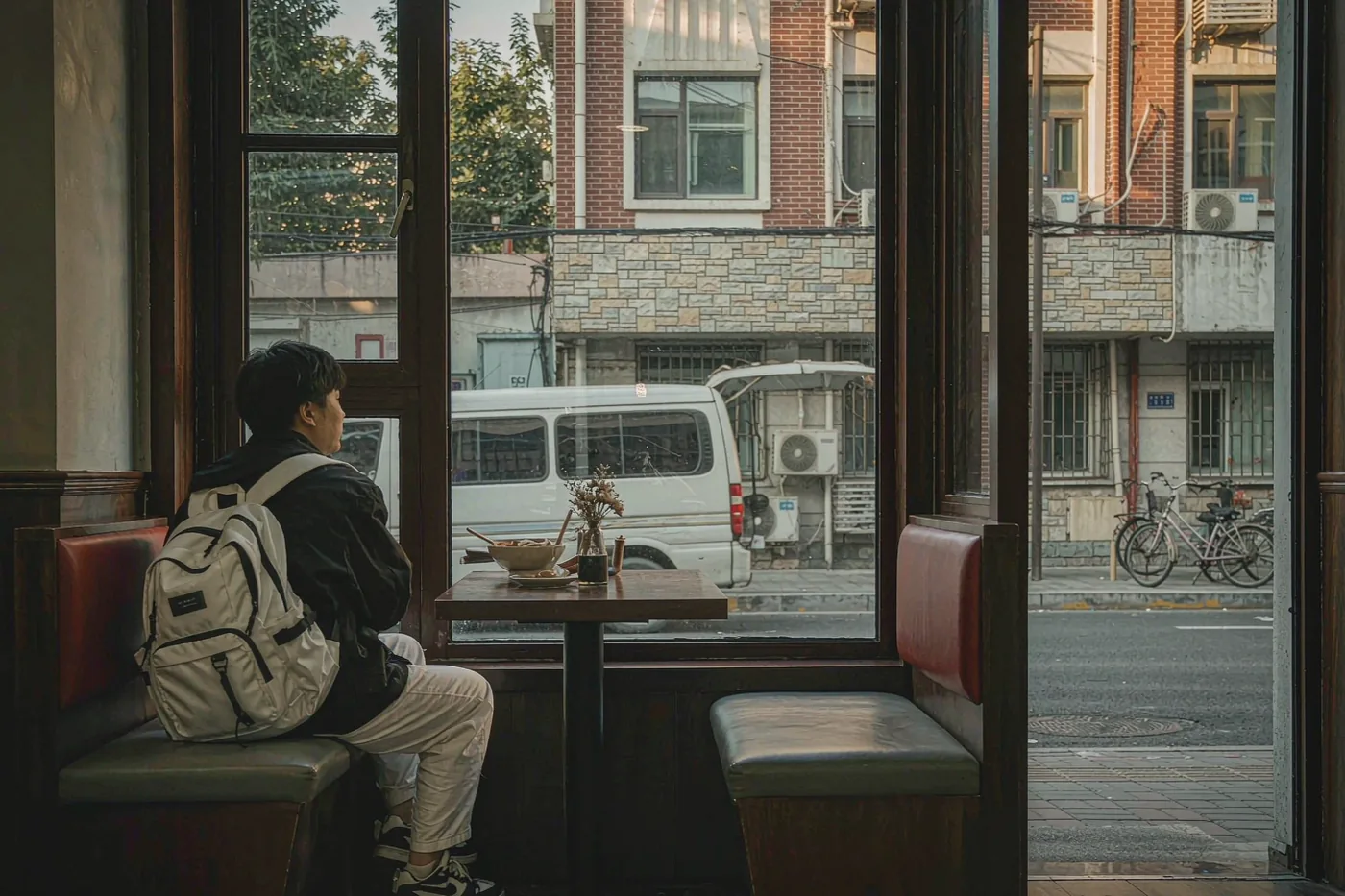
This is the part solo travellers worry about most and Beijing handles it better than almost anywhere. Noodle and dumpling houses are built around single diners: counter seats, one bowl, no ceremony. Individual-pot hot pot chains are everywhere and genuinely designed for one person — your own burner, your own broth, nobody looks twice. Mall food courts and department-store basements give you a dozen cuisines under one roof with picture menus and no negotiation at all. Sit-down Peking duck is the awkward one, because a whole duck is a group dish: order half a duck at a casual chain, or save it for an evening when you want the theatre more than the value. Breakfast is the easiest meal of the day — stalls selling jianbing, baozi and soy milk are a queue, not a table. Nobody tips, and you pay by scanning the code on the table.
You will want one photo that is not your thumb. The reliable options: ask another solo traveller or a couple at the viewpoint — it is near-universal and usually reciprocated; use a small tripod in outdoor park areas; or use the photographers who work the popular viewpoints at the wall and around the palace. What gets refused: selfie sticks and tripods are turned away inside many indoor halls and on the busiest wall sections, and drones are regulated across the city — read our drone rules guide before you even pack one. A phone propped on a bag against a wall solves most of the problem and annoys nobody.
Beijing winds down earlier than Shanghai, but not as early as visitors expect. The lake loop at Shichahai, the hutong bar streets, livehouses and the bookshops that stay open late all work for one person with a book or a phone. The practical constraint is transport rather than safety: most metro lines stop running around or before midnight, so check the last train for your specific line before you settle into a bar, and treat a DiDi home as the plan rather than the emergency. Keep your hotel's address saved in Chinese on your phone — showing a screen to a driver beats attempting the pronunciation.
Beijing is a safe city to walk alone at night, and violent crime against visitors is rare. What solo travellers do meet is social pressure. One: the friendly stranger who wants to practise English and steers you towards a teahouse or a gallery. Two: the driver who says the meter is broken and names a flat fare — use Didi or the official taxi rank instead. Three: the offer at a market, or from a rickshaw, that is too good and too insistent. All three are covered properly in our scams and tourist traps guide; the short version is that anywhere a new acquaintance is steering you towards a specific venue is a place to leave. Keep your hotel's phone number and 110 in your phone, and never be polite at the cost of being firm.
Solo travel in Beijing is cheap on food and transport and expensive on rooms, because you are not splitting the bed. A central day — metro rides, one sit-down meal plus street food, and entry to one ticketed sight — realistically lands in the low hundreds of yuan; our Beijing budget guide breaks it down line by line. A Great Wall day roughly doubles that once transport and the cable car are in. The biggest saving available to a solo traveller is a hotel on a metro line rather than a hotel in the centre: the city is much bigger than its sightseeing core, and the metro makes most of that distance irrelevant.