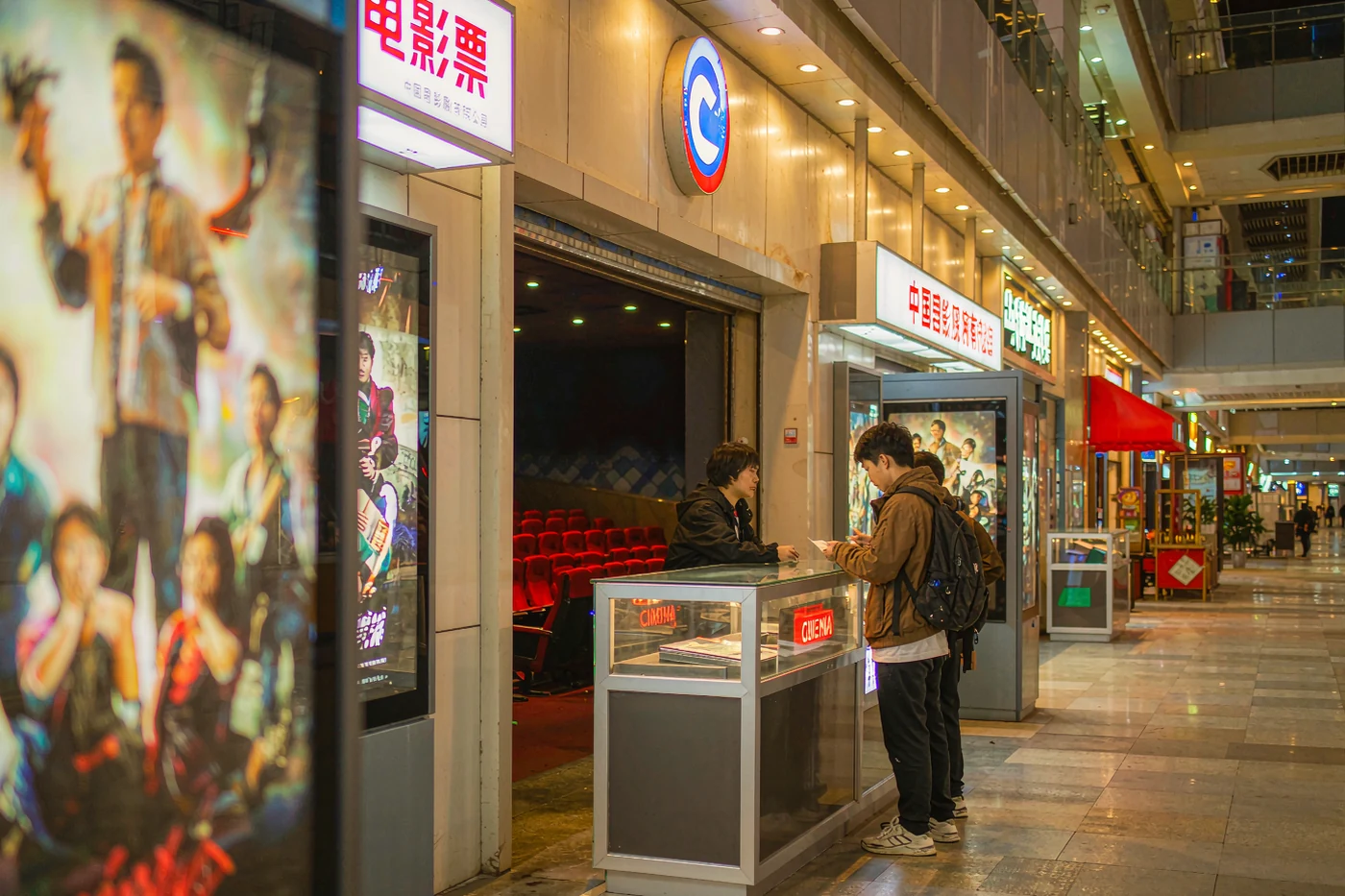
A practical guide to catching a movie in Beijing as a visitor: how to book with foreign apps, finding English-subtitled screenings, and where the city's best IMAX screens are.
A movie night in Beijing is one of the easiest, most affordable ways to experience everyday Chinese city life — tickets typically run 40–90 CNY (about US$6–13), roughly half what you would pay in London or New York. The catch for visitors is language and payment: most local films screen in Mandarin without English subtitles, and the dominant Chinese ticketing apps are tricky without a Chinese bank card. This guide walks you through how to book, how to find films you can actually understand, and where the big-format screens are.
Hollywood blockbusters released in China are almost always shown in the original English with Chinese subtitles (often labelled '原版' or '英文原版'). Look for those screenings rather than the dubbed '配音版'. Chinese-language films, however, are rarely subtitled in English outside of festivals — a few arthouse cinemas and annual festival screenings (such as the Beijing International Film Festival) do offer English subtitles [verify before travel]. If you don't speak Mandarin, stick to original-language Hollywood releases, or treat a Mandarin screening as a visual experience rather than a story you'll follow.
Local apps like Maoyan and Taopiaopiao dominate bookings and offer the lowest prices, but they are Chinese-language and have historically been difficult to link to Western cards. Easiest routes for visitors: ask the cinema's own box office or a self-service kiosk (many take foreign cards or cash [verify before travel]), use Trip.com's events/activities section which sometimes sells movie tickets to foreigners, or ask your hotel front desk to book on your behalf and pay them back. If you have Alipay or WeChat Pay set up with an international card, you can usually use Maoyan within those super-apps [verify before travel]. Book a day ahead for weekend evenings; Chinese cinemas sell assigned seats, so the centre rows go fast.
Beijing has a deep bench of large-format screens. True 70mm IMAX film projectors are rare worldwide, and China has a couple of them, but most 'IMAX' screens here are the standard digital kind — still a big step up from a regular hall. Beyond IMAX, you'll see premium brands like Dolby Cinema, CINITY, and China Film Giant Screen; any of them delivers excellent picture and sound for a modest premium of roughly 20–60 CNY (US$3–9) over a normal ticket. Prices and which films get premium formats vary week to week [verify before travel].
A long-standing favourite among Beijing's expat community in the CBD-adjacent Shuangjing area, known for reliably screening Hollywood films in the original English version and for its IMAX auditorium. Comfortable seating, straightforward booking, and easy access by subway.
The malls around Guomao and the Parkview Green complex host modern multiplexes with premium screens (IMAX, Dolby, or CINITY) and frequent original-language showings of Hollywood releases — convenient if you're sightseeing near the CBD. Confirm on the day which auditoriums are screening the English version.
For something beyond blockbusters, the China Film Archive's cinema occasionally screens restored classics, Chinese arthouse titles, and festival selections, sometimes with English subtitles [verify before travel]. Worth checking if you're a film lover staying more than a few days — it's one of the few places a Mandarin film may come subtitled.