Explore Beijing / Supplier Hunting in Shenzhen: A First-Timer's Sourcing Itinerary
Supplier Hunting in Shenzhen: A First-Timer's Sourcing Itinerary
A practical 2–3 day plan for Western buyers meeting suppliers in Shenzhen — from Huaqiangbei electronics markets to factory visits in Bao'an, with tips on payments, translation, and getting around.
6 min read · KOULING's Beijing Travel Guide
Shenzhen is the unofficial capital of global manufacturing, and most first-time buyers fly in for two to three days of whirlwind meetings. This guide gives you a realistic itinerary: which districts to base yourself in, how to structure market days versus factory days, and the small practical things — cash apps, interpreters, business cards — that make or break a sourcing trip. Prices and schedules change often, so verify everything [verify before travel].
Before You Go: Paperwork and Prep
Most Western passport holders need a visa to enter mainland China, though transit and business visa rules have been updated several times recently — check the latest requirements for your nationality [verify before travel]. Business travelers typically apply for an M (business) visa, which usually requires an invitation letter from a Chinese company [verify before travel]. Book supplier meetings at least two weeks ahead; factories often need lead time to arrange an English-speaking salesperson and, at some facilities, advance registration with your passport details [verify before travel].
Set up mobile payments before landing — Alipay and WeChat Pay both accept foreign cards now, and vendors rarely take cash or foreign credit cards. Set up and test both apps at home [verify before travel].
Hire an interpreter or fixer for factory days — Expect roughly 500–1,200 CNY (about $70–170 USD) per day for a sourcing interpreter [verify before travel]. Many supplier sales staff speak workable English, but market vendors often do not.
Bring printed business cards — Cards remain standard etiquette in meetings. Include your WeChat ID — it is the default business communication channel in China.
Arrange a VPN or eSIM before departure — Google, WhatsApp, and many Western sites are blocked on mainland networks. Install a reliable solution before you fly, since VPN sign-ups are hard from inside China [verify before travel].
Where to Base Yourself
Stay near a metro line and you can reach almost every sourcing district in 30–45 minutes. For electronics buyers, Futian is the most convenient base: it sits between Huaqiangbei's markets and the exhibition centers. For factory-heavy days in Bao'an or Longgang, consider splitting your stay or accepting longer morning commutes of 60–90 minutes by metro or DiDi ride-hail (typically 60–150 CNY, roughly $8–21 USD, for cross-district trips) [verify before travel].
Futian — Best all-round base: walking distance to Huaqiangbei, close to the Futian checkpoint if you're combining the trip with Hong Kong.
Nanshan — Tech-company territory, good if your suppliers are design or software firms; longer hop to the electronics markets.
Bao'an — Practical if most of your days are factory visits near Bao'an International Airport; quieter at night.
Huaqiangbei Electronics Markets
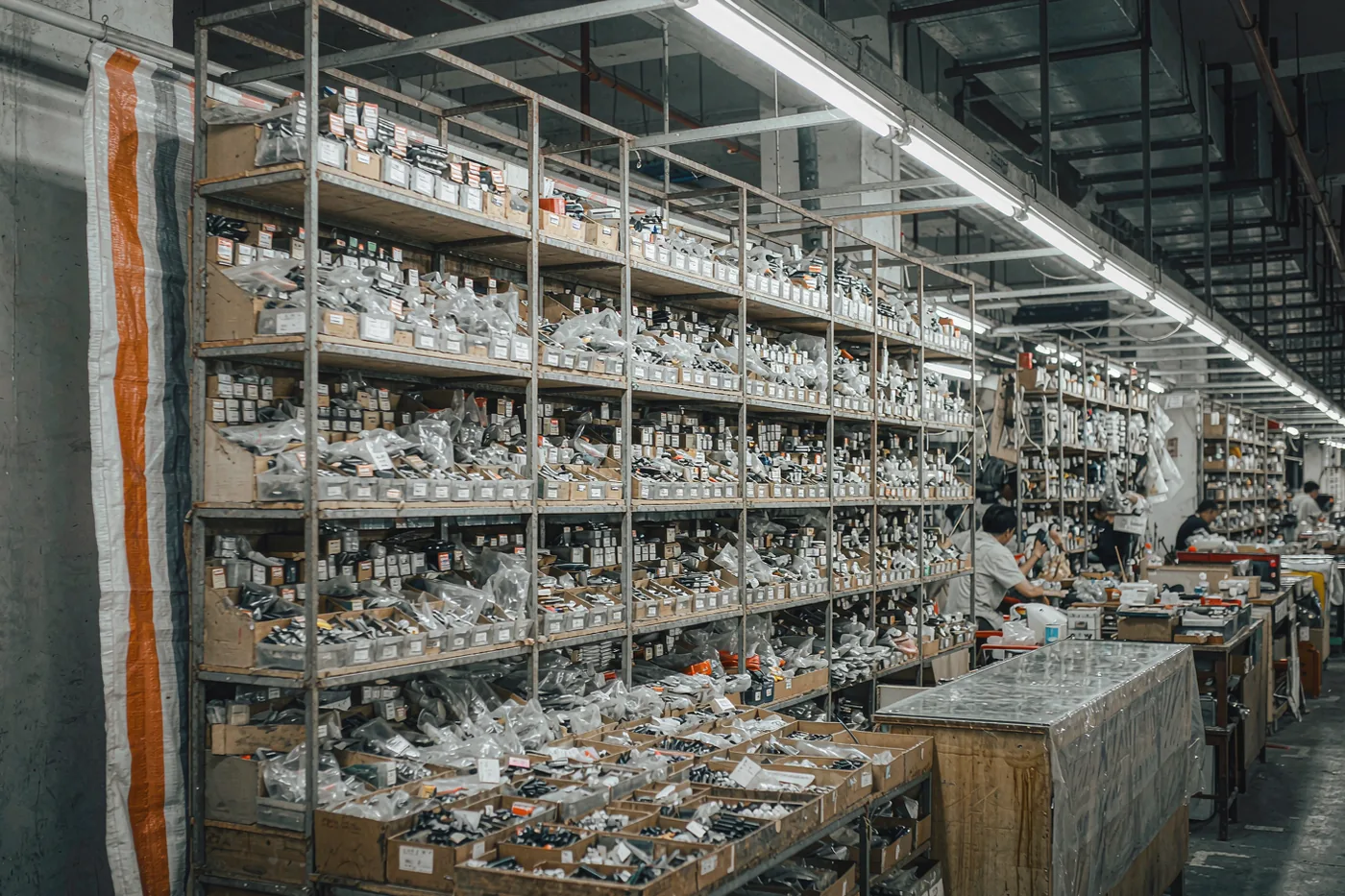
The world's largest electronics market district: dozens of connected malls selling components, phone parts, drones, LED products, and finished goods. Expect sensory overload — walk the relevant floors with a shortlist, note vendor names and WeChat contacts, and never buy on the first pass. Bargaining is expected; opening offers can be 30–50% above a realistic price. Many vendors are resellers rather than manufacturers, so always ask who actually makes the product.
Metro
Huaqiangbei Station on Lines 1, 2, and 7 — confirm the current line layout [verify before travel]
Opening hours
Most stalls roughly 10:00–18:00; many close Sundays or run reduced hours [verify before travel]
Tickets
Free to enter; bring 200–500 CNY (about $28–70 USD) cash-free via Alipay/WeChat Pay for samples
How long
Half a day to a full day depending on your product category
Shenzhen Convention & Exhibition Center (Futian)
If your trip coincides with a trade show — the China International Consumer Electronics Exchange and various sourcing fairs run here through the year — a single day on the show floor can replace weeks of cold outreach. Registration usually requires your passport and a business card; some shows are free for pre-registered buyers while others charge roughly 100 CNY (about $14 USD) [verify before travel].
Metro
Convention & Exhibition Center Station, near Lines 1 and 4 — confirm the nearest exit [verify before travel]
Opening hours
Typically 09:30–17:00 on show days [verify before travel]
Tickets
Free to ~100 CNY (about $14 USD) depending on the show [verify before travel]
How long
4–8 hours
Factory Visits in Bao'an / Longgang
Auditing a factory in person is the single best due-diligence step you can take. Arrange visits through your supplier contact at least a week ahead [verify before travel]. Wear closed-toe shoes, expect a guided tour of production lines, and ask to see the specific line that would run your order — not just the showroom. Bring your own samples or drawings. Most factories are 45–90 minutes from central Shenzhen by metro plus taxi, or 30–60 minutes by DiDi [verify before travel].
Metro
Varies by factory; many Bao'an sites are reachable via Lines 1 or 11, then a short taxi ride — confirm the exact station with your supplier [verify before travel]
Opening hours
Visit slots usually 09:00–11:30 or 14:00–16:30 on weekdays [verify before travel]
Tickets
Free, but many facilities require advance registration with passport details [verify before travel]
How long
2–3 hours per factory, plus travel
Sample Day 1: Markets and First Meetings
08:30
Breakfast near your hotelHotel breakfast or a congee shop; 15–30 CNY ($2–4 USD). Confirm your first meeting time the night before — suppliers occasionally reschedule.
09:30
Metro to HuaqiangbeiFare typically 3–5 CNY (under $1 USD) [verify before travel]. Arrive when stalls open to beat the crowds.
10:00
Market scouting, two buildingsPick two malls matched to your product category. Photograph vendor cards, collect WeChat contacts, compare sample prices.
13:00
Lunch with a supplier contactWhoever invites usually pays in Chinese business culture — offer once, then thank them. Budget 50–150 CNY ($7–21 USD) per person if you pay [verify before travel].
14:30
Showroom meeting at supplier officeConfirm samples, MOQs (minimum order quantities), and lead times in writing the same day via WeChat or email.
18:00
Dinner and notes reviewWrite up every meeting while fresh: quoted prices, contact details, red flags. This is the habit that separates good sourcing trips from forgettable ones.
Related Beijing guides
If you found this useful, these cover the next question most visitors ask:
Never pay a deposit in cash to a market stall — Legitimate suppliers accept bank transfer or Alipay to a company account. Get a business invoice (fapiao) and verify the company name matches the bank account [verify before travel].
Order samples before committing — Sample costs typically run 100–1,000 CNY ($14–140 USD) per item, often refundable against bulk orders [verify before travel]. Always get a sample of the actual production unit.
Use DiDi, not street taxis — The DiDi app has an English interface and in-app payment, removing language and haggling issues. Cross-town trips usually cost 30–100 CNY ($4–14 USD) [verify before travel].
Build in buffer time — Factories may run late or cancel. Keep your last day flexible for follow-up visits, and never book a flight out on the evening of your final factory visit.
Get quotes in writing, in both currencies — Ask whether prices are FOB (Shenzhen port) or EXW (ex-works) — the difference can add 5–10% to your landed cost [verify before travel].