Who actually qualifies for discounted or senior rail fares in China, and how to buy tickets as a foreigner using only a passport and an international card.
If you're hoping to snag a senior fare or a discounted rail ticket in China without opening a local bank account, here's the honest picture up front: most Chinese fare discounts are tied to Chinese ID documents, not age or residency you can prove with a passport. That said, there are real savings available to foreign visitors — mainly child fares, discounted seat classes, and occasional promotions — and paying for them without a Chinese bank card is now genuinely easy. This guide explains what you qualify for, how to book, and where to pay with a foreign Visa, Mastercard, or a mobile wallet linked to your overseas card.
China Railway's discount system is document-based. Senior citizen fares (typically for women 60+ and men 65+, or similar thresholds) are generally reserved for holders of a Chinese resident ID card [verify before travel]. A foreign passport, even one belonging to a long-term resident, usually cannot access these fares. What you can use as a foreigner: child tickets (based on height, roughly free under a set height and discounted for taller children — exact thresholds change [verify before travel]), student fares (only with a valid Chinese-issued student discount card), and standard class differences — second-class seats on high-speed trains are already meaningfully cheaper than first class, often by 40-60%. Slow conventional 'K' and 'T' trains cost less still, sometimes half the high-speed fare for the same route, though journeys take two to three times longer.
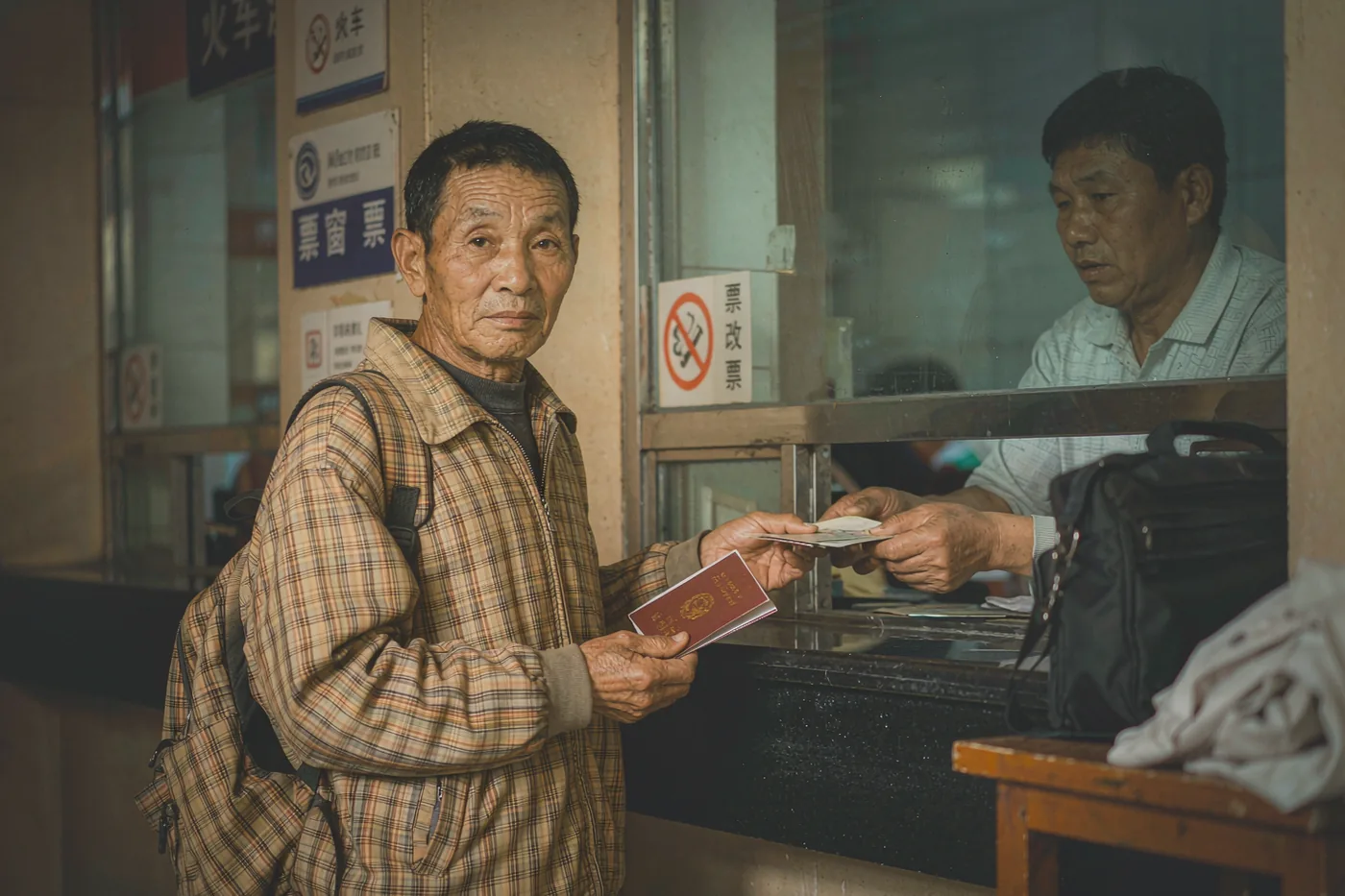
You do not need a Chinese bank card or Chinese phone number to buy train tickets in China. Option one: the official 12306 app and website now accept international payment cards (Visa, Mastercard, and others) for online booking with a passport-verified account [verify before travel]. You'll register with your passport number and complete identity verification, which can take a little time, so set it up a few days before travel. Option two: Alipay or WeChat Pay linked to your foreign card — both support international Visa/Mastercard binding, and you can pay for tickets booked through 12306's mini-program or pay at the station counter by scanning. A small service fee (typically around 3% on Alipay/WeChat transactions above a threshold) may apply to foreign cards [verify before travel]. Option three: buy in person at any railway station ticket window or self-service machine with your passport; staff windows accept cash in CNY and, increasingly, international cards, though cash is the safest bet [verify before travel]. Approximate reference: US$1 ≈ 7.2 CNY; a Beijing–Shanghai second-class high-speed ticket runs roughly 550-660 CNY (about US$75-90) [verify before travel].
Booking opens a fixed window before departure (roughly 15 days for online sales, subject to change [verify before travel]), and popular routes sell out fast during Chinese holiday periods. Book early for travel around Chinese New Year and the October Golden Week. When booking online with a passport, you'll collect tickets or — more commonly now — just scan your passport at the station gate; many stations support direct passport e-ticket entry, but some older gates still require a printed confirmation from a window or machine [verify before travel]. Arrive 45-60 minutes early at large stations like Beijing South to allow time for security and any manual passport check. If a gate rejects your passport, go to the manual check channel where staff will verify it by hand.
Beijing's main high-speed hub, serving Tianjin, Shanghai, and cities south. Ticket windows and self-service machines handle passport bookings; English signage is good. Largest station in the group, so allow extra time.
The main departure point for conventional overnight sleeper trains to Xi'an, Lanzhou, and western China — a favorite budget option since soft sleeper fares can beat a hotel night plus airfare. Passport ticket purchase at staffed windows.
Historic central station handling conventional trains toward the northeast and some high-speed services. Convenient if you're staying near the city center, with staffed counters that are used to serving foreign passport holders.
If you found this useful, these cover the next question most visitors ask: