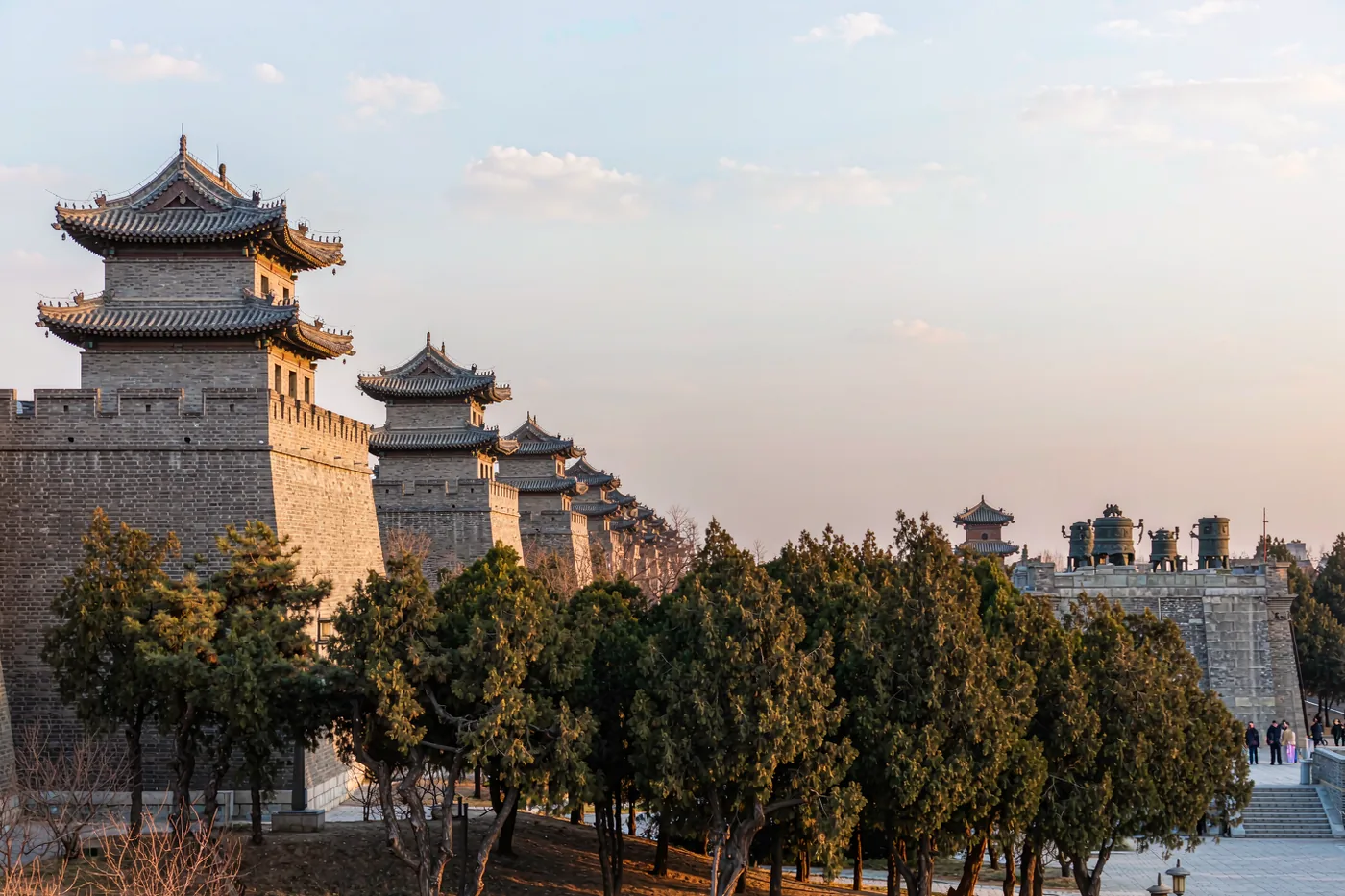
Explore Beijing / Beijing's Ming City Wall Relics Park & Ancient Observatory: The Last Surviving Wall
Beijing's Ming City Wall Relics Park & Ancient Observatory: The Last Surviving Wall
A short stretch of 600-year-old Ming dynasty wall and a working observatory from the same era, both easy to reach in central Beijing and perfect for a relaxed half-day.
5 min read · KOULING's Beijing Travel Guide
When Beijing's city walls were largely demolished in the mid-20th century, one fragment survived on the city's southeast side, near Beijing Railway Station. Today that roughly 1.5-kilometer (about 1-mile) stretch of Ming-era brickwork is protected as the Ming City Wall Relics Park, and just east of it stands the Ancient Observatory, built in 1442. Unlike the Forbidden City, these sights see far fewer tour groups, so you can linger, take photos, and enjoy plum blossoms in spring without elbowing through crowds. This guide covers what to see, how to get there, current costs, and how to combine both into an easy half-day.
What You're Looking At
The wall you see is not a restored showpiece — that's part of its charm. Built in the early 1400s under the Ming dynasty, it was once part of a ring more than 30 kilometers (about 19 miles) long. What remains is the rammed-earth core and original brick facing, left largely as it was found, with grass growing between bricks and views of modern towers rising behind. The park strip along the wall is free to stroll, while a ticketed section lets you climb onto the wall itself. Interpretive signage includes some English, but hiring a guide or reading up beforehand will deepen your visit.
The surviving wall section — Roughly 1.5 km (about 1 mile) of original Ming-era wall, preserved rather than fully restored.
The walkable park strip — A free green corridor along the wall's base with plum and crabapple trees that bloom spectacularly in late March and April.
Corner tower — A restored Ming-era corner watchtower at the park's east end, open to visitors, with excellent photo angles from below.
Ming City Wall Relics Park (明城墙遗址公园)
The main event. Enter from Chongwenmen East Street or near Beijing Railway Station. Climbing the wall section and visiting the corner tower require a ticket; strolling the park strip is free. Surfaces on the wall are uneven brick, so wear solid shoes.
Metro
Line 2 to Chongwenmen (崇文门) or Line 2/1 to Jianguomen — short walk from either; confirm current exits before travel [verify before travel]
Opening hours
Approximately 08:00–18:00 for the ticketed wall and tower section [verify before travel]
Tickets
Small fee (historically around CNY 10 / US$2) for the wall climb and tower; park strip free [verify before travel]
How long
45–90 minutes, longer if you stroll the full park
Ancient Observatory (北京古观象台)
A 10–15 minute walk east along Jianguomen overpass, this brick platform from 1442 is one of the world's oldest surviving observatories. The real stars are the huge bronze astronomical instruments on its roof — armillary spheres and sextants crafted with Ming and Qing dynasty craftsmanship, some influenced by Jesuit astronomers like Ferdinand Verbiest. A small museum inside explains China's imperial astronomy tradition; labels include English.
Metro
Line 1 and Line 2, Jianguomen (建国门) station — the observatory sits right by the overpass [verify before travel]
Opening hours
Typically closed Mondays; roughly 09:00–17:00 otherwise [verify before travel]
Tickets
Low admission fee (historically around CNY 20 / US$3) [verify before travel]
How long
1–1.5 hours
When to Go and How to Photograph It
Spring is the park's secret weapon: thousands of plum and crabapple trees planted along the wall's base erupt into bloom around late March through April, creating one of Beijing's best photo opportunities — ancient brick against pink blossoms. Autumn brings golden ginkgo light, and winter can be atmospheric when snow dusts the wall. Midday light is harsh; visit early morning or the last two hours before closing for warm side lighting. Drones are restricted in central Beijing — don't fly without checking local rules [verify before travel].
Best season — Late March–April for plum blossoms; October for autumn color. Confirm bloom timing before travel [verify before travel].
Best light — Early morning or late afternoon; the east-facing wall looks best in afternoon sun.
Best angles — Shoot up along the wall from the park path, frame the corner tower against modern towers, and photograph the bronze instruments from the observatory's roof.
Half-Day Itinerary: Wall, Observatory, and Nearby Sights
09:00
Metro to Jianguomen stationUse Line 1 or 2; a transit ride costs a few CNY (under US$1). You'll need Alipay/WeChat Pay or a metro card — confirm current payment options [verify before travel].
09:30
Ancient ObservatoryDo it first while energy is high; the roof instruments photograph best before midday glare.
11:00
Walk west to the Ming City Wall Relics ParkAbout 10–15 minutes along Jianguomen overpass and Chongwenmen East Street.
11:15
Climb the wall and corner towerBuy the ticket at the entrance; bring a passport for ticket purchases if required [verify before travel].
12:30
Lunch near ChongwenmenMalls and restaurants around Chongwenmen serve everything from noodles to familiar Western chains.
14:00
Optional add-onsThe Temple of Heaven is one metro stop south via Line 5, and the Forbidden City is a short taxi or metro ride away.
Practical Tips
Bring your passport — Many Beijing attractions require ID for entry or ticket purchase; carry it or keep a clear photo on your phone [verify before travel].
Mind the Monday closure — The Ancient Observatory and most Chinese museums close Mondays; the wall park's outdoor areas stay open [verify before travel].
Wear grippy shoes — The wall's brick surface is original and uneven — not ideal for heels or narrow-soled shoes.
Beat the crowds — Weekday mornings are quietest; during the spring bloom weekends can still be busy despite the park's low profile.
Pair it with the train station — The wall runs beside Beijing Railway Station, handy if you're arriving or departing by train — allow buffer time rather than cutting it close [verify before travel].