Explore Beijing / Seeing a Doctor and Buying Medicine in Beijing (and What to Do If You Lose Your Passport)
Seeing a Doctor and Buying Medicine in Beijing (and What to Do If You Lose Your Passport)
Pharmacies on every corner, international clinics, 120/999 emergencies, and the step-by-step route if a foreign passport is lost.
5 min read · KOULING's Beijing Travel Guide
Getting sick or running out of medicine while travelling is stressful enough without a language barrier. The good news: Beijing has a pharmacy on almost every corner and international-standard clinics. This guide covers what to buy over the counter, when to see a doctor, what to do in an emergency, and — most important for foreigners — exactly what to do if you lose your passport.
Pharmacies: your first stop
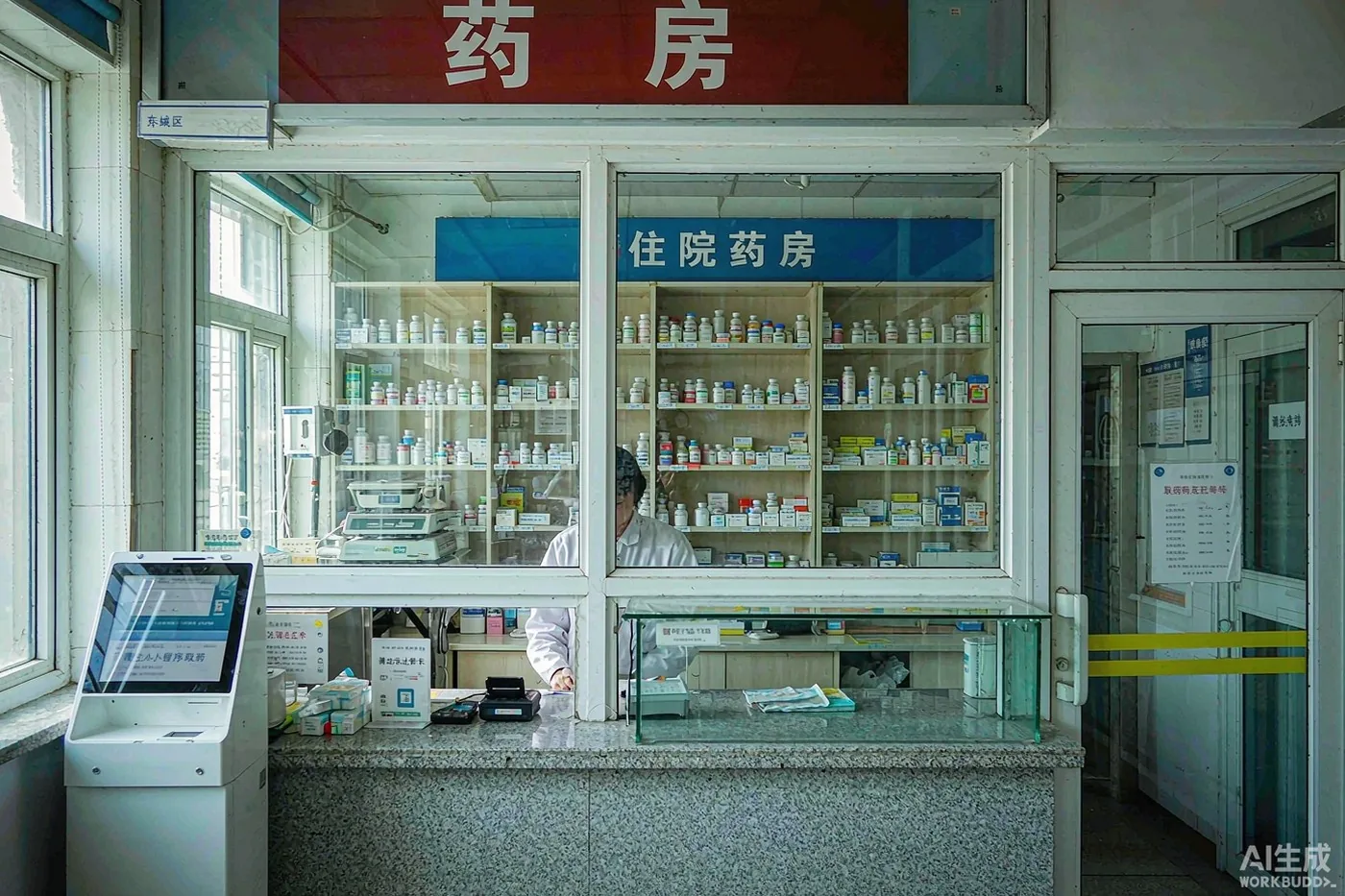
For minor issues — a cold, a stomach bug, a blister, an allergy — a pharmacy (药店, usually marked with a green cross) is faster and cheaper than a hospital. Major chains include Tongrentang (同仁堂), Jinxiang (金象) and Neptunus (海王星辰). Many stay open late and some are 24 hours. Bring your passport if you want a receipt for travel insurance. Most pharmacists speak little English, so show a photo of the medicine you use at home or use a translation app.
Common over-the-counter medicines
Paracetamol or ibuprofen (扑热息痛 / 布洛芬) — For fever and pain — widely available in any pharmacy.
Loperamide or smectite (蒙脱石散 / 易蒙停) — For travellers' diarrhoea; carry some from home as a precaution.
Antihistamine (氯雷他定) — For allergies and mosquito bites in summer.
Oral rehydration salts (口服补液盐) — For dehydration after a stomach upset — cheap and effective.
Band-aids and antiseptic (创可贴 / 碘伏) — For minor cuts and blisters from all the walking.
Seeing a doctor
For anything more than minor, go to a hospital. Beijing has large public Grade-3A (三甲) hospitals and private international clinics. International clinics such as United Family Hospital (和睦家) have English-speaking staff and can bill some insurers directly, but cost more. Public hospitals are excellent and cheap but crowded, with Chinese-only reception — bring a Chinese-speaking friend, use a translation app, or ask your hotel front desk to help.
Hospitals near our hotels
Near KOULING Ruiyue — Beijing Century Hospital (世纪坛医院) sits by Military Museum on Line 9; larger 三甲 options are a few stops further. Verify the nearest open department before you set out.
Near KOULING Donggaodi — Aerospace Center Hospital (航天总医院 / 711 Hospital) is in the Donggaodi area, a short ride from Wufutang — convenient if you are staying south.
Bring passport and payment — International clinics take foreign cards; public hospitals usually want cash or Alipay / WeChat.
Emergencies
Ambulance 120 / 999 — For medical emergencies, state the address clearly; have someone write it in Chinese.
Police 110 — For theft, loss and non-medical emergencies.
Travel insurer first — Many policies require pre-authorisation before hospital admission — call the hotline before you commit.
Lost passport — step by step
Losing your passport is scary but routine in Beijing. Do this in order: (1) Report to the local police (dial 110 or visit a station) and obtain a 报案证明 (police report). (2) Contact your embassy or consulate to apply for a 旅行证 (travel document) or emergency passport. (3) Take both documents to the Beijing Exit-Entry Administration (出入境管理局) to get a replacement visa or entry stamp. (4) Keep hotel copies throughout. Start at your embassy's website — each posts a Beijing-specific checklist. Timelines and required forms change, so confirm the current procedure with your embassy.
Paying and insurance: what works at the counter
Foreign visitors cannot use Beijing's local social-insurance card, so every pharmacy and hospital visit is self-pay. Public hospitals typically ask for a deposit upfront (often 3,000–10,000 yuan for emergency admission, less for a clinic visit) and refund the balance when you settle the bill. Cash in yuan works everywhere; Alipay and WeChat Pay now accept foreign cards and are accepted at most pharmacies. International travel insurance is rarely billed directly — you pay first, then claim. Before your trip, photograph your policy's claim form requirements and ask for 英文诊断证明 (English diagnosis certificate) and itemized invoices (发票) at the hospital billing window; without itemized receipts most insurers reject claims. Keep every small ticket. A routine clinic visit at a public hospital often totals a few hundred yuan; international clinics run 1,000–2,500 yuan and up, which is why checking your insurer's direct-billing list before you go matters.
Common mistakes with medicine and prescriptions
Assuming your brand exists here — International brands are largely absent. Learn the generic name (e.g. ibuprofen = 布洛芬, loratadine = 氯雷他定) and show it to the pharmacist.
Skipping the prescription for strong painkillers — Codeine-containing and some sedating medicines require a doctor's prescription — a pharmacy cannot sell them without one.
Travelling with restricted medication unlabelled — Carry prescription medicines in original packaging with a doctor's letter; some cold medications common in Europe contain ephedrine, which is controlled.
Hoarding leftovers from the hospital — Doctors often over-prescribe. Check dosages on the box; returning unopened boxes is generally not possible.
Claiming without the original invoice — The red-stamped 发票 is the only accepted receipt for insurers — a card terminal slip or QR payment record is not enough.
Practical tips
Carry a photo of your passport — Keep a phone photo and a paper copy separate from the original.
Pack a small kit — Paracetamol, rehydration salts, band-aids and any prescription you rely on — bring extra, as refills on foreign prescriptions can be hard to get.
Translation app ready — Download Google Translate's offline Chinese pack before you need it.
Hotel front desk helps — Both KOULING hotels have staff used to overseas guests and can call a clinic or translate for you.