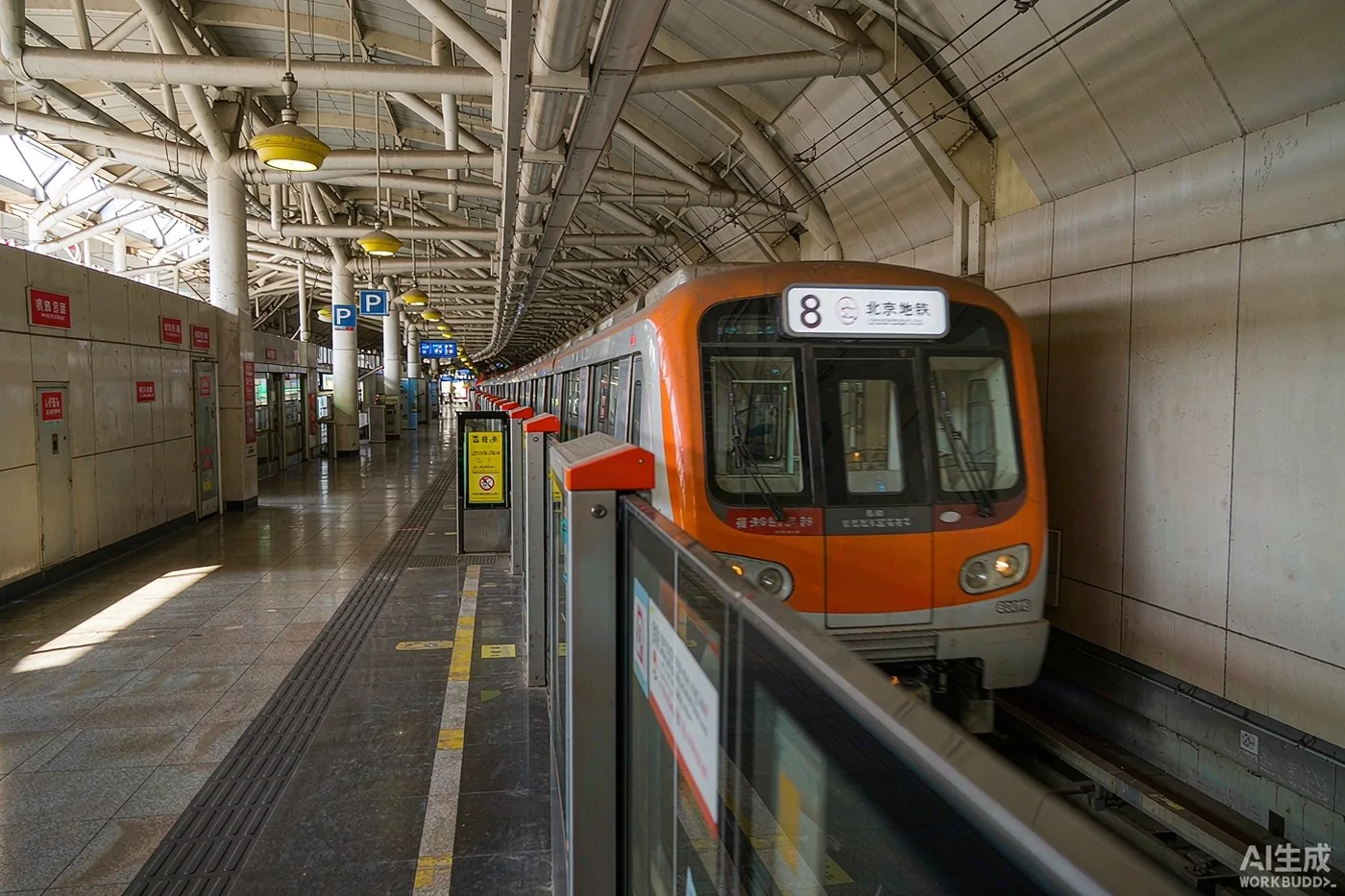
Ride Line 8 from the Olympic Park to Qianmen and hit Beijing's most iconic spots — one line, almost no transfers between them.
Beijing Subway Line 8 runs almost straight down the city's central axis, which means it threads together more headline sights than almost any other line. Start in the north at the Olympic Park, drift south through the hutongs of Nanluoguxiang and the lakes of Shichahai, and finish at the old-world streets of Qianmen. This guide rides the full length and tells you exactly which exit to take at each stop.
Line 8 is the only metro line that links the Olympic Green, the historic hutong belt and the Qianmen shopping streets without forcing you to change trains. Trains run every 2–3 minutes at peak, and most sights sit within a 5-minute walk of their station — so a single line covers a very full day.
The northern stretch of Line 8 drops you at the Olympic Green — the Bird's Nest (National Stadium) and the Water Cube (National Aquatics Center) from the 2008 Games, now wrapped in a vast park with lakes and woodland. Come for golden-hour photos and a flat, easy walk.
A 700-year-old hutong alley lined with cafés, small boutiques and snack stalls. It gets crowded, so arrive before 11:00 or after 17:00. The narrow lanes running off it (the 'Eight Rear Lanes') are quieter and more authentic.
These twin towers marked the heart of the old city and once told Beijing the time. Climb the Drum Tower for a rooftop view over the grey-tiled hutongs. The square between the towers is the city's most photogenic.
Three connected lakes where locals ice-skate in winter and bar-hop in summer. Rent a paddle boat, walk the willow-lined shore, or step into Prince Gong's Mansion — the best-preserved Qing-dynasty princely residence nearby.
NAMOC holds 100,000+ works of modern Chinese art across a striking purpose-built building. Entry is free, but you must book a timed slot online in advance — there is no same-day walk-in.
Qianmen Street is a restored pedestrian thoroughfare running south from Tiananmen Square, with the older Dashilan (Dazhalan) lanes just to the west. A mix of century-old brands, Beijing snacks and the capital's first tram line.
Tianqiao was historically Beijing's entertainment quarter. Today it is best known for the Beijing Natural History Museum — dinosaurs, a blue-whale skeleton and family-friendly exhibits. Book free tickets online ahead.
If you found this useful, these cover the next question most visitors ask:
Line 8 follows a predictable crowd rhythm. The northern end — Olympic Green — is busiest on weekends and public holidays between roughly 10am and 4pm, especially when there is an event at the Bird's Nest; check the stadium's calendar before you go, because on concert days the station queues spill onto the concourse. The middle stretch (Shichahai, Nanluoguxiang) peaks in the late afternoon and early evening, when hutong visitors head home and bar crowds arrive at Houhai. Qianmen and Tiananmen East see the worst crush early in the morning during flag-raising, which draws tens of thousands before dawn. If you want a genuinely quiet ride, travel before 9am on a weekday or after 8pm, when trains are often close to empty even in summer. During major holidays such as Golden Week in early October, treat any advice about crowds as an underestimate and expect security checks at central stations to add ten to twenty minutes to your journey.