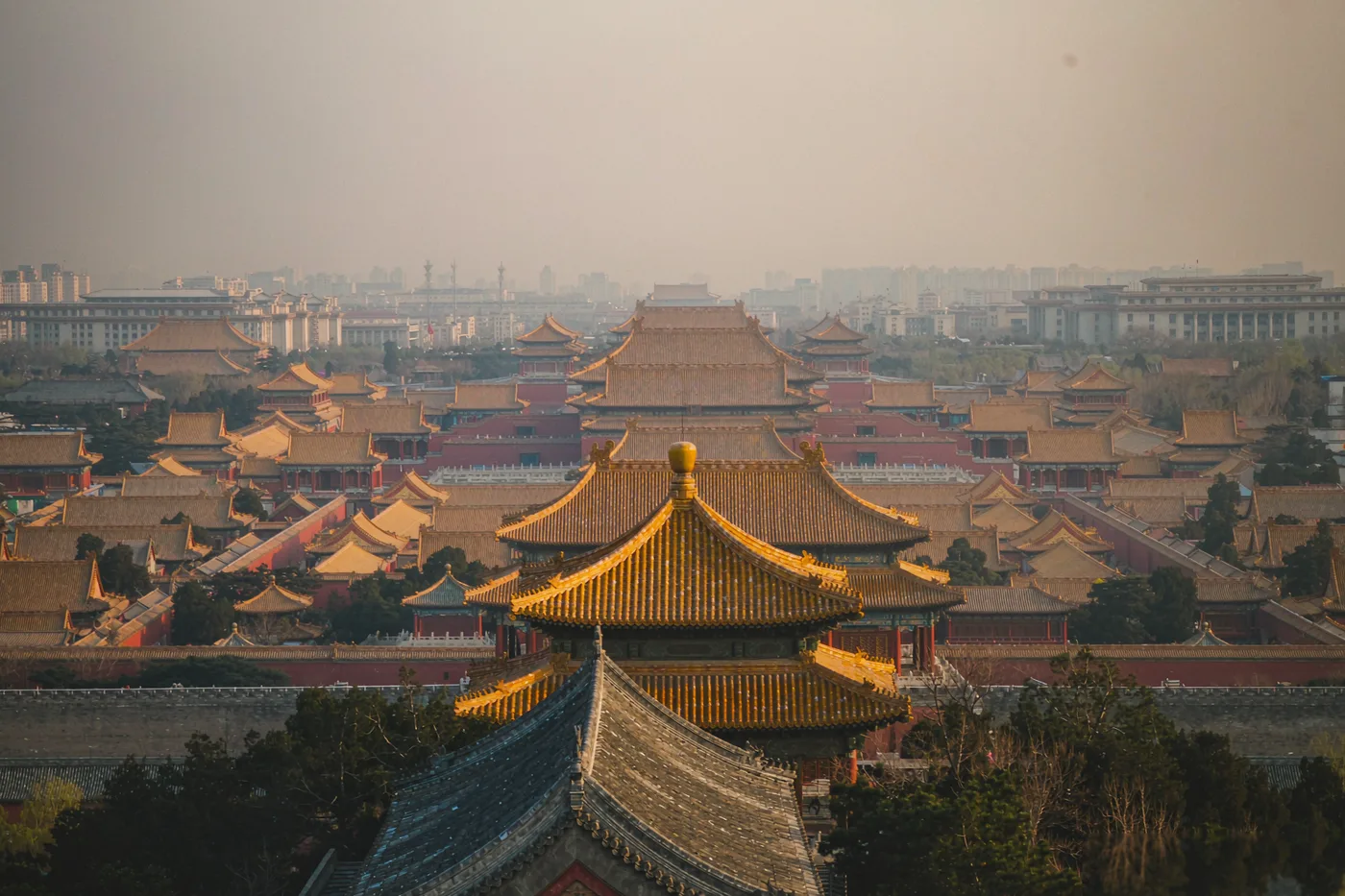
The hill directly behind the Forbidden City offers the most famous panorama in Beijing — here's how to time your visit, what the tiny ticket costs, and the booking rules you need to know.
Jingshan Park sits directly behind the Forbidden City, and at its heart is Coal Hill — an artificial mound about 45 metres (150 feet) high, built from the earth excavated to create the palace moat. Climb to the Wanchun Pavilion at the top and you get the single most photographed view in Beijing: the golden roofs of the Forbidden City stretching south, and the city's modern skyline behind you. Entry costs just CNY 2 (under US$1) [verify before travel], making it arguably the best value sight in the city.
Jingshan Park is a public park, not a ticketed museum, but Beijing parks have tightened reservation policies in recent years. Foreign visitors can usually buy a ticket on arrival with cash or a mobile payment, and the CNY 2 price means there's rarely a queue problem. However, during national holidays (Chinese New Year, Golden Week in early October) and some peak periods, online real-name reservation may be required [verify before travel]. Bring your passport — it's needed for ticket purchase and any reservation check.
The park opens early — typically around 6:30 am, with closing tied to sunset (roughly 17:30 in winter, 21:00–22:00 in summer) [verify before travel]. Sunrise views are possible in summer when opening hours allow it, and early morning also brings locals doing tai chi and dancing, which is a pleasure to watch. The classic shot, though, is late afternoon: the sun behind you lights up the Forbidden City's roofs, and the view at golden hour is unmatched. Weekends and holidays get crowded at the summit — arrive at least an hour before sunset if you want railing space.
Jingshan's south gate is directly across the street from the Forbidden City's north (Shenwu) gate — most visitors pair the two. By metro, take Line 8 to Shichahai station and walk roughly 10–15 minutes east, or confirm the current best station and exit with your hotel front desk, as station exits and walking routes change. Taxis and ride-hailing apps work well too; ask to be dropped at Jingshan Park's south or east gate.
The climb to the summit takes about 10–15 minutes on stone steps — moderate, with handrails in places. Wanchun Pavilion (Pavilion of Ten Thousand Springs) at the top frames the Forbidden City panorama perfectly. Note that Coal Hill was a royal garden in imperial times and is also where the last Ming emperor took his life in 1644 — a plaque near the summit marks the spot.
The north-facing railing at the summit is where everyone takes the shot: the Forbidden City's Hall of Supreme Harmony roof in the centre, Beijing's CBD towers on the horizon. Cleanest air is typically after rain or on windy days; winter cold snaps often bring the crispest skies.
On the hill's eastern slopes, a peony garden blooms spectacularly in late April to early May, when the park holds a peony festival. If you're visiting in spring, this alone is worth the CNY 2. Outside the season it's a quiet green slope.