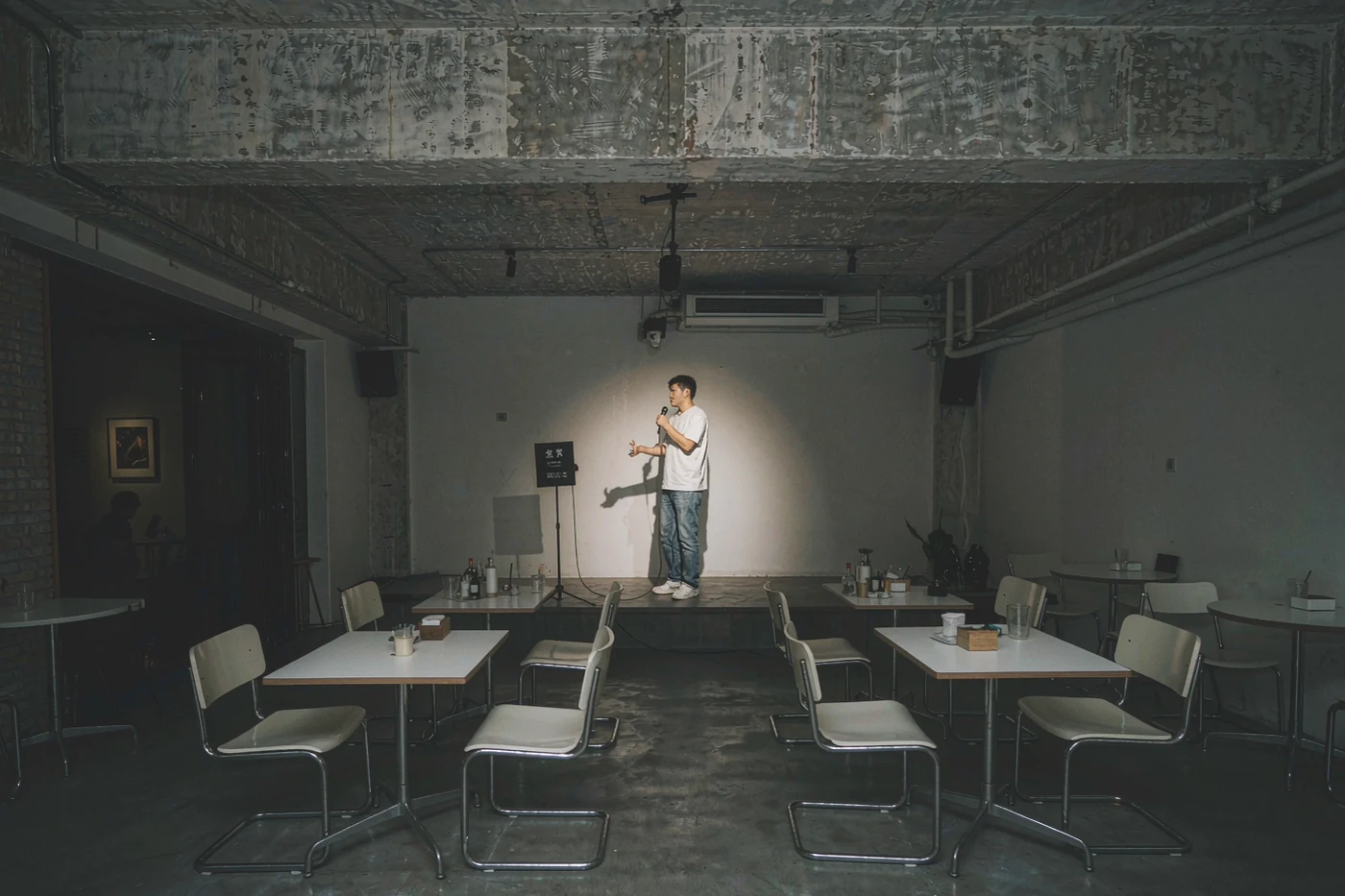
Beijing's English-language comedy scene runs on two weekly rooms — here's where they are, what tickets cost and how to get five minutes on the mic yourself.
Beijing has a full-blown Chinese-language comedy industry — televised stand-up (脱口秀), arena specials, comedy festivals — but the English-language scene is something else: small, scrappy, and exactly two weekly rooms deep. That is good news rather than bad. The venues are intimate, tickets cost less than a cocktail back home, and the comedian testing rough material in front of twenty people in March may be headlining a special by December. This guide covers the two weekly open mics, the weekend specials, what tickets actually cost, how to buy them without a Chinese payment setup, how audience etiquette works, and what to do if you want five minutes on the mic yourself.
Everything in this scene orbits two weekly open mics, each run by a different producer in a different district. Both are fully in English, both welcome drop-in audiences, and both change their lineups weekly — so check WeChat or the ticketing apps on the day you plan to go rather than trusting any fixed schedule.
The most established English open mic runs every Wednesday at The Local Bar & Grill, an expat-fixture sports bar on the ground floor of Building 80 in the Sanlitun Courtyard 4 complex (工人体育场北路4号院80号楼1层). The show starts around 21:00 and wraps by 23:00, presented by Boring Bamboo Comedy with a rotating mix of long-term expats, visiting comics and first-timers trying five minutes for the first time. Entry is a modest cover paid at the door or in advance through the organizer's WeChat [verify]; there is no dress code and no enforced drink minimum, though the bar expects you to order something.
The other weekly room is quieter and more theatrical: Castle Comedy (城堡喜剧) runs a Tuesday-night English open mic at Nanyang Shared-space Theatre (南阳共享际剧场), a small black-box venue at Nanyang Hutong 6 in Dongcheng, tucked behind the hutongs near Nanluoguxiang. Shows start at 19:30, and unlike the bar nights these are properly ticketed — roughly ¥38–48 through the Damai or Maoyan apps, with dates scheduled through the end of 2026 [verify]. The ticketing notice states no admission for under-18s. A theatre open mic also means theatre discipline: the show starts on time and the room is genuinely quiet.
Open mics are for material in progress; specials are for finished sets. Both producers run weekend showcases and headliner shows, usually at Tribute Pub on Lucky Street near Chaoyang Park (好运街,朝阳公园路3号) or at the Nanyang theatre. These are the nights worth planning a trip around: recent specials have been priced around ¥88 in advance and ¥108 at the door, typically including one drink, with four or five acts on the bill [verify]. If your Beijing stay allows only one comedy night, pick a special over an open mic — the quality gap is real.
Set expectations before you pay. An open mic is a workroom, not a gala: comics use it to test newly written five-minute sets on a real audience, so the quality can swing from razor-sharp to visibly rough within the same half hour. That unevenness is the point — and it is also why tickets cost the price of a coffee. Go with a group, sit near the front, laugh generously, and you will get the best version of the room. If you want guaranteed polish, wait for a special — or pick one of the big Chinese-language productions instead, knowing you will follow maybe a third of it, since the wordplay is the act.
The Beijing English scene is friendly to first-timers, and both weekly rooms run genuine open lists — not just booked showcases wearing the open-mic label. The mechanics: message the producer on WeChat early in the week to get on the list (or ask the host when you arrive, though pre-booking is safer), prepare three to five minutes of tight, rehearsed material, and expect a firm time limit. Sets are in English only; the Chinese-language rooms are separate productions. Do not attempt crowd work you cannot finish, do not punch down at the local audience, and never record another comic without asking — the scene is small and everyone knows everyone.
Bar open mics are the easy case: cover charges are collected at the door, where international cards at the bar usually work, and pre-sale runs through WeChat, which any visitor can use after linking an international card [verify]. Theatre shows are harder: Damai and Maoyan are Chinese apps that work best with a mainland number, though both have added international card support and passport-based registration in recent years [verify]. If everything fails, message the producer directly — these are small operations, and a polite 'I'm visiting, can I pay at the door?' almost always gets a yes. Our guides to setting up Alipay and WeChat Pay walk through the card-linking process step by step.
Stand-up rooms here run on the same unwritten rules as anywhere, plus one that matters more in China: do not record the comics. Phones go down while acts are on, filming a set without permission can get you called out from the stage, and the material tested at an open mic tonight may belong to a filmed special six months from now. Heckling is rare and unappreciated — the hosts are comedians, not bouncers, and the microphone is in their hands. Do arrive 15–20 minutes early at bar shows for a decent seat, and do stay through the whole show: walking out mid-set in a room of thirty people is very noticeable.
Both rooms sit inside established evening neighborhoods, which is half the fun. The Local puts you in the middle of Sanlitun's bar sprawl — dinner first, show at 21:00, then the surrounding streets if the night is going well. Nanyang Theatre drops you into the hutongs between Nanluoguxiang and Beixinqiao: eat earlier, because kitchens there wind down by around 21:00, catch the 19:30 show, and you can be in a quiet craft-beer bar ten minutes later. Tuesday is otherwise a dead night for going out in Beijing; a comedy open mic is one of the few things running that late in the week outside the weekend circuit.