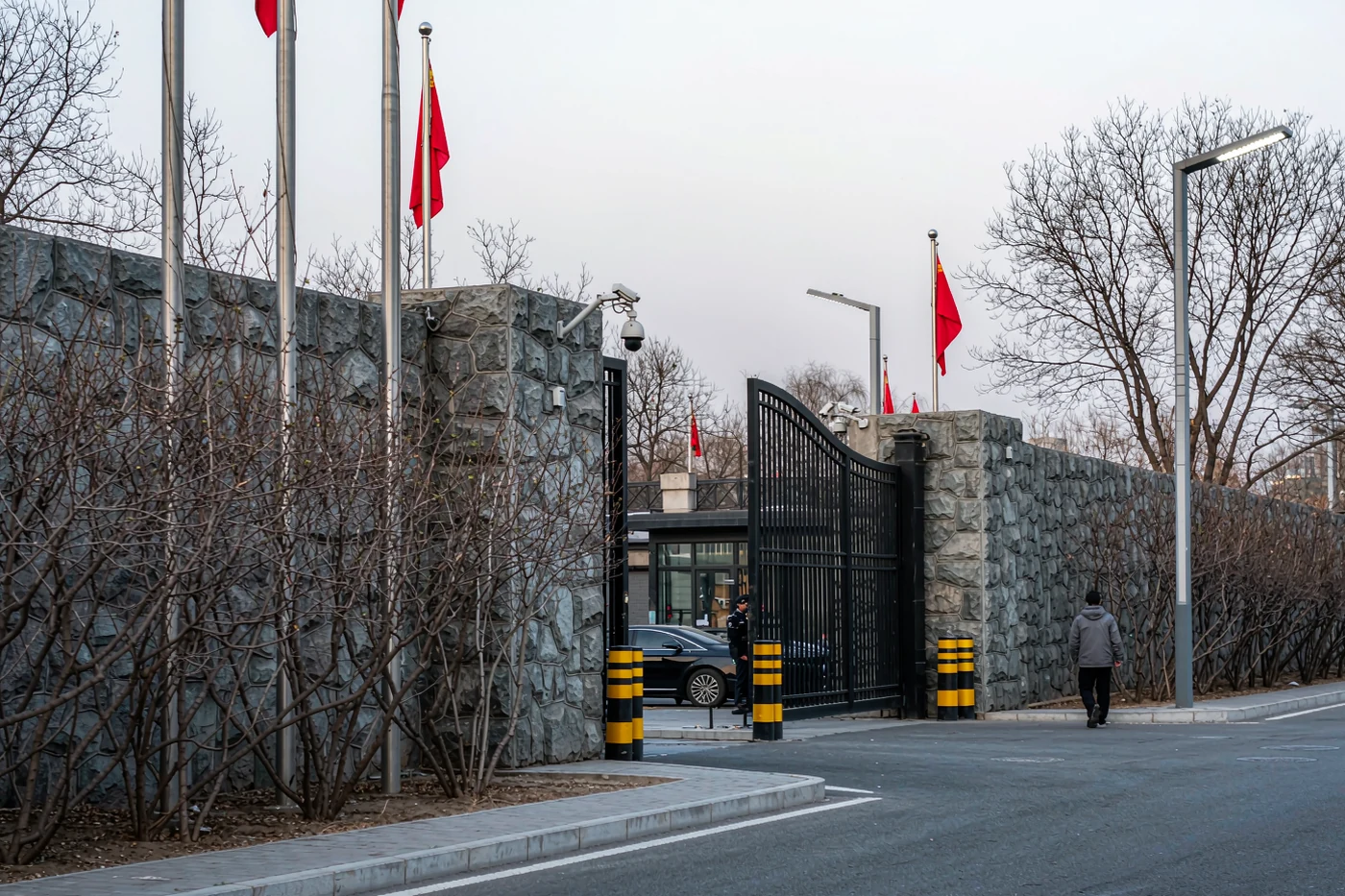
Notarials, detention visits, hospital help, repatriation loans — what Beijing's consulates genuinely do, the four-day notification rule, and the long list of things they will refuse.
Most visitors file their embassy under one heading: lost passport. It is the one consular service everyone can name, and the only one most people ever read about. The rest is the part nobody looks up until the day it matters — the notarised statement your insurer demands after a theft, the visit you are entitled to if you are detained, the phone call that reaches your family when you are in a Beijing hospital and cannot make it yourself. Beijing has well over a hundred resident embassies, almost all of them inside one district. This guide covers what those offices will genuinely do for you, the rules that make some of that help a right rather than a favour, and the much longer list of things they will refuse no matter how politely you ask. For the passport-loss sequence itself, read the dedicated guide — this is everything around it.
Practically every embassy in Beijing sits in Chaoyang District, in three clusters you can navigate without a taxi. The oldest is Jianguomenwai and the Ritan park area, just inside the eastern Second Ring. North of it is Sanlitun, the bar and shopping district that also hides a dense pocket of missions. The largest is Liangmaqiao, along the north-east Third Ring, which is where most of the big compounds moved in the 2000s. For a consular appointment, put the exact gate in your map app rather than the embassy name — several compounds have more than one entrance and only one admits the public. ⚠️ 待人工确认: line numbers and station names are stable, but exit letters and gate arrangements change; the appointment letter wins.
An embassy is the mission to the central government and it sits in the capital; a consulate general is a regional office with a defined consular district. The difference starts to matter the moment you leave Beijing. American citizens, for instance, are served by the embassy in Beijing plus consulates in Shanghai, Guangzhou, Shenyang and Wuhan, each responsible for a fixed set of provinces: Shanghai covers the municipality plus Jiangsu, Zhejiang and Anhui; Guangzhou covers Guangdong, Guangxi, Fujian and Hainan; Shenyang covers the three north-eastern provinces; Wuhan covers Henan, Hubei, Hunan and Jiangxi. Other governments draw the map differently, so read the consular district list on your own foreign ministry's site rather than assuming. If you are physically in Beijing, the Beijing mission handles you. Almost every country maintains an embassy here, but a small number serve China from a mission in another capital — check before you fly, because in an emergency that turns a taxi ride across town into an international phone call.
Strip away the ceremony and the list is short, concrete and worth memorising, because most of it costs nothing and none of it requires a crisis. Consular officers witness signatures, take affidavits and certify copies of your passport data page; they visit nationals who are detained and hand over a list of local lawyers and interpreters; they check on you in hospital, contact your family, and help move money to you; they handle the paperwork around a death; they run a way for relatives to send you funds and, in the last resort, a loan to get you home; and they do welfare checks when people at home cannot reach you. Some posts also register births abroad and handle visas for family members. What none of it amounts to is a free legal service or a travel agency.
Two layers of law apply and you should know both before you need either. The Vienna Convention on Consular Relations, which China has ratified, requires the authorities to tell you without delay that you may have your consulate notified, to notify the post if you ask, and to let a consular officer visit you, correspond with you and arrange legal representation. The second layer is a bilateral treaty. The US–China consular convention is explicit and more generous than the Convention: the authorities shall notify the consulate immediately and no later than four days from the arrest or detention, and that duty does not depend on you asking. Visits shall not be refused after two days from the date the consulate was notified, may be repeated, and no more than one month may pass between them. The officer may be told the reasons for the detention, may attend the trial, and may hand you parcels of food, clothing, medicine and reading and writing materials. Say the sentence out loud anyway — "I am a national of (country). I request that my consulate be notified" — then write down the time, the officers' badge numbers and the name of the facility. Ask for an interpreter before you sign anything. One honest caveat: current travel advisories, including the American one, warn that detained foreigners in China may not always get prompt consular access. Read your own government's advisory before you fly; that is what it exists for.
A hospital admission is the second most common reason a tourist ends up dealing with their consulate, and the help here is mostly logistical: contacting relatives, providing a list of physicians and hospitals, visiting you, and helping family get money to you. Nobody pays the bill for you — bring travel insurance and expect to pay up front and claim later. Before you are discharged, ask for an itemised invoice and a discharge summary; request an English version, and if it is not available, get the Chinese original stamped by the hospital, because your insurer at home will ask for both. In the worst case, the Vienna Convention requires the receiving state to notify the relevant consular post of the death of a foreign national. The consulate then informs the next of kin, issues a consular report of death abroad, and advises on local burial versus returning the remains home. Repatriation of remains is arranged through a funeral director and is expensive — it is paid by family or by insurance, not by the government.
The most common reason a tourist walks into a consulate that is not about a passport is a form. Insurers want a signed, witnessed statement about a theft. A bank at home wants a certified copy of your passport data page. A property sale or a court deadline at home may need a power of attorney executed in person. Nearly all consular sections run on online appointments booked in advance, and ⚠️ 待人工确认 fees, payment methods and processing times are set by your own government and vary by post — check the schedule on its website. The one thing to understand about direction: a consulate notarises your own signature and your own documents for use back home. It will not certify a Chinese police report as authentic, and it will not translate a Chinese document into English for you. Documents intended for use in China go the other way — through a Chinese notary office and, depending on what the receiving authority asks for, an apostille. Since China joined the Hague Apostille Convention in November 2023 the legalisation route has changed for many documents, so ask the authority that will receive the document which route it wants rather than guessing.
If you are stranded with no money and no way to get any, the consulate has two tools. The first is a channel for family or friends to send you funds through the government's official route, which is slower than a bank app but works when your card has been eaten by an ATM and your bank is on the other side of the world. The second, reserved for genuine last-resort cases, is a repatriation loan: enough to buy a one-way ticket home and nothing else. It is a loan. You sign a promissory note, you owe the money back, and your passport can be limited until it is repaid. It is not a grant, not a compensation scheme, and not a way to fund the rest of your holiday. What the consulate will not do is settle your hotel bill, your hospital invoice or your lawyer's retainer — those are yours from the first yuan.
This is the list that saves you a wasted trip across town. Consular officers operate under Chinese law and under their own government's rules, and the boundary is firm. They cannot get you out of detention, post bail for you, cancel a fine, or make a case go away. They cannot pay your bills. They cannot act as your lawyer, give you legal advice, or tell you how to plead — they hand you a list of local attorneys and interpreters and leave the choice to you. They cannot get you special treatment: no queue-jumping at the exit-entry bureau, no waived overstay penalty, no lifted exit ban, no visa issued on the spot. And they cannot step into Chinese paperwork: your visa, your stay permit and your accommodation registration are all issued by Chinese authorities. Standing on your own embassy's ground does not put you outside Chinese law either — immunity belongs to the mission and its staff, not to you.
Treat a consular visit like airport security with a queue number. Book the appointment online, print the confirmation, and arrive about fifteen minutes early — not an hour early, because most compounds will not let you in before your slot. Bring your passport and a paper copy of the data page, the completed forms, a pen, and both cash and a card, since ⚠️ 待人工确认 payment methods differ by post. Screening is airport-style: expect a metal detector, a bag scan, and to surrender your phone, laptop and anything larger than a small bag — many consular waiting rooms allow no electronics at all, so do not plan to fill in forms on your phone. Photography on the compound is prohibited. Both Chinese public holidays and your own country's holidays close the post, and the combined calendar is published on its website. If you need an interpreter, bring your own; consular staff will not interpret a Chinese conversation for you. For a genuine emergency outside office hours there is a duty line — the US Embassy in Beijing sits at 55 Anjialou Road in Chaoyang District, main number +86 10 8531 3000, with consular emergencies on +86 10 8531 4000.
Every major government runs a free enrolment scheme for its citizens abroad, and almost nobody uses it. The American one is the Smart Traveler Enrollment Program; Canada has Registration of Canadians Abroad; Australia and the UK run their own registration and alert services. Enrol before you fly and update it when you change hotels — it is how your government finds you during an earthquake, a typhoon or a civil emergency, and how it pushes safety alerts to your phone. Then put four things in your phone where you can reach them without signal: your embassy's address, its switchboard, its after-hours emergency number, and its consular email. Keep a separate note with your passport number, issue date and expiry — in a different place from the passport itself, so that losing one does not lose both.