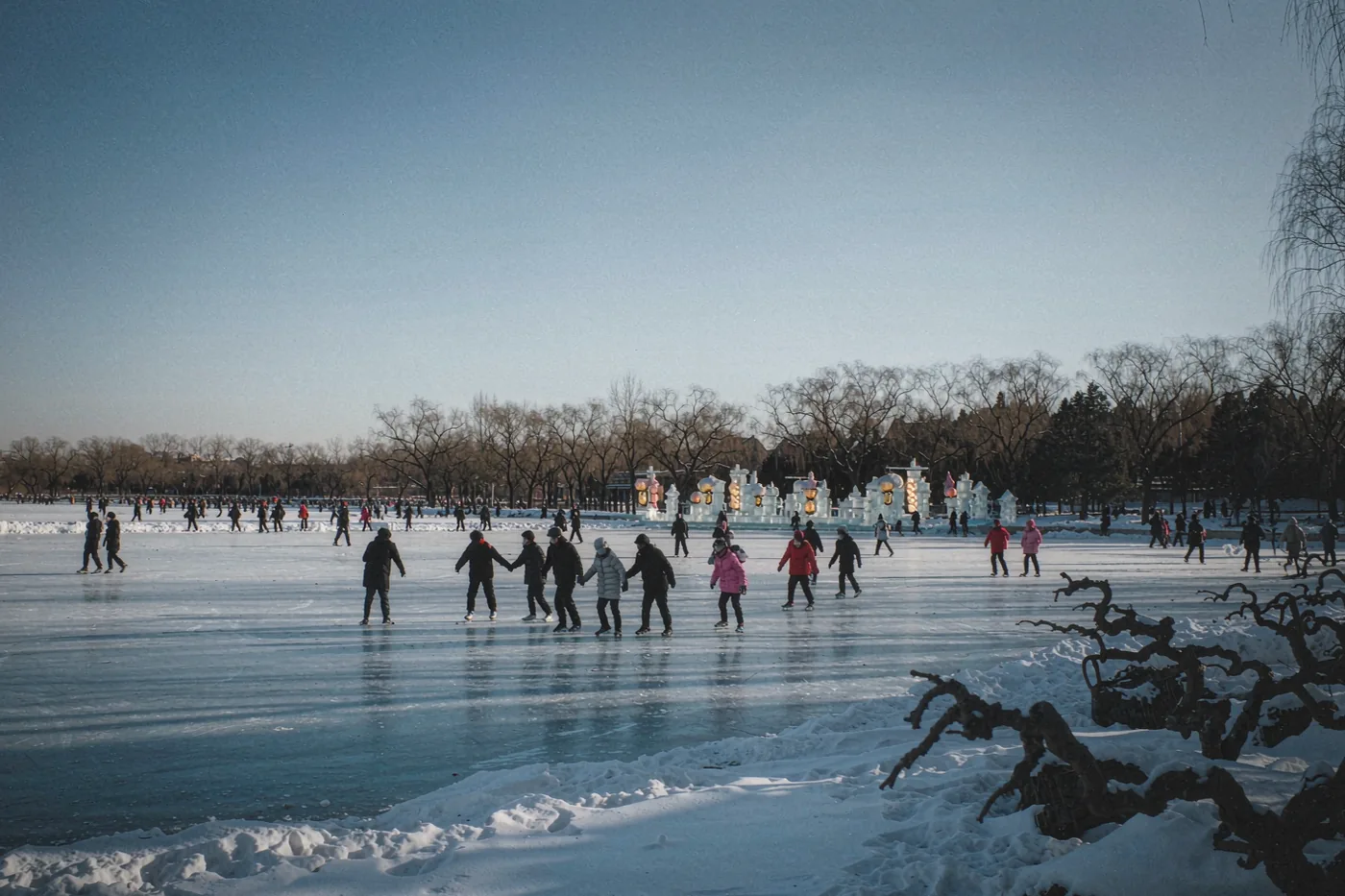
Beijing winters are cold, dry and surprisingly sunny. Daytime highs in December and January typically sit around 0°C to 5°C (32°F to 41°F), and nights regularly drop to -10°C (14°F) or lower. Many Western visitors avoid the season, which means shorter lines at the Forbidden City and cleaner air on clear days. The trade-off: you'll need serious layers, and some outdoor sites feel brutal on windy days. This guide covers what winter adds to the city, how to dress, and which frozen attractions are worth your time.
What Winter Actually Feels Like in Beijing
Beijing has a dry, continental winter. Unlike the damp cold of London or New York, the chill here is biting but predictable, and snow is rare — the city sees only a few light snowfalls most winters. The real challenge is wind: a gusty day at the Great Wall or on Tiananmen Square can feel 5-10°C (9-18°F) colder than the forecast. Hotels, malls, subway cars and restaurants are all well heated, so plan for the cold in bursts — you'll be peeling off layers indoors.
- December–February — Peak cold season. January is the coldest month, with average lows around -8°C to -10°C (18°F to 14°F) [verify before travel].
- Dry air — Humidity is very low. Bring lip balm, moisturizer, and drink more water than you think you need.
- Short days — Sunset falls around 4:45–5:00 PM in December, so schedule outdoor sightseeing early [verify before travel].
- Air quality — Winter traditionally brings higher smog risk, though it has improved dramatically in recent years. Check a real-time AQI app and keep a KN95-style mask handy.
How to Dress for -10°C (14°F) Sightseeing
Think in three layers plus accessories. Locals wear long thermal underwear (qiuxianku) all winter — you should too if you plan to spend hours outdoors. The good news: quality down jackets and thermals are cheap and easy to buy in Beijing at Uniqlo, Decathlon, or local markets, so you can top up on arrival instead of overstuffing your suitcase.
- Base layer — Thermal top and leggings (merino or synthetic, not cotton).
- Mid layer — A fleece or wool sweater over the base; add a second mid layer for the Great Wall or ice festivals.
- Outer layer — A windproof down jacket rated to at least -10°C (14°F). Wind resistance matters more than thickness.
- Extremities — Warm hat, gloves, scarf or buff, and thick socks. Heat escapes from your head — a beanie transforms the experience.
- Footwear — Waterproof, insulated shoes with grip. Sidewalks can be icy after snow or where sprinklers freeze overnight.
- Extras — Disposable heat packs (nuantie, 暖贴) cost about 1-3 CNY ($0.15-$0.45) each at convenience stores — buy a handful.
Shichahai & Houhai Frozen Lakes
Houhai's lake famously freezes solid by late December, and the city opens a public ice playground on it: sleds, ice bikes, skate chairs you push with poles, and thick crowds of laughing locals. It's the most atmospheric winter scene in central Beijing — centuries-old hutongs and drum towers around a white, glittering lake. Grab a hot milk tea or roasted sweet potato from a street stall afterward.
- Metro
- Jishuitan or Gulou Dajie stations — confirm current line and station name before you go.
- Opening hours
- Ice rink generally operates late December through late February, daylight hours only, and only when ice is thick enough [verify before travel].
- Tickets
- Roughly 30-100 CNY ($5-15) depending on activities and equipment rental [verify before travel].
- How long
- 2-3 hours, ideally midday when it's warmest.
Longqing Gorge Ice & Snow Festival
Beijing's answer to Harbin's famous Ice Festival: enormous illuminated ice sculptures, an ice waterfall down the gorge walls, and light shows set against a dramatic canyon about 80 km (50 miles) northwest of the city. It runs roughly mid-January through February. It's a full half-day trip; most visitors take a tour or a Didi (ride-hailing) car since public transit connections involve transfers.
- Metro
- Not metro-accessible. About 1.5-2 hours by car or tour bus from central Beijing [verify before travel].
- Opening hours
- Typically opens mid-January; sculptures are lit for evening visits, which is the best time to go [verify before travel].
- Tickets
- Entrance has historically been around 100-160 CNY ($15-25) [verify before travel].
- How long
- Half day, including travel.
The Great Wall (Mutianyu or Badaling) in Snow
Seeing the Wall dusted in snow with far thinner crowds than autumn is a genuine bucket-list moment. Choose Mutianyu for scenery and a cable car/toboggan, or Badaling for easier train access. Check the weather the night before: a blue-sky day after snowfall is spectacular, but high winds or ice can close sections, and you don't want to be on an exposed rampart in a gale.
- Metro
- Badaling: reachable by high-speed rail from Beijing North or Qinghe Station [verify before travel]. Mutianyu: bus plus shuttle, or private car/tour.
- Opening hours
- Generally 8:00 AM to 4:30-5:30 PM with shorter winter hours [verify before travel].
- Tickets
- Entrance roughly 40-45 CNY ($6-7); cable car and toboggan cost extra [verify before travel].
- How long
- Full day including travel.
Related Beijing guides
If you found this useful, these cover the next question most visitors ask:
Cold-Weather Survival Tips
- Book indoor anchors — Pair every outdoor stop with an indoor one nearby — museums, malls, or a hotpot lunch — so you can thaw out at midday.
- Moisturize everything — The dry air cracks skin fast. Lip balm and hand cream are non-negotiable; buy them at any Watsons or convenience store.
- Charge your phone indoors — Batteries drain rapidly below freezing. Keep your phone in an inside pocket and carry a power bank.
- Eat hot — Winter is the season for Beijing hotpot (shuan yangrou, Mongolian-style lamb hotpot) and braised lamb soup. A bubbling pot is the best 20-minute warm-up there is.
- Layer for the subway — Subway cars and malls are often overheated. Wear layers you can easily stuff in a bag.
- Watch your footing — Black ice lurks on shaded sidewalks. Walk like a penguin on frosty mornings.