Explore Beijing / What to Wear in Beijing: A Season-by-Season Packing and Dress Guide
What to Wear in Beijing: A Season-by-Season Packing and Dress Guide
Beijing swings from sub-zero wind on the Great Wall to 35°C summer humidity. What to actually pack, season by season — plus the temple and mosque dress codes and what is cheaper to buy on arrival.
8 min read · KOULING's Beijing Travel Guide
Beijing punishes the wrong suitcase. Within one trip the city can hand you sub-zero wind on a Great Wall rampart, 35°C humidity in a hutong courtyard, and a restaurant so aggressively air-conditioned that you want your jumper back. It is also a city with a handful of real dress codes and a great many cheap things you should not bother flying in. This is the practical version: what goes in the bag for each season, what the temples and mosques actually require, which single decision matters most (shoes), and what to leave at home and buy here instead.
Beijing's four seasons, in packing terms
The continental climate means the spread between seasons is enormous, and the spread within a single spring or autumn day can be 15°C on its own. Plan for the range, not the average. Autumn is the easiest season to dress for and winter is the one that catches people out — not because it is Siberian, but because of wind and bone-dry air.
Spring (March–May) — Roughly 5–25°C and climbing. Warm afternoons, cool mornings, and March can bring dusty wind from the north.
Summer (June–August) — 25–35°C with real humidity. July and August carry the heaviest rain, usually as short late-afternoon thunderstorms.
Autumn (September–October) — 10–25°C, dry and sunny. The easiest season to pack for; evenings turn cold quickly from mid-October.
Winter (November–February) — Daytime highs around 0–5°C in the coldest months with nights well below freezing. Dry, sunny and often windy.
Layering beats bulk — every season, including summer
Beijing is a city of hard indoor-outdoor swings. Winter means powerful central heating in hotels, malls, subway cars and restaurants; summer means air conditioning turned up high enough that a sleeveless top inside a hotpot restaurant is genuinely uncomfortable. A three-layer system — base, mid, shell — handles both. The one non-obvious rule: in winter, wind resistance matters more than thickness, because a gusty day at the Great Wall or on Tiananmen Square can feel 5–10°C colder than the forecast.
Base layer — A merino or synthetic tee. Synthetic and merino dry overnight in a hotel room; cotton does not.
Mid layer — A fleece or packable light down piece. This is the layer you will be taking off and putting back on all day.
Outer shell — Windproof and, in summer, packable enough to stuff into a daypack for sudden thunderstorms.
Shoes: the decision that makes or breaks the trip
If you optimise one thing, optimise footwear. A full sightseeing day — Forbidden City in the morning, hutongs after lunch, a bar in the evening — easily runs to 15,000–20,000 steps, and the surfaces are unforgiving: polished stone in the palace courtyards, uneven flagstones in the hutongs, and steep, irregular brick ramps on the Great Wall. Wet stone after a summer downpour is genuinely slippery. Do not bring shoes you have not already walked in.
One pair of broken-in walking shoes — Cushioned, closed-toe, with real tread. This is your default shoe for the entire trip.
For the Great Wall — Restored sections such as Mutianyu need grippy closed-toe shoes rather than fashion trainers; undeveloped stretches are a serious hike and deserve proper boots.
One smarter pair — Bars, hotel lounges and fine dining in Beijing are relaxed — smart-casual covers almost everything, and heels struggle on hutong flagstones.
Sandals or flip-flops — Worth packing only for the hotel room and the shower, not for city walking.
Dress codes: temples, mosques and halal restaurants
Beijing is not a strict city, and you will not be stopped at a gate for wearing shorts. But a small amount of modesty changes how welcome you look, and a few places have genuine rules. Inside temple halls, photographs are prohibited nearly everywhere and hats and sunglasses come off before you cross the threshold; step over raised thresholds rather than onto them.
Temples — Cover shoulders and knees, remove hats and sunglasses indoors, and do not photograph inside halls — courtyards and exteriors are usually fine.
Niujie Mosque — Dress conservatively and skip shorts or short skirts. The prayer hall is for Muslims, so treat Niujie as a neighbourhood to walk and eat in rather than a monument to tour — and avoid Friday lunchtime.
Halal (qingzhen) restaurants — No formal dress requirement, but modest clothing reads as respectful in the Muslim quarter and across the city's halal places.
Bars, clubs and hotels — Effectively no dress code. Smart-casual will take you anywhere in Sanlitun, the CBD or a hotel rooftop.
Summer: rain, humidity and the sun umbrella
July and August are hot, sticky and the wettest months, but the rain usually arrives as a sharp late-afternoon thunderstorm and clears within the hour rather than washing out a whole day. Locals do not treat it as a problem: they carry a compact umbrella, and in the summer months a great many people also carry a sun umbrella — a UV-blocking parasol that is completely normal here for anyone, and one of the easiest comfort upgrades you can make for the same money as a coffee.
Compact umbrella — Bring one or buy one within an hour of landing — convenience stores and supermarkets sell them cheaply.
Sun umbrella — A UV parasol is ordinary street furniture in Beijing summer and far more comfortable than reapplying sunscreen every hour.
Quick-dry clothing — Cotton stays wet against the skin for hours in this humidity; technical fabrics dry between sights.
One light long-sleeve layer — For aggressive indoor air conditioning, which in summer is the most common reason visitors get chilled.
Winter: wind, dry air and what to buy after you land
Winter Beijing is quieter, cheaper and — if you pack correctly — genuinely excellent: crisp blue skies and near-empty sights. The two things that defeat visitors are wind and dryness. Wind turns a tolerable forecast into a raw one on open ground, and indoor heating is turned up high, so you will be stripping layers every time you step inside. The air is also extremely dry, and chapped lips are the most consistent complaint.
Windproof outer layer — Rated for temperatures at or below freezing, with wind resistance prioritised over sheer bulk.
Heat packs — Disposable pocket warmers cost roughly ¥1–3 each at convenience stores. Buy a handful rather than flying them in.
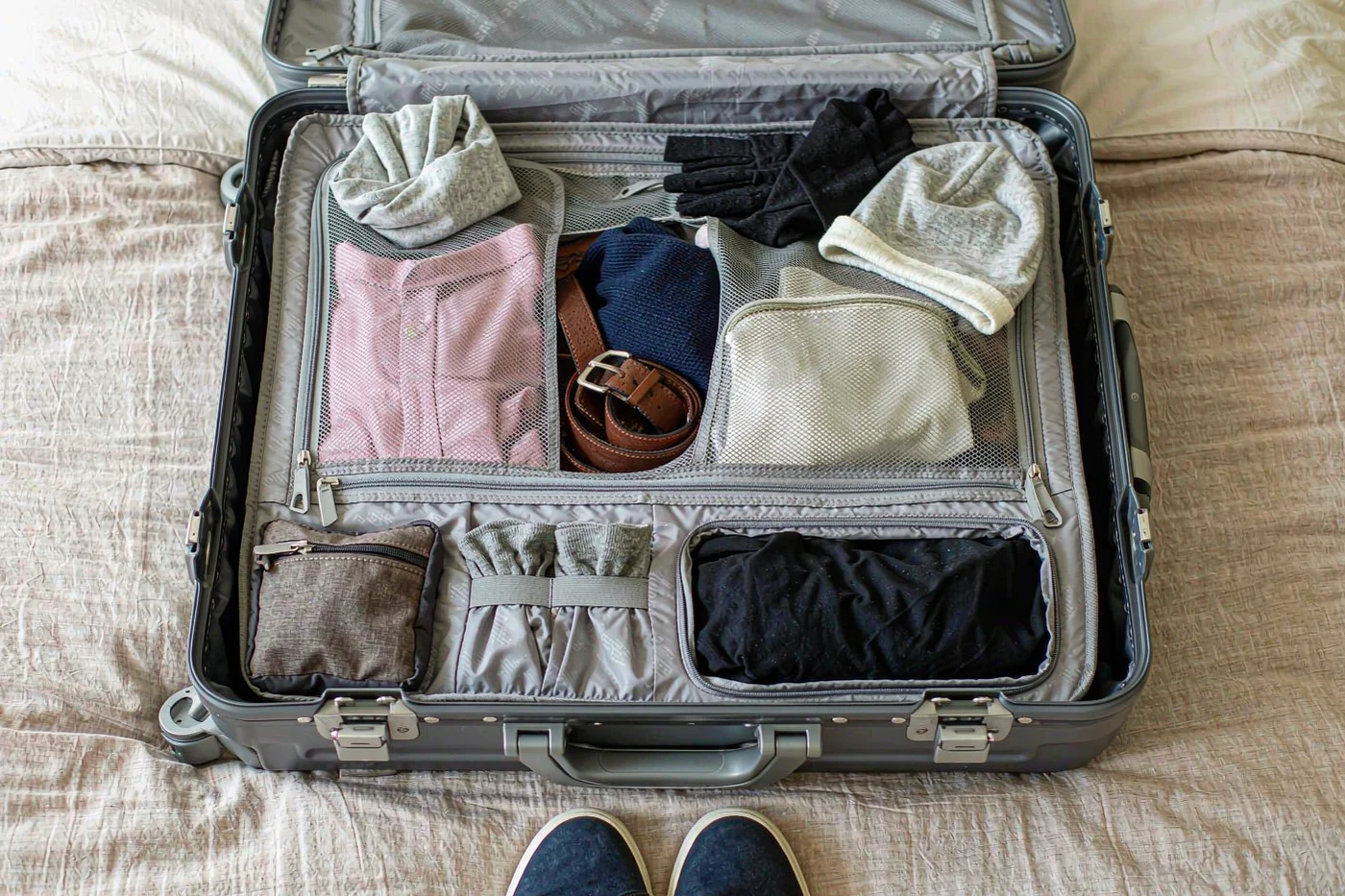
Gloves, beanie and scarf — Small, cheap and the difference between a pleasant hour at the Summer Palace and a short one.
Lip balm and hand cream — The dry air and heated interiors are relentless. Hotels supply some, but bring your own.
What not to pack: buy it after you arrive
Beijing is one of the easiest cities in the world to resupply. Convenience stores such as 7-Eleven, Lawson and FamilyMart sit on most central blocks, supermarkets stock Western brands, and pharmacies are dense and cheap. Anything bulky, generic and inexpensive is a waste of luggage allowance. There is one exception: prescription medication. Bring what you need from home rather than planning to replace it here.
Umbrellas, heat packs, phone accessories — Available within a few hundred metres of almost any hotel and priced for locals, not tourists.
Toiletries, sunscreen and tissues — Supermarkets and convenience stores cover all of it. Tissues matter especially — public toilets do not supply paper.
A winter jacket — If you do not already own a proper one, buying on arrival is often cheaper than buying at home and saves the luggage space.
Prescription medication — The one thing to bring with you, in original packaging, along with a copy of the prescription.
Two logistics that let you pack less
Power and laundry are what make a light suitcase viable. China runs on 220V / 50Hz with Type A, Type I and Type C sockets, so a universal adapter is non-negotiable, and if your phone dies mid-day you can rent a shared power bank from a kiosk or café with Alipay or WeChat. On laundry, both same-day hotel service and self-service laundromats are easy to find, which means packing for four or five days and washing once is a perfectly reasonable strategy.
Universal adapter plus power bank — 220V / 50Hz; shared power-bank rental kiosks are everywhere if you forget yours.
Pack for half the trip — Quick-dry fabrics plus one laundry stop means a cabin-size bag is realistic even for ten days.
The core checklist — any season
Broken-in walking shoes — Cushioned, closed-toe and grippy. Never a brand-new pair.
Universal adapter and power bank — 220V / 50Hz with Type A, I and C sockets in use.
Three-layer clothing system — Base tee, fleece or light down, windproof shell.
Compact umbrella and quick-dry clothes — Useful in every season — summer storms and sudden AC alike.
One shoulders-and-knees outfit — For temples, Niujie Mosque and the Muslim quarter.
Passport copies and prescription medication — Bring medication from home in its original packaging.
Add by season
Spring — Light jacket, sunglasses, a scarf for dusty wind, and allergy medication if pollen affects you.
Summer — Sun umbrella, sunscreen, insect repellent and one or two spare quick-dry shirts.
Autumn — A proper mid-layer for evenings — from mid-October the temperature drops fast after sunset.
Winter — Windproof down jacket, gloves, beanie, lip balm and a pocket of disposable heat packs.