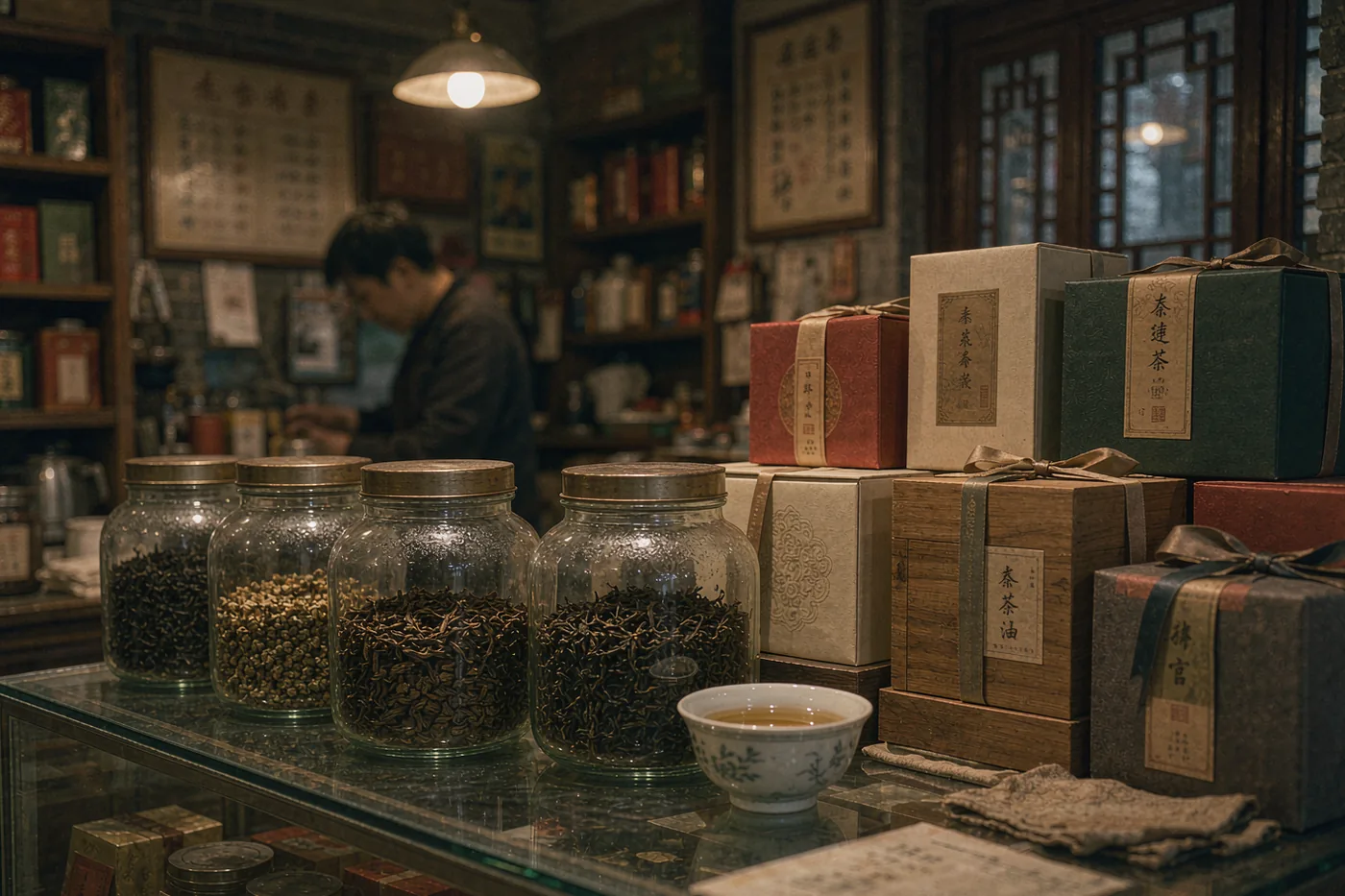
From jasmine tea to cloisonné, a practical guide to shopping for gifts in Beijing without overpaying or falling for tourist traps.
Beijing is one of the best places in China to shop for gifts, especially tea. But between glittering tourist malls and unmarked backstreet shops, prices and quality vary wildly. This guide covers what's genuinely worth buying, what to skip, and where first-time visitors should go. Bring cash or set up mobile payment before you go [verify before travel], as some smaller stalls still don't take foreign cards.
Tea is the safest, most appreciated gift you can carry home. Beijing is famous for jasmine-scented green tea (moli huacha), and a good tin costs far less than equivalent quality in the West. A mid-range gift tin typically runs 100–300 CNY (roughly 15–45 USD) [verify before travel]. Skip the cheapest dust-grade tea bags and the wildly expensive 'aged pu-erh' marketed at tourists — unless you know tea, you can't judge it. Ask to smell and, if possible, taste before buying.
Beyond tea, a few Beijing specialties hold up as gifts. Cloisonné (jingtailan) enamel vases and bracelets are the city's classic craft; small pieces start around 50–150 CNY (about 7–25 USD) [verify before travel]. Seals carved with your name in Chinese, silk scarves, and paper cuttings are also popular. Food gifts like candied fruit (guo-dan-pi style snacks), osmanthus cakes, and rainbow-layered candy travel well. Avoid anything marketed as 'antique' — genuine antiques require export permits and replicas are everywhere [verify before travel].
Bargaining is expected at markets but not in proper tea shops or department stores. A polite opening counter-offer of 40–50% of the asking price is normal at places like Panjiayuan; settle somewhere in the middle [verify before travel]. Check quality carefully: look at the actual leaves, ask for the production date on tea packaging, and never buy loose tea that's been sitting in open bins. Keep receipts, and remember that liquids and tea tins need to go in checked luggage on flights.
One of Beijing's oldest and most trusted tea brands, founded in 1900, with a well-known flagship near Qianmen. Staff are used to visitors, prices are fixed, and quality is consistent — a safe first tea purchase. English may be limited, so point and sample.
A whole street dedicated to tea wholesale and retail in Beijing's west — hundreds of shops under one district. Prices are lower than tourist areas and the range is enormous, but quality varies and English is rare. It's the place to go once you know roughly what you want.
Beijing's famous weekend flea market for crafts, 'antiques', beads, calligraphy, and curios. Haggling is essential and fakes are plentiful, but the atmosphere is fantastic and small gifts (paper cuttings, ornaments, cloisonné) are cheap. Weekends are busiest and best; many stalls close on weekdays.