Explore Beijing / Riding the Beijing Subway with Big Suitcases: Elevator-Friendly Lines, Transfers and Exits from PEK and PKX
Riding the Beijing Subway with Big Suitcases: Elevator-Friendly Lines, Transfers and Exits from PEK and PKX
Which Beijing subway lines and transfer stations are easiest with heavy luggage from Capital (PEK) and Daxing (PKX) airports — plus how to find lifts and which exits to use.
6 min read · KOULING's Beijing Travel Guide
The Beijing Subway is cheap, fast and extensive — but not every station is kind to a 28-inch suitcase. Older stations rely on long staircases, while newer lines (and all airport express lines) have lifts and wide gates. This guide shows you the elevator-friendly routes from Capital Airport (PEK) and Daxing Airport (PKX) into the city, which transfer stations to seek or avoid, and how to find the lift at almost any station. Fares are low — a typical airport-to-centre ride runs roughly CNY 4–7 (about US$0.60–1.00) [verify before travel].
Start at the Airport: Two Express Lines Built for Luggage
Both major airports have dedicated express rail links with space for bags and step-free access from the terminal. These are your best first legs — you can reach a central hub station before you ever touch a staircase.
Capital Airport Express (from PEK) — Serves Terminal 3 and Terminal 2, then stops at Sanyuanqiao and Beixinqiao in the city. Trains have luggage racks, but you must first confirm the current route and interchange stations, as connections have changed in recent years [verify before travel].
Daxing Airport Express (from PKX) — Links Daxing Airport to Caoqiao and on toward central Beijing, with fast, spacious trains. The express line costs more than a standard subway ride [verify before travel]. Some services continue to Beijing West railway station — confirm current routing and fares [verify before travel].
Buy tickets or tap in — Single-journey machine tickets cost a few CNY (US$ under 1) for normal lines; some machines and gates accept foreign contactless cards, but having Alipay/WeChat Pay set up makes everything smoother [verify before travel].
Elevator-Friendly Lines and the Transfers to Favor
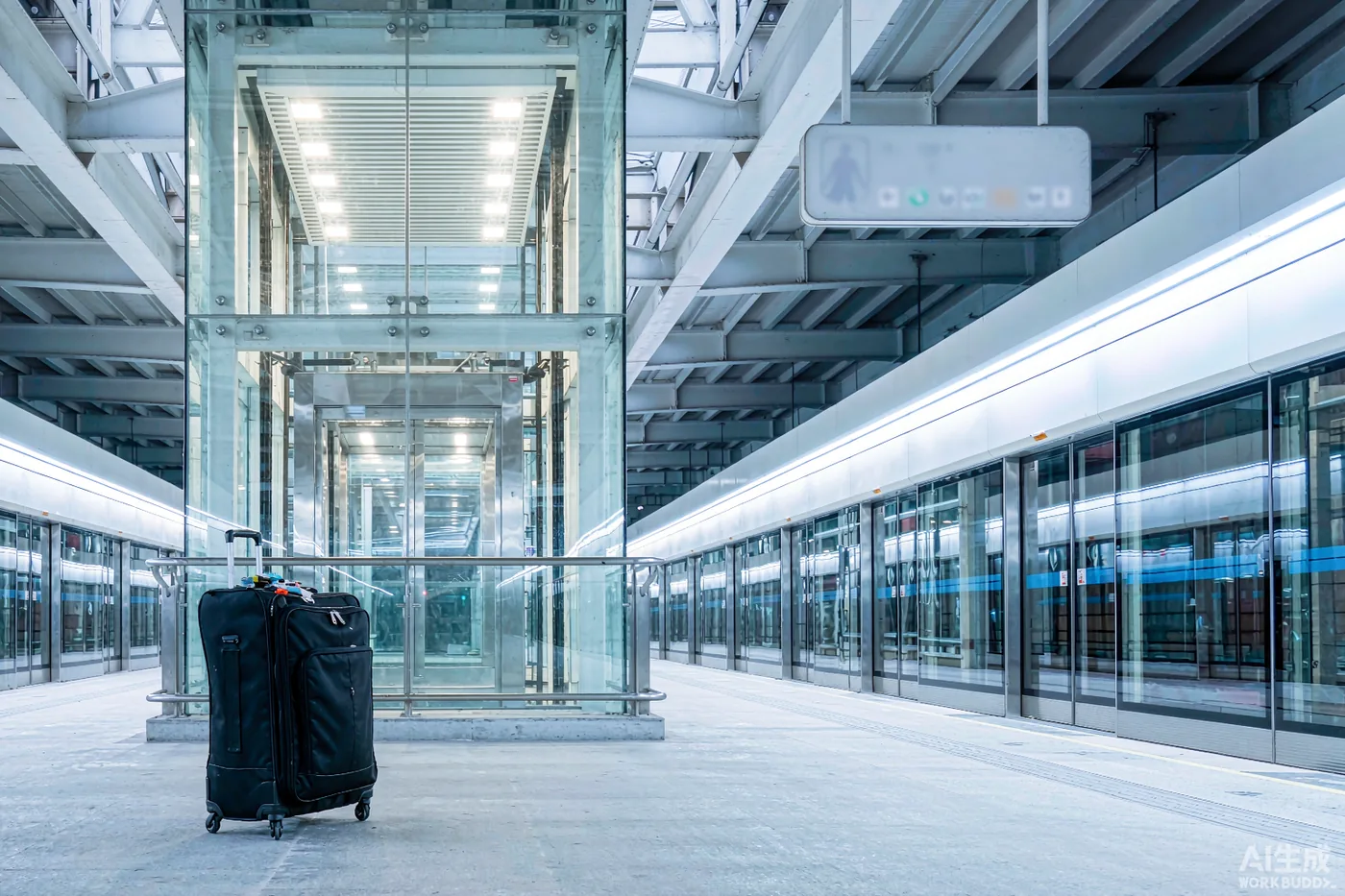
Newer lines — roughly those opened in the 2010s and later — have lifts at every station and wide, tall platform-screen doors. Older downtown stations can mean deep staircases, so plan transfers with that in mind.
Generally lift-friendly lines — Newer lines such as Line 8's southern extension, Line 9, Line 14 and the airport express lines typically have elevators from street to platform. Always confirm lift location on the station map or ask staff for the wu zhàngtī (无障碍电梯, accessibility elevator).
Transfers that treat luggage well — Caoqiao (Daxing Airport Express to Line 10) and Beixinqiao are modern interchanges with lifts and moving walkways. Big hubs like Dongzhimen and Xizhimen work but involve long walks — allow extra minutes with bags.
Transfers to be careful with — Very old interchanges in the city centre can require stair-only passages on some legs. If your route includes a maze-like transfer, look for the accessibility elevator symbol on directional signs, or take one more stop and cross at street level using lifts at both ends.
Exits and street access — Exits are lettered (A, B, C, D). At least one exit at a modern station has a lift or ramp — the station map on the platform and inside the ticket hall marks which. Locate the accessible exit before you leave the platform.
How to Find the Lift at Any Beijing Station
You do not need Mandarin fluency — a few symbols and phrases solve 90% of lift-hunting.
Look for the wheelchair symbol — Blue signs with a wheelchair icon mark accessibility elevators. Follow them from the concourse; they may lead you slightly out of your way, but they get you street-to-platform without stairs.
Ask or show a phrase — Say or show: 无障碍电梯在哪里? (Wúzhàng'ài diàntī zài nǎlǐ? — 'Where is the accessibility elevator?') Staff and most younger commuters can help; translation apps also work well in stations.
Security screening reality — Every station entrance has an X-ray scanner; you must lift bags onto the belt. Oversized or very heavy cases are fine — staff will wave big luggage through the wide lane, sometimes with a hand-check.
Wide gates and boarding — Look for the wider accessible gates at the ends of the fare-gate rows — suitcase-friendly. Platforms are level with trains, so rolling on and off is easy.
Capital Airport (PEK) → City Centre
Take the Capital Airport Express from your terminal into the city, transferring once at a modern hub. Expect roughly 25–35 minutes on the express plus your onward subway leg; total door-to-door in the central districts is usually 60–90 minutes depending on your hotel's line. Confirm current express route, stops and fare before travel [verify before travel].
Metro
Capital Airport Express, then interchange in the city — confirm current line and station names [verify before travel]
Opening hours
Airport express runs roughly from early morning to late night, with trains every 10–20 minutes [verify before travel]
Tickets
Approximately CNY 25–30 (about US$3.50–4.50) for the express leg; standard subway CNY 3–7 onward [verify before travel]
How long
About 60–90 minutes door to door to central Beijing
Daxing Airport (PKX) → City Centre
The Daxing Airport Express is fast and luggage-friendly, connecting the striking new terminal to the subway network in under 30 minutes. From the interchange at Caoqiao you can continue on Line 10 or other lines. Some trains run non-stop or limited-stop — check the departure board for your service [verify before travel].
Metro
Daxing Airport Express, interchange at Caoqiao (Line 10) — confirm current through-running and stops [verify before travel]
Opening hours
Roughly early morning to late evening; last trains vary [verify before travel]
Tickets
Roughly CNY 10–35 (about US$1.50–5) depending on service class [verify before travel]
How long
About 19–30 minutes airport to Caoqiao; 45–75 minutes total to central districts
Alternative: Airport Shuttle and Taxi Basics
If your hotel is not near a lift-equipped station, an airport shuttle bus or a taxi may spare your arms entirely. Official taxis from PEK to the city centre cost roughly CNY 100–150 (US$15–21) and from PKX roughly CNY 150–220 (US$21–31) [verify before travel]. Use official taxi ranks only, and keep your hotel's address in Chinese characters handy.
Metro
Not applicable — taxi and shuttle bus options from both airports
Opening hours
Taxis available whenever flights arrive; shuttle buses run on schedules [verify before travel]
Tickets
Metered taxi as above; shuttle buses a few tens of CNY [verify before travel]
How long
45–90 minutes to central Beijing depending on traffic and airport
Luggage Survival Tips for the Beijing Subway
Travel off-peak — Avoid roughly 7:30–9:30 and 17:30–19:30 on weekdays. Rush-hour crushes make a suitcase miserable, and lifts get crowded too.
Bank your energy at big hubs — Interchange walks at stations like Xizhimen or Dongzhimen can take 10+ minutes. If you have two big bags, consider a taxi for the last leg instead.
Elevators can be tucked away — Some lifts sit inside the paid area or on one specific corner; follow the wheelchair signs or ask staff rather than wandering with a loaded trolley.
Mind the last train — Subway service ends around 23:00 at most stations [verify before travel]. If you land late, budget for a taxi.
Keep CNY small change or e-payment ready — Ticket machines take cash and increasingly foreign cards, but setting up Alipay or WeChat Pay before arrival saves queue time [verify before travel].