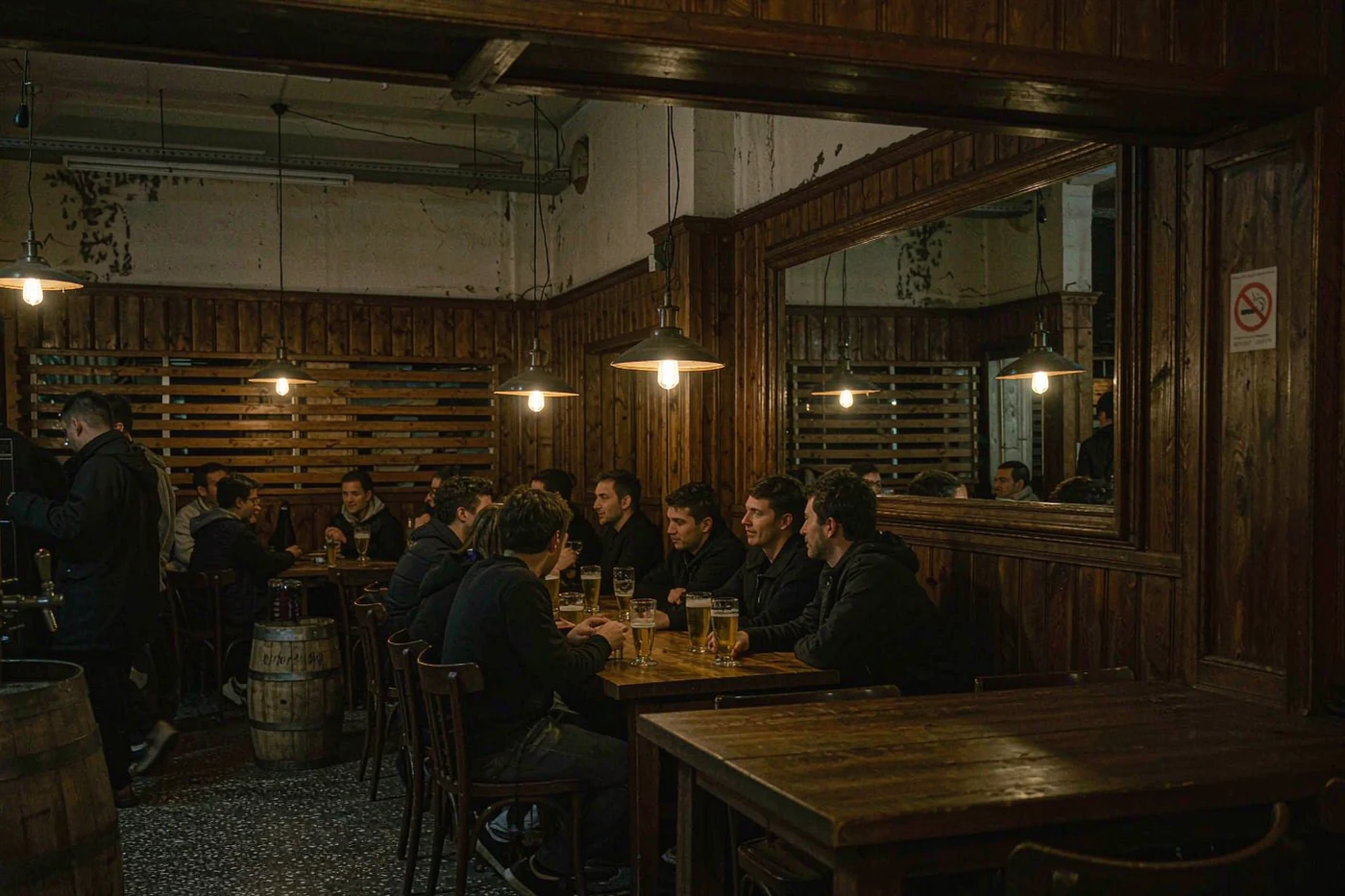
Indoor smoking is banned outright, alcohol is sold around the clock, and quiet hours start at 22:00. The real fines, the drink-driving threshold, and the two rules that changed in 2026.
Smoking, drinking and noise are the three areas where Western visitors most often assume Beijing works like home — and they are also three of the few areas where the rules are written down with published penalties attached. This is not an etiquette guide. It is about the things that can actually cost you money, cost you a night in a police station, or end your trip early. The drink-driving section deserves a read even if you never get behind a wheel: the legal threshold is low enough that one beer can put a light person over it, and it is a national limit, not a Beijing one.
Beijing's smoking rules come from the municipal smoking-control regulation that took effect on 1 June 2015, and they are among the strictest in the country. All indoor areas of public places and workplaces are smoke-free — not smoke-free with a ventilated room attached. Purpose-built smoking rooms were removed, so a bar, restaurant, mall, airport lounge or hotel lobby still advertising one is either working from an old sign or in breach. Public transport is included, and so are several outdoor places: kindergartens, schools, children's palaces and child-welfare institutions, open heritage sites, the competition and seating areas of stadiums and fitness venues, and maternal-and-child health and children's hospitals. One rule catches visitors out more than any other: you may not smoke while standing in a queue, wherever that queue happens to be.
The individual penalty is deliberately modest. An officer can tell you to stop and issue a ¥50 fine on the spot, rising to ¥200 if you refuse to put it out. Smoke somewhere mainly used by minors and the range jumps to ¥200–500 with a formal warning attached. The venue carries the real risk: operators who fail to put up signs, keep ashtrays out, or ask a smoker to stop face ¥2,000–5,000, and up to ¥10,000 for some breaches. That gap explains why staff will almost always ask you to stop long before anything reaches a fine. If you refuse and the situation turns into a disturbance, or you obstruct enforcement, it stops being a health matter and becomes a public-security one.
Enforcement is complaint-driven, so you will still see people smoking in restaurant toilets, in the corners of bars and in building entrances. Do not read that as permission — one complaint from another customer is usually enough to start a fine for the venue. The workable approach is simple: step outside, look for a marked smoking point (most large malls, office complexes and some stations set one near an exit), and stand away from doorways and from any queue. Hotels are the one place where you get a real choice. Most mid-range properties and above have smoking floors or smoking rooms; if you light up in a non-smoking room you are breaching your booking rather than a city regulation, and hotels typically charge a deep-cleaning fee that varies a lot by property.
E-cigarettes are regulated nationally as tobacco products. Since 2022 they may only be sold through licensed channels on the national trading platform, they must not be sold to anyone under 18, and the national standard removed non-tobacco flavours — a fruit-flavoured vape on a Beijing shelf is either old stock or not legitimate retail. Beijing's 2015 smoking regulation predates vaping, and how individual venues apply it varies. The safe assumption is the simple one: if you would not light a cigarette there, do not vape there either. ⚠️ 待人工确认: whether a specific venue or district formally treats indoor vaping as a smoking violation.
China has no statute making it an offence for a young person to drink, which is why visitors hunting for a single legal drinking age will not find one. What the law does instead is place the obligation on the seller. The Law on the Protection of Minors bans selling tobacco, alcohol or lottery products to anyone under 18, requires a sign saying so in a prominent position, and requires the seller to ask for ID when age is unclear. It also bans tobacco, alcohol and lottery outlets near schools and kindergartens. The penalties run against the business, not the buyer: correction orders, confiscation of any gain, fines up to ¥50,000, and for repeat or serious cases suspension, or revocation of the licence with fines up to ¥500,000.
There is no citywide cut-off for alcohol bought to take away. Convenience chains such as 7-Eleven, Lawson and Bianlifeng sell beer and spirits around the clock, supermarkets sell until they close, and licensed tobacco-and-liquor shops keep long hours. Drinking in a park, on a street-food strip or in a hired courtyard is legal — China has no open-container law and no general ban on drinking in public. What does draw attention is behaviour. Drunken conduct that disturbs other people can be dealt with by police under public-security rules, and a loud group arriving back at 01:00 is far more likely to cause you a problem than the drinking itself.
This is the one rule on the page that can genuinely end a trip. National thresholds are 20mg of alcohol per 100ml of blood for drinking-driving and 80mg for drunk-driving. The lower figure is low enough that a single beer can put a light person over it, which is why one drink is not a defence. Drinking-driving means a six-month licence suspension plus a ¥1,000–2,000 fine; a second offence brings up to ten days' detention, the same fine and revocation of the licence. At 80mg and above it becomes the criminal offence of dangerous driving: detention, a fine, revocation of the licence and a five-year ban on reapplying, or ten years for commercial vehicles. The limits are not limited to cars — motorbikes and powered two-wheelers are covered, riding a bike while drunk is prohibited, and moving a car a few metres across a car park still counts as driving.
Chinese residential noise standards define 06:00–22:00 as daytime and 22:00–06:00 as night, and the national sound-environment quality standard sets residential limits of 55 decibels by day and 45 at night. Forty-five decibels is not much headroom — it is roughly a normal conversation heard through a wall. The night window is the one that matters to visitors, because hotel corridors, hutong courtyard rentals and compound courtyards all count as residential. A group coming back at 01:00 is making noise in the window where the limit is lowest and neighbours are most likely to pick up the phone.
Two national changes land directly on this topic. From 1 January 2026, the revised Public Security Administration Punishments Law added a dedicated social-noise provision: where noise continues after the community, the owners' committee, the property manager or the authorities have already warned, mediated or handled it, the penalty is up to five days' detention or a fine of up to ¥1,000, rising to five to ten days' detention with a possible further ¥1,000 in serious cases. That is a move from a small fine to detention plus fine, and it makes police the enforcement channel. From 15 August 2026 the Ecology and Environment Code added rules for public-space activity: square dancing, outdoor singing and outdoor livestreaming must stay within the area, hours and volume set by the site manager, and after education and an order to correct, individuals face ¥200–1,000 and organisers ¥2,000–20,000. ⚠️ 待人工确认: the exact article numbers and local implementing rules of the code.
If noise is wrecking your nights, start with the building. Hotel reception or the property management office can usually end it in minutes, and that is also the step the law expects first. Failing that, the city service hotline 12345 takes complaints and routes them to the right department; for something happening right now after 22:00, 110 reaches police, who can attend and warn on the spot. Keep evidence — a short video with the timestamp visible, or a decibel reading from a phone app — because a noise complaint with nothing behind it tends to stall. On the other side of the door, the easy ways to stay clear of trouble: keep corridor and courtyard conversations short after 22:00, do not use a speaker in a courtyard rental, and if you are booking a hutong guesthouse for a group, ask whether the courtyard is shared with long-term residents.