Explore Beijing / Beijing Science Museums for Families: Dinosaurs, Hands-On Science and the Planetarium
Beijing Science Museums for Families: Dinosaurs, Hands-On Science and the Planetarium
The three Beijing museums genuinely worth a morning with children — the free national natural history museum at Tianqiao, the hands-on national science museum in the Olympic Park, and the planetarium beside the zoo — plus the booking rules that decide whether you get in at all, and the passport step foreign visitors hit at the ticket window.
9 min read · KOULING's Beijing Travel Guide
Beijing has dozens of museums, but only a handful reward a visit with children, and three of them sit at the top: the national natural history museum with its dinosaur hall, the national science museum where almost every exhibit can be touched, and the planetarium next to the zoo with real moon samples. All three are cheap or free, all three are reachable by metro, and all three are genuinely difficult to get into — not because of the price but because tickets are released at fixed times and disappear. This guide covers what each one is actually good for, how the booking systems work, and the one step that catches foreign visitors: a passport booking cannot be swiped at the turnstile.
National Natural History Museum of China — free, but book it
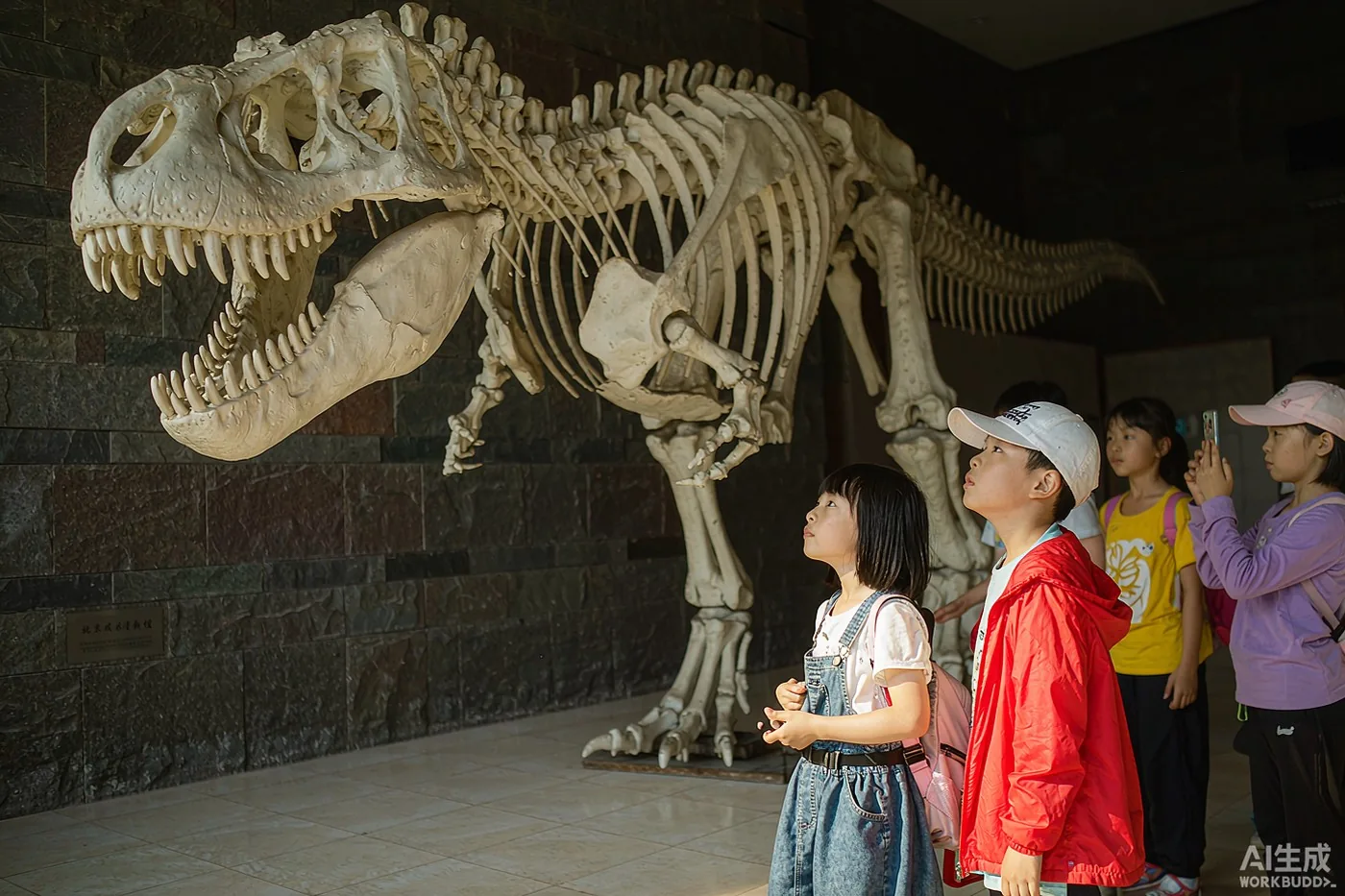
Renamed from Beijing Natural History Museum in 2023, this is the one that makes children stop mid-sentence.
Getting there — Tianqiao South Street 126, Dongcheng. Metro line 8 to Tianqiao, exit B, roughly 200 m on foot. No dedicated car park — drivers use the Tianqiao Art Centre (around RMB 10 per hour).
Hours and closing day — 09:00–17:00, last entry 16:30, closed Mondays except public holidays. Three entry windows: 09:00–11:00, 11:00–14:00 and 14:00–16:00.
Free, but only with a booking — Admission is free and no on-site booking exists. Reserve on the official site or WeChat account 国家自然博物馆 three days ahead; tickets release at 11:00 daily and weekend slots go within minutes.
What to actually see — Ground floor: the Mamenchisaurus skeleton and the Yellow River elephant. Upper floors: the African hall and human origins. Basement: the aquatic hall and the human body gallery. Allow 2.5–3 hours.
Do not come for the moving dinosaurs — Dinosaur Park, the animatronic hall in the basement, has been closed since mid-March 2026. Check the official account before promising a child robotic dinosaurs.
Foreign passports — read this — Passport and foreign permanent residence ID are accepted as booking documents. But only mainland ID cards can be swiped at the gate: passport holders must bring the physical passport plus the booking confirmation to the ticket window to exchange for a paper ticket.
Practicalities — No proper restaurant inside, only snacks at the shop. Air conditioning is fierce, so carry a light layer. Free lockers, drinking water, baby-changing. Audio guides in Chinese, English, Japanese and Korean.
Easy pairing — Temple of Heaven is a short metro hop away, which makes this a natural half-day with a park.
China Science and Technology Museum — the hands-on one
The national science museum in the Olympic Park, and the one where children are allowed to touch almost everything.
Getting there — Beichen East Road 5, Chaoyang, inside the Olympic Park. Metro line 8 to Olympic Park, exit G, about 8 minutes on foot to the west entrance. Entry is west gate only; the east gate is exit-only. Lines 8 (Forest Park South Gate) and 15 (Anli Road) also work.
Hours and closing day — Tuesday to Sunday 09:30–17:00, closed Mondays except public holidays, and closed over Chinese New Year's Eve and the first two days of the new year. Last-entry time is published as 16:00 by the museum and 16:30 by some ticketing platforms — treat 16:00 as the safe assumption.
Tickets — Main exhibition halls: RMB 30 adults, RMB 20 students. Free for children under 8 or under 1.3 m, seniors 65 and over, military and disabled visitors (one adult may bring up to three free children).
Children's Science Paradise — In the basement, for ages 3–8 only, RMB 30 per person with adults paying the same. Two sessions — 09:30–12:50 and 13:40–17:00 — and the hall is cleared between them, so the two sessions cannot be combined.
Booking — WeChat account 中国科学技术馆, released seven days ahead at 18:00. Real-name, and free-ticket visitors must still book. Refunds are often released between 07:00 and 08:00 on the morning of the visit, which is the best time to retry.
How to walk it — Floor 4 is the aerospace hall with the Shenzhou re-entry capsule, a Tianhe core module section and a rocket engine; floor 3 is robots and AI; floor 2 is physics you can ride; floor 1 is ancient Chinese technology. Seeing the whole main hall properly takes six to seven hours.
No parking — The museum provides no parking. Free lockers by the west entrance, drinking water on every floor, and no proper restaurant — walk to the shopping centre next door for a real meal.
Beijing Planetarium — moon samples and a dome screen
Small, cheap, right next to the zoo, and the only one of the three where children can touch a real meteorite.
Getting there — Xizhimen Outer Street 138, Xicheng, immediately beside Beijing Zoo. Metro line 4 to Zoo, exit D, one or two minutes to the east gate. No public car park.
Hours — note the different closing day — 09:00–16:30, last entry 16:00, and closed on Tuesdays rather than Mondays (except public holidays). Summer hours are often extended, commonly to around 19:00; check before an evening visit.
Tickets — Exhibition halls RMB 10 per person. Theatre tickets (Cosmos or Space theatre) RMB 45, and buying a theatre ticket normally covers the halls too, which makes it the better value. 4D and 3D theatres around RMB 30. Under-18s enter the halls free; students and seniors half price.
Booking — WeChat account 北京天文馆, real-name purchase, with tickets for the next three days refreshed at about 18:30 daily. There is no box office for walk-ups.
Building B is the one to prioritise — The newer Building B holds the lunar exhibition with real Chang'e-5 moon samples, a solar hall, the eight planets, and meteorites you can actually touch. Its basement has black-hole and rocket-launch interactives.
Building A is the old one — Foucault pendulum, the vintage planetarium projector and the dome screen of the Cosmos theatre. Worth twenty minutes if you have time, not worth a detour on its own.
Pair it with the zoo — Beijing Zoo is literally next door, which turns this into an easy full day for younger children.
The real barrier is the booking, not the price
All three use real-name, fixed-time-release systems, and all three sell out for weekends and school holidays.
Release times differ — Natural history: three days ahead, released 11:00. Science museum: seven days ahead, released 18:00. Planetarium: rolling three days, refreshed about 18:30.
Set an alarm and pre-fill — Add every visitor as a contact in the WeChat account beforehand. On release, seconds matter, and typing passport numbers is what loses the slot.
Everyone needs a reservation — Children, infants and seniors all need their own booking. At the natural history museum, under-12s cannot be booked alone, and a cancelled booking cannot be re-made for the same day.
Do not be late — Miss your time window and entry is refused. At the natural history museum, three no-shows in a month blocks the account for 90 days.
Passport holders — The natural history museum explicitly accepts passports as a booking document but requires collecting a paper ticket at the window. For the science museum and planetarium, check the document-type options in the WeChat account before assuming — these are worth confirming by phone if your trip depends on them.
Choosing one by age and energy
You will not do two of these in a day without a meltdown. Pick one.
Ages 3–8 — The science museum's Children's Science Paradise if you can get a slot, otherwise the planetarium's Building B, where touching a meteorite beats reading a label.
Ages 6–12 — The natural history museum for the dinosaur skeletons, or the science museum for the sheer number of things to press. The science museum wins on a rainy day.
Teenagers and adults — The science museum's floor 4 aerospace hall, with real Shenzhou hardware, and the planetarium's dome theatre.
Half a day only — The natural history museum and the planetarium each take about 2.5–3 hours. The science museum cannot be half-done — a half day there means seeing a third of it.
The pairing that works — The science museum sits inside the Olympic Park, so it combines with the Bird's Nest and Water Cube exteriors. The other two are in the south and west of the city and do not pair with each other conveniently.
Once you are there
Small logistics that decide whether the morning goes well.
Metro is the only sane option — The science museum has no parking, the planetarium has none, and the natural history museum has none of its own. All three are directly on a metro line.
Check the closing day twice — The natural history museum and the science museum close on Mondays. The planetarium closes on Tuesdays. This is the single most common way people waste a morning.
Food — None of the three has a proper restaurant. Bring snacks and an empty bottle — the science museum has drinking water on every floor. The science museum is the only one with real meals nearby.
Comfort — All three are heavily air conditioned in summer, so a light layer helps. Strollers can be hired, large bags can be left in free lockers, and flash and tripods are banned throughout.
Family science museum checklist
Book first, plan later — Secure the slot before building the day around it — the booking is the scarce resource, not the ticket price.
Closing days differ — Monday closes the natural history and science museums; Tuesday closes the planetarium.
Passport to the window — At the natural history museum, passport bookings are collected at the ticket window, not swiped at the gate.
No robotic dinosaurs — Dinosaur Park has been closed since mid-March 2026. The skeletons are still there and still impressive.
Retry at 07:00–08:00 — Science museum refunds are often released early on the morning of the visit.
Snacks and a bottle — No proper restaurant in any of the three; drinking water is available inside.
Two to three hours each — Except the science museum, which needs most of a day to do properly.
Carry passports — Real-name entry means the document you booked with is the document you must present.