Explore Beijing / Beijing Scams & Tourist Traps to Avoid
Beijing Scams & Tourist Traps to Avoid
The handful of scams that target foreign visitors in Beijing — and exactly how to spot and avoid each one.
4 min read · KOULING's Beijing Travel Guide
Beijing is a safe city for travellers, but a small number of scams specifically target people who are visibly foreign. They follow predictable scripts, so once you know the patterns you can sidestep all of them. None of this should make you paranoid — just aware.
The 'art student' and teahouse scam
The most common script: a friendly young person starts a conversation in English, says they are an art (or language) student, and invites you to a nearby teahouse or gallery 'just to practise English'. The bill then arrives for hundreds of dollars.
It always ends at a private teahouse or gallery — Real students don't steer you to a specific venue. Politely decline and suggest a public cafe instead.
Never let a new acquaintance order for you — Once food or tea is served, you are on the hook for the price.
Walk away if the bill looks wrong — If pressured, move to a busy public area and call your hotel or 110.
Fake monks and 'temple donations'
People in robes near major temples or on pedestrian streets may ask for a 'donation' or offer a blessing with a requested fee. Genuine monks do not solicit on the street.
Real monks don't approach tourists for money — Donations at temples go through official boxes inside the temple, never a clipboard on the street.
A 'free bracelet' usually isn't — If someone ties a string on you and then demands payment, that's a scam — hand it back and walk on.
Taxi and ride-hail tricks
Most Beijing taxis are honest and metered, but a few tactics target newcomers.
Insist on the meter — A driver who says 'meter broken' or quotes a flat rate before starting is one to avoid — step out.
Use Didi when you can — The app shows the fare, the route and the driver; payment is automatic, so there is nothing to argue about.
Airport touts — Inside the terminal, use the official taxi queue or Didi; ignore people who approach you offering a 'cheaper' ride.
At the airport and train station
Crowded transit hubs are where touts cluster.
Official taxi ranks only — Follow the signs to the marked taxi queue; uniforms and meters are your friend.
'Your hotel is closed / full' is a lie — A common trick to redirect you to a commission hotel. Call your hotel directly.
Luggage helpers — Use only uniformed, badged porters; agree on a price first if it is not posted.
Shopping: Silk Market, Pearl Market and fakes
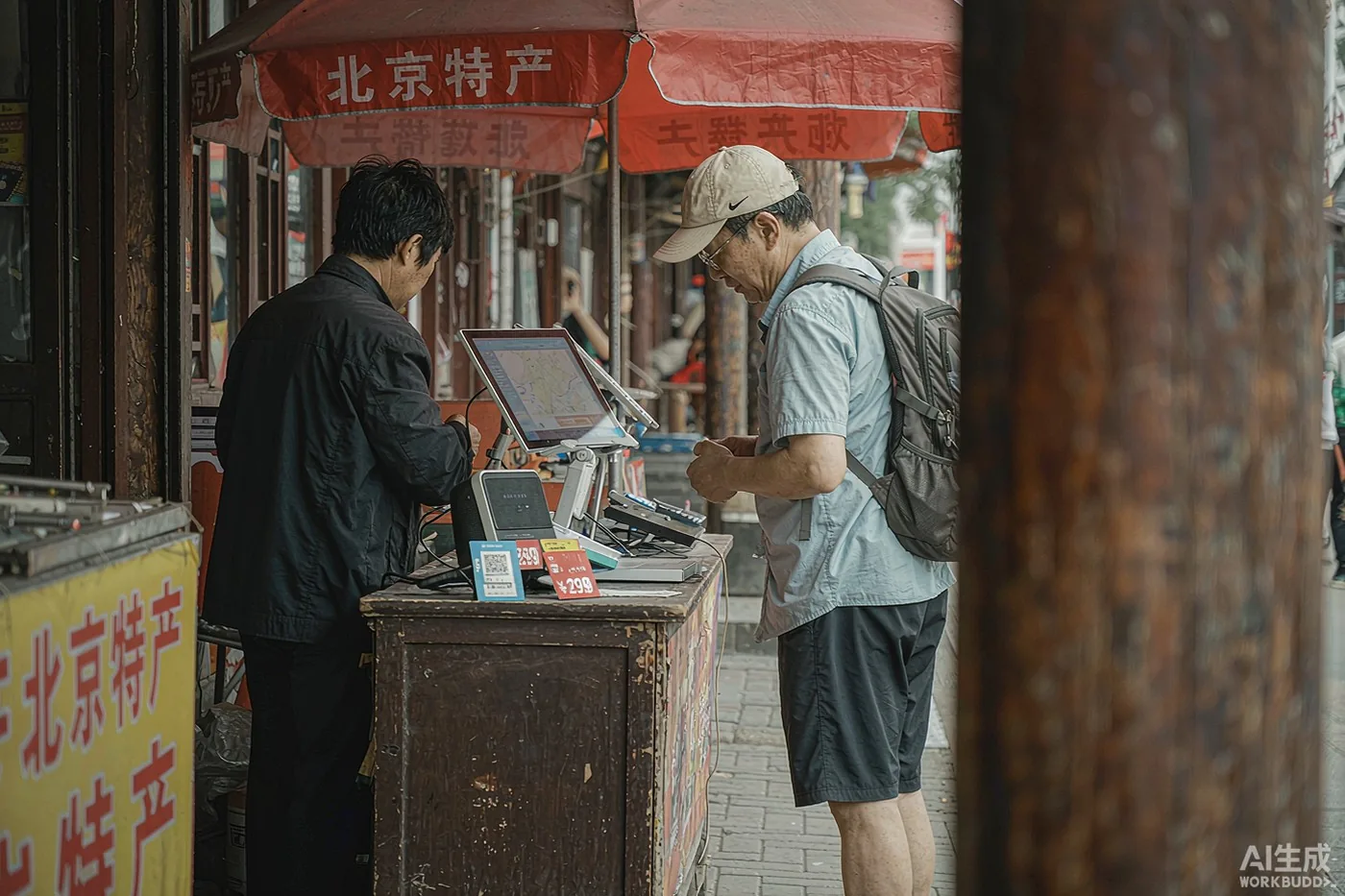
Markets like Silk Market (Xiushui) and Pearl Market sell genuine items alongside fakes, and the opening prices are inflated several times over.
Bargain hard — start at a third — Walk away if the price won't move; there is always another stall.
Assume 'brand' goods are copies — If the price is too good for a luxury label, it is.
Pay with your phone — Alipay / WeChat keeps a record; be wary of sellers pushing a private QR you don't recognise.
Tickets and 'official guides' at sights
At popular attractions, unofficial sellers offer 'skip-the-line' tickets or guided tours at the gate.
Buy from the official app or window — Forbidden City, the Great Wall sections and others sell through official channels; book ahead where required.
A clipboard 'official' is not official — Uniforms are easy to fake. Buy inside the marked ticket office.
QR-code and payment traps
Scan-to-pay is everywhere, which creates openings for fake codes.
Scan only merchant codes you can see — Stickers glued over the real code at a till are a known trick — check it's the venue's own.
Don't scan random 'promo' codes — A flyer or poster promising a prize for scanning can link to a phishing page.
Related Beijing guides
If you found this useful, these cover the next question most visitors ask: