Explore Beijing / Filling a Prescription in Beijing: Pharmacies, Refills and Taking Medication Home
Filling a Prescription in Beijing: Pharmacies, Refills and Taking Medication Home
How first-time visitors can get a Chinese prescription, fill it at a pharmacy or hospital pharmacy, and legally carry medication home — including what to check about your own country's rules.
7 min read · KOULING's Beijing Travel Guide
If you fall ill in Beijing or run out of a regular medication, the system works differently from the US, UK or EU. In China, most pharmacies cannot accept a prescription written abroad — you typically need a prescription issued by a licensed Chinese doctor, usually after an in-person or online consultation. The good news: seeing a doctor is fast and inexpensive by Western standards, and pharmacies are everywhere. This guide walks you through the process, refill strategies, and how to take medication home legally.
Step 1: Getting a Valid Chinese Prescription
Foreign prescriptions are generally not accepted at Chinese pharmacies, so you'll need a Chinese-issued prescription. Two routes work for visitors. First, register at a hospital's international department (国际医疗部, guoji yiliaobu) or general outpatient clinic — bring your passport, describe your condition and medication, and the doctor can issue a prescription the same day. A consultation typically costs roughly CNY 50–600 (about US$7–85) depending on the facility [verify before travel]. Second, for straightforward refills of ongoing medication, several licensed online platforms offer telemedicine consultations with delivery, but you'll usually need to communicate in Chinese or use a translation app. At the hospital, payment is made before you see the doctor; many hospitals now accept foreign cards and mobile payment, but carry cash as a backup [verify before travel].
Bring your passport — Registration at every hospital requires your original passport. Some hospitals also ask for a local phone number for appointment notifications.
Bring your original packaging — Show the doctor the original box or blister pack (or a photo of it). Knowing the generic drug name, not just the brand, helps enormously.
Ask for a bilingual printout if possible — Large international departments can often provide prescription details in English; smaller clinics may only issue Chinese text. Use a translation app to confirm drug name, dosage and quantity.
Step 2: Filling It — Hospital Pharmacies vs. Street Pharmacies
The safest option for prescription medication is the pharmacy inside the hospital where you were seen (医院药房) — prescriptions from that hospital are filled there directly, often within 30 minutes. For everyday items and some prescription drugs, chain pharmacies such as Tongrentang, Jinping or Nepstar are on nearly every commercial street and inside malls. Note that a controlled or strong medication may only be dispensed at the issuing hospital's pharmacy, and some drugs commonly available over the counter abroad (certain codeine products, for example) are restricted in China. Prices are generally far below US/EU levels — a course of common antibiotics might cost CNY 20–80 (US$3–12) [verify before travel].
Hospital pharmacy — Most reliable for prescription-only drugs; open roughly the same hours as the clinic, and 24-hour service exists at some major hospitals [verify before travel].
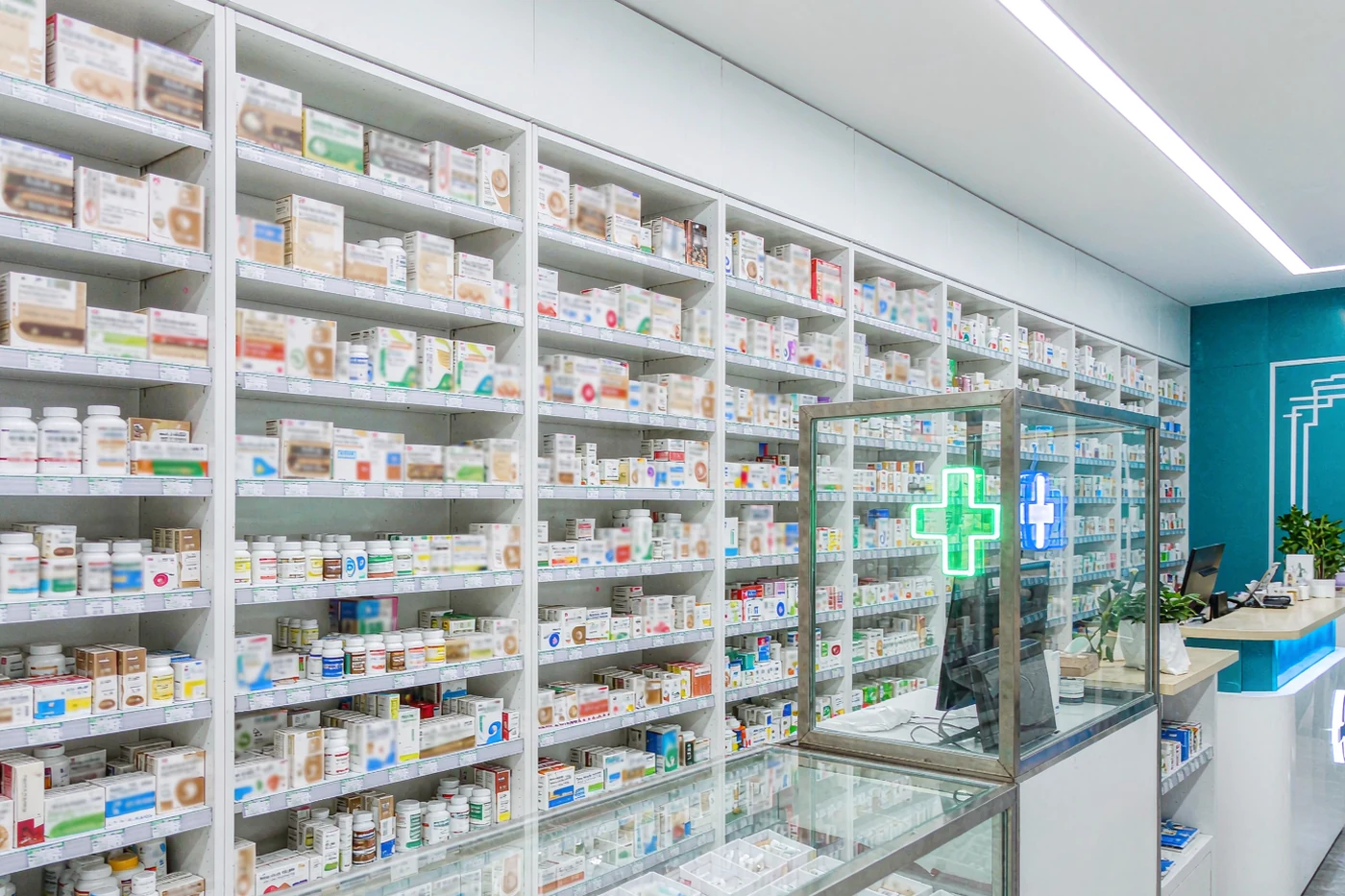
Chain pharmacies — Look for the green cross sign. Staff rarely speak English; showing the Chinese drug name or the original box is the fastest route.
Delivery apps — Meituan and Ele.me can deliver from nearby pharmacies in under an hour, useful if you're unwell in your hotel.
Refills While You're in China
Chinese prescriptions typically cover a limited supply (often up to one month for chronic medication; some hospitals issue longer for stable conditions) [verify before travel]. If your stay extends beyond that, return to any hospital's outpatient department — you don't have to go back to the original hospital — and see a doctor for a repeat prescription. Book an appointment via the hospital's WeChat mini-program or simply register on the day; same-day registration for general internal medicine is usually possible. Keep every prescription slip and receipt, as you may need them for customs on the way home.
Plan ahead of long holidays — During Chinese New Year and Golden Week (early October), clinics run reduced schedules and some pharmacies close — refill well before [verify before travel].
Refill before flying home — Get your last refill at least 2–3 days before departure in case a specific drug needs to be ordered.
Taking Medication Home Legally
Leaving China with medication is usually straightforward, but arriving home is where rules bite. Most countries allow personal-use quantities (typically up to 90 days) of prescription medicine accompanied by proof — keep the original packaging, the Chinese prescription slip, and ideally a doctor's letter in English stating the drug name, dosage and that it's for your personal use. Controlled substances (opioids, certain ADHD medications, some sleeping pills) face strict limits or bans in many countries; check your home authority (FDA in the US, NHS/GOV.UK in the UK, your national health agency in the EU) before you travel and before you buy extra in China [verify before travel]. Never carry medication in unlabeled containers, and keep it in your hand luggage.
Keep everything labeled — Original boxes, blister packs, the Chinese prescription and payment receipts together form a solid proof chain at customs.
Check quantity limits — The US generally allows a 90-day personal supply [verify before travel]; the UK and most EU countries allow up to 3 months for personal use [verify before travel]. Controlled drugs need far more care — confirm with your national authority.
Drugs restricted in your home country — Some medications sold in China are prescription-only or banned at home (e.g. certain codeine combinations). Don't assume 'easy to buy in Beijing' means 'easy to import.'
Peking Union Medical College Hospital — International Medical Services
One of China's most respected hospitals; its international medical department is used to treating foreign visitors, with English-capable staff and same-day prescriptions for common conditions and refills. Expect crowds even in the international wing — arrive early.
Metro
Dongdan area, served by Lines 1 and 5 (Dongdan station) — confirm current exit before travel
Opening hours
International department typically weekday mornings and afternoons; outpatient hours vary — verify before travel
Tickets
International consultation roughly CNY 300–600 (US$42–85); standard outpatient much cheaper — verify before travel
How long
Allow 2–3 hours for registration, consultation and pharmacy
Beijing Hospital / Large Tier-3 General Hospitals
Beijing's tier-3 (三甲) hospitals all house outpatient departments with on-site pharmacies. These are the workhorse option for repeat prescriptions: register, pay, see a doctor, fill the prescription downstairs, often all within two hours. Staff English varies, so bring translated notes.
Metro
Most tier-3 hospitals are near a metro station — check the specific hospital's location and line before travel
Opening hours
Outpatient clinics generally weekday 08:00–17:00 with limited weekend service — verify before travel
Tickets
Registration/consultation roughly CNY 50–100 (US$7–14) at standard clinics — verify before travel
How long
1.5–3 hours typical
Tongrentang Pharmacies (Chain)
The famous traditional Chinese medicine chain has flagship stores on Qianmen Street and around Wangfujing — worth a visit even if healthy. For Western prescription drugs, staff will ask for a Chinese prescription; for travel remedies (herbal teas, plasters), you can buy freely.
Metro
Qianmen flagship: near Qianmen station (Line 2/8) — confirm station before travel
Opening hours
Typically 09:00–21:00 for street stores — verify before travel
Tickets
No entry fee; herbal remedies roughly CNY 20–200 (US$3–28)
How long
20–40 minutes
Practical Tips Before You Go
Pack double your regular medication — Bring more than your trip length requires, split between two bags — filling a prescription abroad should be a backup, not the plan.
Carry a doctor's letter — An English letter listing your medications, dosages and conditions speeds up both Chinese consultations and home customs.
Screenshot the Chinese drug name — Find your medication's generic name in Chinese characters (a translation app or your pharmacist at home can help) — showing characters beats showing a foreign brand name.
Know your emergency numbers — Ambulance: 120; general police: 110. Major hospitals with international departments are listed on hotel concierge cards.
Bring payment backup — Mobile payment (Alipay/WeChat Pay linked to a foreign card) is dominant, but hospitals increasingly accept foreign cards and cash — carry CNY 200–500 (US$28–70) in cash just in case [verify before travel].