Explore Beijing / Beijing's Vintage & Flea Market Scene: Panjiayuan and Beyond — What's Real, What's Repro, and How to Ship It Home
Beijing's Vintage & Flea Market Scene: Panjiayuan and Beyond — What's Real, What's Repro, and How to Ship It Home
A practical first-timer's guide to Beijing's flea and vintage markets: how to spot genuine antiques at Panjiayuan, what the reproductions are actually worth, and how to ship your finds home safely.
6 min read · KOULING's Beijing Travel Guide
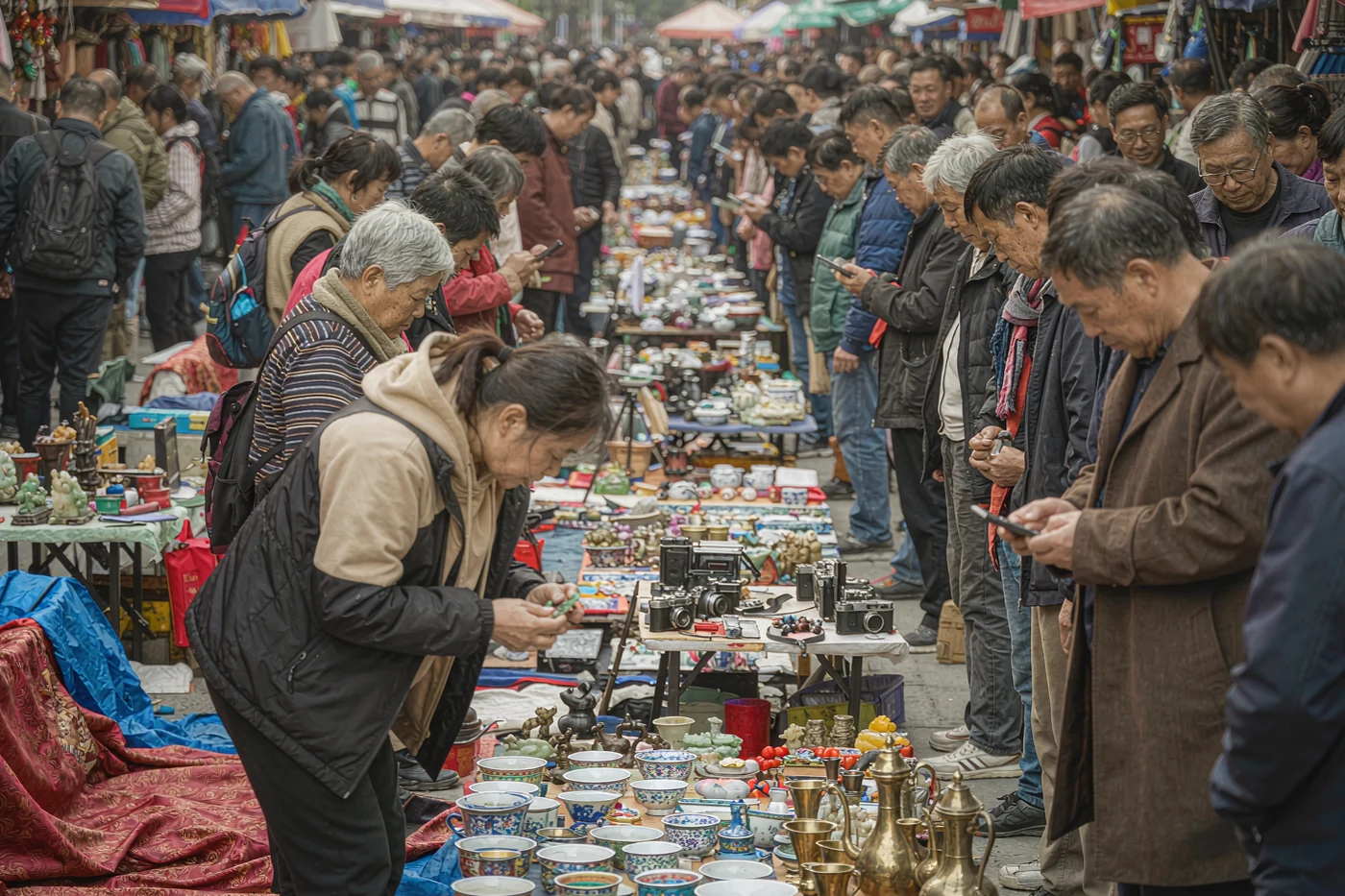
Beijing's flea markets are where the city's obsessive collecting culture spills into the open air. The undisputed heavyweight is Panjiayuan — a weekend bazaar of several thousand stalls selling everything from Cultural Revolution-era porcelain and jade to worn Marxist posters and 'antique' furniture that was built last Tuesday. You will not leave with a museum piece, and that's fine: this is one of the most fun, most photographic, and most surprisingly affordable ways to spend a morning in Beijing. This guide covers what to buy, how to spot reproductions, how to bargain and pay, and how to get anything fragile back home without heartbreak.
First, a Reality Check: What's Real and What's Repro
Assume almost nothing over a certain price point is genuinely old, and you'll have a great time. Vendors are generally upfront if you ask directly — many will cheerfully volunteer that a piece is a reproduction ('fangpin', 仿品). The trick is knowing which categories are worth the reproduction gamble:
Mao-era memorabilia (Little Red Books, enamel mugs, badges) — Genuinely old examples exist and often cost US$3–15 (about CNY 20–100). Repros are near-identical, so buy what you like, not what you hope to flip.
Porcelain, bronzes, and 'imperial' items — Treat anything claimed as Ming or Qing dynasty as decorative reproduction unless you are a trained expert. A convincing fake can sell for hundreds of dollars; the real thing would be worth tens of thousands.
Beads, jade and 'antique' jewelry — Most is dyed stone, glass, or modern jade. Buy it as jewelry you like, never as an investment. Ask for a certificate at your own risk — forged certificates are common.
Old photographs, posters, painted scrolls — Largely printed or painted new and deliberately aged with tea, smoke, or dirt. Great souvenirs at US$5–30 (CNY 35–200); terrible antiques.
Furniture and wooden carvings — Solid reproduction Ming-style furniture is a legitimate industry — quality pieces are beautiful and often good value, just not old. Check joinery and weight for quality.
Bargaining, Paying, and Staying Out of Trouble
Haggling is expected and enjoyed. Start at roughly 30–40% of the opening price and settle somewhere around 50–60%; walking away slowly is the most effective technique in Beijing. On payments: most stalls now accept Alipay and WeChat Pay with linked foreign cards [verify before travel], but small vendors sometimes prefer cash, so carry CNY 100–300 in small notes [verify before travel]. Two legal points Western visitors often miss: genuine antiques (items predating 1949, per current rules) generally cannot be exported without a permit, and anything you buy that looks genuinely old should stay in China unless you get official paperwork. Buy clearly modern handicrafts and reproductions and you have nothing to worry about.
Set your budget before you start — Small purchases add up fast. US$30–60 (CNY 200–400) buys a genuinely nice haul of souvenirs.
Get the vendor's WeChat or a business card — If you ship later, or realize you want a second piece, a direct contact is worth more than any discount.
Avoid anything made from animal parts — Ivory, certain corals, and some shells are illegal to bring into the US, UK, and EU. Walk past the 'dragon bone' and tiger-tooth stalls entirely.
Panjiayuan Antique Market
The famous one, and worth the trip even if you buy nothing. Weekends are the full spectacle — thousands of stalls, serious collectors with headlamps arriving at dawn — while weekday visits are calmer but partial. Go Saturday morning around 07:00–09:00 for atmosphere or 09:00–11:00 for a more comfortable browse [verify before travel]. Wear closed shoes; it's mostly unpaved gravel.
Metro
Panjiayuan station on Line 10 (confirm current exits before travel); roughly a 5–10 minute walk from the station
Opening hours
Weekend flea market is the main event, roughly 04:30–17:00; indoor buildings open daily with more limited hours [verify before travel]
Tickets
Free entry [verify before travel]
How long
2–4 hours
Baoguo Temple Market
A more local, more scholarly-flavored market near Guang'anmen, strong on coins, old books, calligraphy supplies, and tea culture. Smaller and quieter than Panjiayuan, and the antique-dealer buildings around it stay open on weekdays. Note that market days and opening schedules have changed in recent years, so confirm what's operating before making a special trip [verify before travel].
Metro
Near Guang'anmennei on Line 7 (confirm current station and exit) [verify before travel]
Opening hours
Historically busiest on weekends; dealer shops open daily [verify before travel]
Tickets
Free entry
How long
1–2 hours
Liulichang Culture Street
Not a flea market but the city's traditional antique-and-art street: rebuilt Qing-style shopfronts selling seals, ink, brushes, rubbings, and tea. Prices are fixed and honest by Beijing standards, quality is vetted, and it's the best place to buy a personalized seal chop (hand-carved with your name) — a far better souvenir than anything repro. Pairs well with Panjiayuan on the same day.
Metro
Near Hepingmen station, Lines 2 and 4 (confirm current exit and walking route) [verify before travel]
Opening hours
Shops generally open daily roughly 09:00–17:30 [verify before travel]
Tickets
Free entry
How long
1–2 hours
Shipping Your Finds Home Without Heartbreak
Use a market-area packing and shipping service — Panjiayuan has packing services that bubble-wrap and crate ceramics professionally. Get an itemized receipt, tracking number, and insurance quote in writing. Costs vary widely — a crated mid-size vase typically runs tens of dollars [verify before travel].
Know your country's customs rules — Wooden items may need heat-treatment certification for Australia/NZ and some other destinations; anything claimed to be antique may need an export permit. Decline paperwork you can't get and buy something else.
Suitcase rule of thumb — Under US$20 (CNY 140) and non-fragile: take it with you. Anything above that, fragile, or made of wood or stone: ship it professionally.
Photograph everything at purchase — Photos of the item, the stall, and the receipt make any customs or insurance claim survivable.
A Perfect Vintage-Hunting Day
07:30
Metro to PanjiayuanArrive by 08:30 to catch the weekend market at full strength before tour groups.
08:30–11:00
Hunt at PanjiayuanCoffee first from a nearby chain if you need it, then work the outer gravel rows inward. Bargain hard, buy small, and photograph purchases.
11:30
Lunch nearbySimple noodle or dumpling shops around the market run US$2–5 (CNY 15–35) a head.
13:30
Metro to Liulichang Culture StreetBrowse the fixed-price seal shops and teahouses; order a hand-carved name seal if time allows (often ready in under an hour [verify before travel]).
16:00
Arrange shippingReturn to your Panjiayuan shipping contact or courier branch with the day's fragile purchases before the counter closes [verify before travel].
18:00
Head back westLine 10 connects easily toward the city's west side — convenient if you're based near a Line 9 hotel.