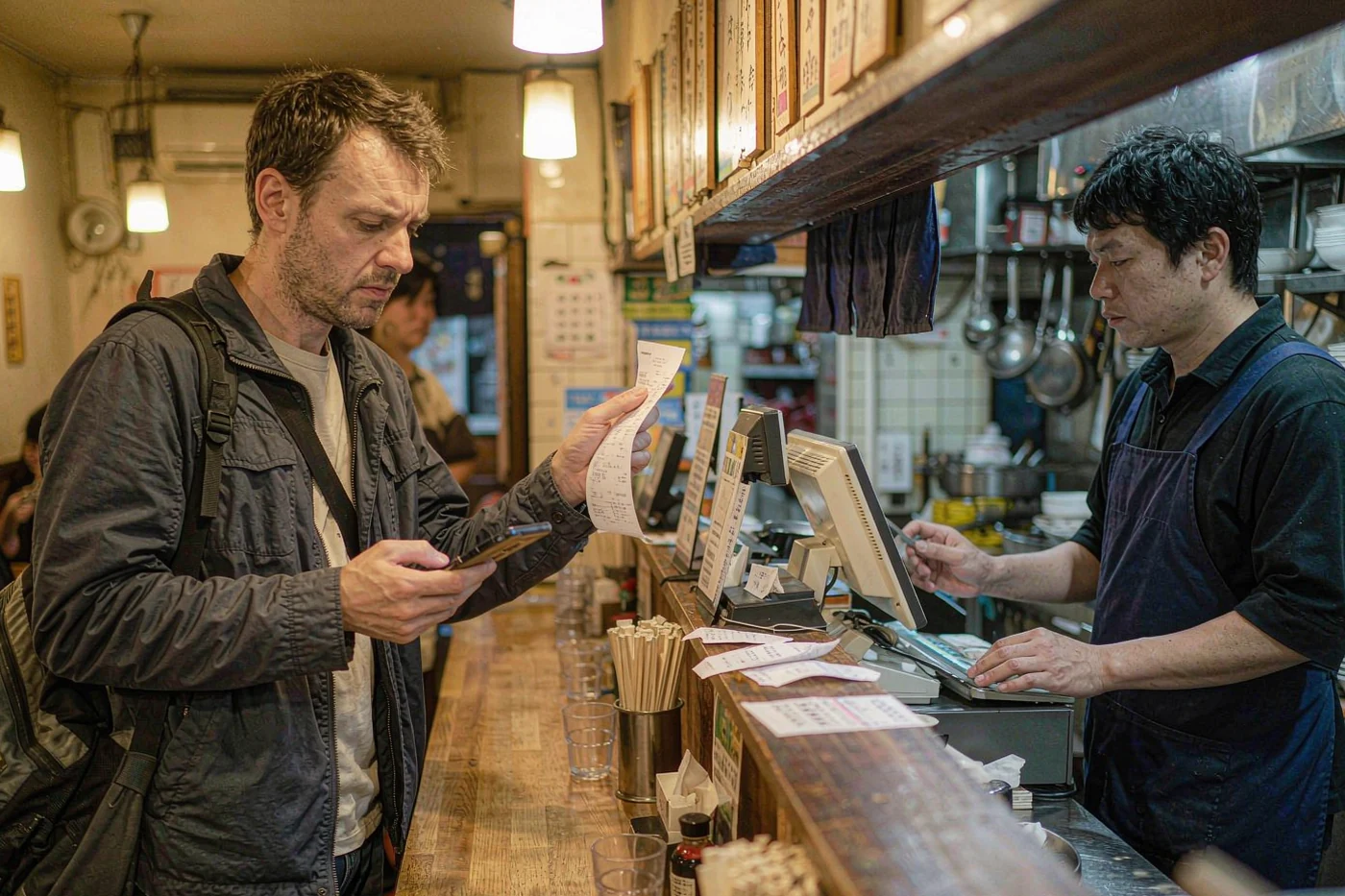
Overcharged, mis-sold or taken for a ride in Beijing? The four complaint channels that really answer — 12345, the 12315 platform, 12328 and 12326 — plus the evidence that turns a complaint into a refund.
Almost every foreign visitor to Beijing gets quietly overcharged for something at least once. A taxi that never switches the meter on. A tea ceremony that turns out to cost ¥600. A restaurant where the bill does not match the prices you were shown. The reflex is to shrug and write it off as the cost of travel — and that is usually the wrong call. Beijing has a complaint system that genuinely works: it is free, it runs 24 hours, and it answers in English. What it needs from you is not a lawyer. It needs a receipt, a timestamp and the right phone number. This is the post-incident playbook: which channel handles which problem, what evidence to grab in the two minutes while you are still standing there, and what a realistic refund actually looks like.
Spend ten seconds deciding this before you dial, because the two systems work completely differently. Police handle people and public order. Hotlines handle money and how a business behaved. Getting it wrong does not mean nobody helps you — it means you queue twice.
12345 is Beijing's all-purpose government service hotline, staffed 24 hours a day. In 2020 it absorbed 52 separate hotlines across 16 districts and 36 departments — including the old 12315 market supervision line — which is why consumer complaints in Beijing go to 12345 rather than 12315. The part that matters most to foreign visitors: according to a Beijing municipal press briefing in October 2025, 12345 takes calls in eight languages around the clock, with an English desk always on and other languages bridged to a volunteer multilingual service centre through a three-way call. Beyond the phone there is the 12345 Online platform, a 12345online section on the city's international portal, and a message board on the Beijing Service WeChat account — and when you cannot easily spell an address over a phone line, writing it down is genuinely faster.
The national 12315 platform (www.12315.cn, with an app, a mini-program and a WeChat account) handles consumer disputes: shops, restaurants, markets, counterfeit goods, misleading prices, prepaid cards, hotel stays and online orders. Its timeline is set out in the measures governing market supervision complaints: the authority decides whether to accept your complaint within 7 working days of receiving it and tells you either way, and mediation is normally concluded within 60 days of acceptance — if no agreement is reached, mediation ends and you are still free to sue or arbitrate. Filing is real-name, a passport is fine, and you must supply the business name, its address and a specific demand. Copy the name off the receipt or the shop sign rather than writing what you thought the place was called.
12328 is the national transport services supervision hotline: 24 hours, handled locally, reachable by phone, WeChat mini-program, WeChat account, app and website. Refusing a passenger, negotiating a flat fare instead of using the meter, taking a long detour, dropping you short, and unlicensed or mis-dispatched ride-hailing cars all fall under it. The single most valuable piece of evidence is the printed fare invoice, which every Beijing taxi must issue and which carries the plate number and the taxi company — exactly what the regulator needs. For app-booked cars, the in-app complaint is usually faster: both Didi and Amap have a complaint entry on the trip page, and 12328 is the escalation when that goes nowhere. General transport complaints are commonly answered within about 7 working days, with complex cases extended and the caller told so; local published commitments vary, so treat the deadline you are given at intake as the real one.
For aviation the order matters. Complain to the airline or the airport first; if you get no reply, or you disagree with the stated reason for a delay or cancellation, escalate to 12326, the civil aviation service quality supervision hotline. It opened in March 2019, and since September 2021 there has also been a supervision platform at www.12326.cn where you can file a written complaint against an airline, an airport or an OTA and follow the case. Rail goes through 12306 — ticketing, refunds and changes, and on-board service are all handled on its phone line, app and website. But if you are still standing in the terminal, the fastest route is never a hotline: go to the service desk and ask for the duty station manager.
At the end of 2021 the national tourism information hotline 12301 was folded into the local 12345 government service hotlines and stopped taking tourism complaints on its own. So tour operators, guides, A-rated attractions, star-rated hotels and rated guesthouses are all a 12345 call in Beijing. Separately, most major sights have a visitor service centre or a complaint desk near the entrance, and a complaint filed while you are still on site is far harder to ignore than one made from your hotel that evening. Bring the booking: order number, the tour contract or itinerary, and the payment record, with the operator's name spelled exactly.
Whether a complaint succeeds is decided about ninety percent here, and every one of these six things is obtainable in the two minutes while you are still at the counter — and close to unobtainable afterwards.
Your right to ask for an invoice does not depend on the amount or on how you paid, and 'it was discounted', 'it was a group-buy deal' or 'the month has rolled over' are not legal grounds for refusing. Refusing to issue one, or issuing a fake, breaches the invoice management rules; you can report it on the tax service hotline 12366 or through the tax authority's online tax-violation reporting channel. If you suspect an invoice is not genuine, check the invoice code and number against the national VAT invoice verification portal at inv-veri.chinatax.gov.cn. The most practical move, though, is simply to ask before you pay — one question at the start changes how the rest of the conversation goes.
Set your expectations correctly: administrative mediation is not a court judgment. The market supervision office brings you and the business to the table, and by far the most common win is a full or partial refund, often arranged by one phone call from the district office. An on-the-spot fine or an arrest does not happen — enforcement against the business runs on a separate, slower track from your refund. And if mediation ends without agreement, your options are not exhausted: you can still sue or arbitrate under any agreement you have, and the 60-day mediation window is not a limitation period. One counter-intuitive rule to finish on: claim the amount you were overcharged, not a punishment. Precise, documented claims get resolved; inflated ones tend to be set aside.
Every channel above costs you at least an hour of your trip. Each of these takes ten seconds and makes the channel unnecessary.