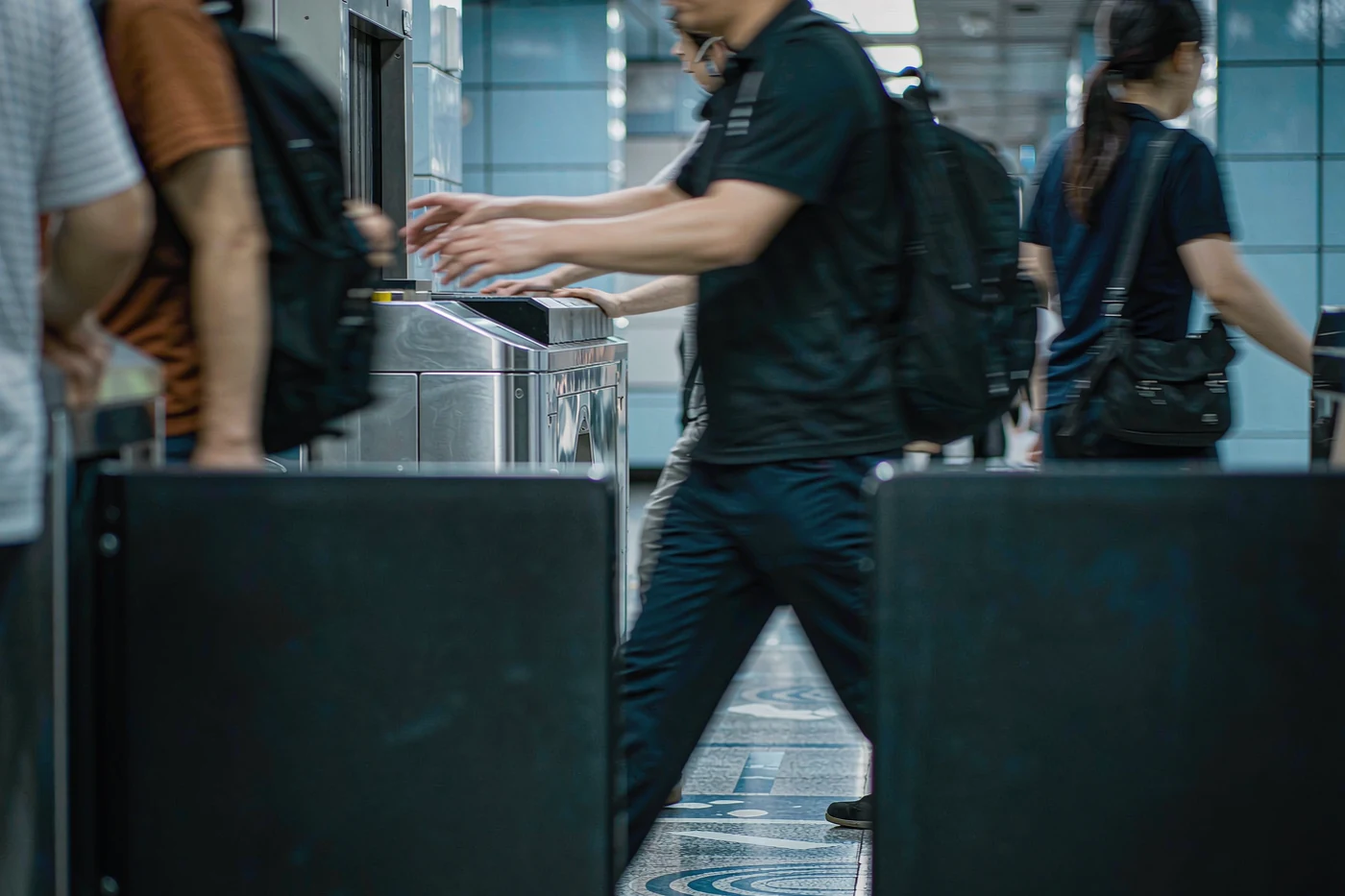
Beijing's subway is fast and cheap, but rush-hour security lines can eat 20 minutes of your day. Here's how to pick calmer stations, exits, and times.
Every rider on Beijing's subway passes through an airport-style security check: bags on the belt, sometimes a quick pat-down. At 8 a.m. or 6 p.m. on a weekday, that check is where the line forms — not at the ticket gates. For a first-time visitor, a little planning can easily save you 10–20 minutes (roughly the cost of one jianbing breakfast, about ¥10 / US$1.50) and a lot of sweating. This guide explains when queues peak, which kinds of stations to avoid, and how to pick an entrance that moves faster.
Security lines track office-worker flow, not tourist flow. Expect the longest waits on weekdays roughly 7:30–9:30 a.m. and 5:30–7:30 p.m., especially on lines running through the Central Business District (Guomao), Financial Street, and Zhongguancun. Weekend mornings are noticeably calmer, and trains from around 10 a.m. to 4 p.m. are the easiest window for sightseeing. If you must travel at rush hour, build in an extra 30 minutes and check a live subway app for congestion levels [verify before travel].
Big interchange stations like Xidan, Dongzhimen, and Guomao have many entrances, and queue lengths vary wildly between them. Entrances attached to shopping malls or office towers are busiest; a side entrance on the same street corner can have no line at all. The general rules: walk one block away from the landmark, look for the smaller lettered exit, and avoid the entrance directly above a bus terminal. Signs above ground show which exit you're entering, so you can decide before you go down.
Sometimes the smartest queue hack is not queuing. Buses don't have security checks, though they crawl in traffic. Shared bikes (about ¥1.50–3 / US$0.20–0.40 per 30 minutes [verify before travel]) are brilliant for the first or last kilometre. And if you're heading to an early flight or train, a taxi or ride-hail (Didi) avoids the metro completely — expect roughly ¥30–120 / US$4–17 depending on distance [verify before travel].
A shopping and interchange mega-hub. The main mall-linked entrances have the longest rush-hour security lines; the smaller exits on the quieter north and side streets move noticeably faster. If you're changing between Line 1 and Line 4, stay inside the gates rather than exiting and re-entering.
The heart of the CBD and one of the worst crush points in the network at rush hour. If you're staying nearby, walk to a smaller satellite entrance around the interchange rather than the ones serving the mall and office towers directly. Weekend visits are painless.
A key arrival point for high-speed rail. Metro security here adds to rail security, so allow generous buffer time with luggage — arrive at least 30 minutes earlier than you would at a normal station, and more for national holidays.