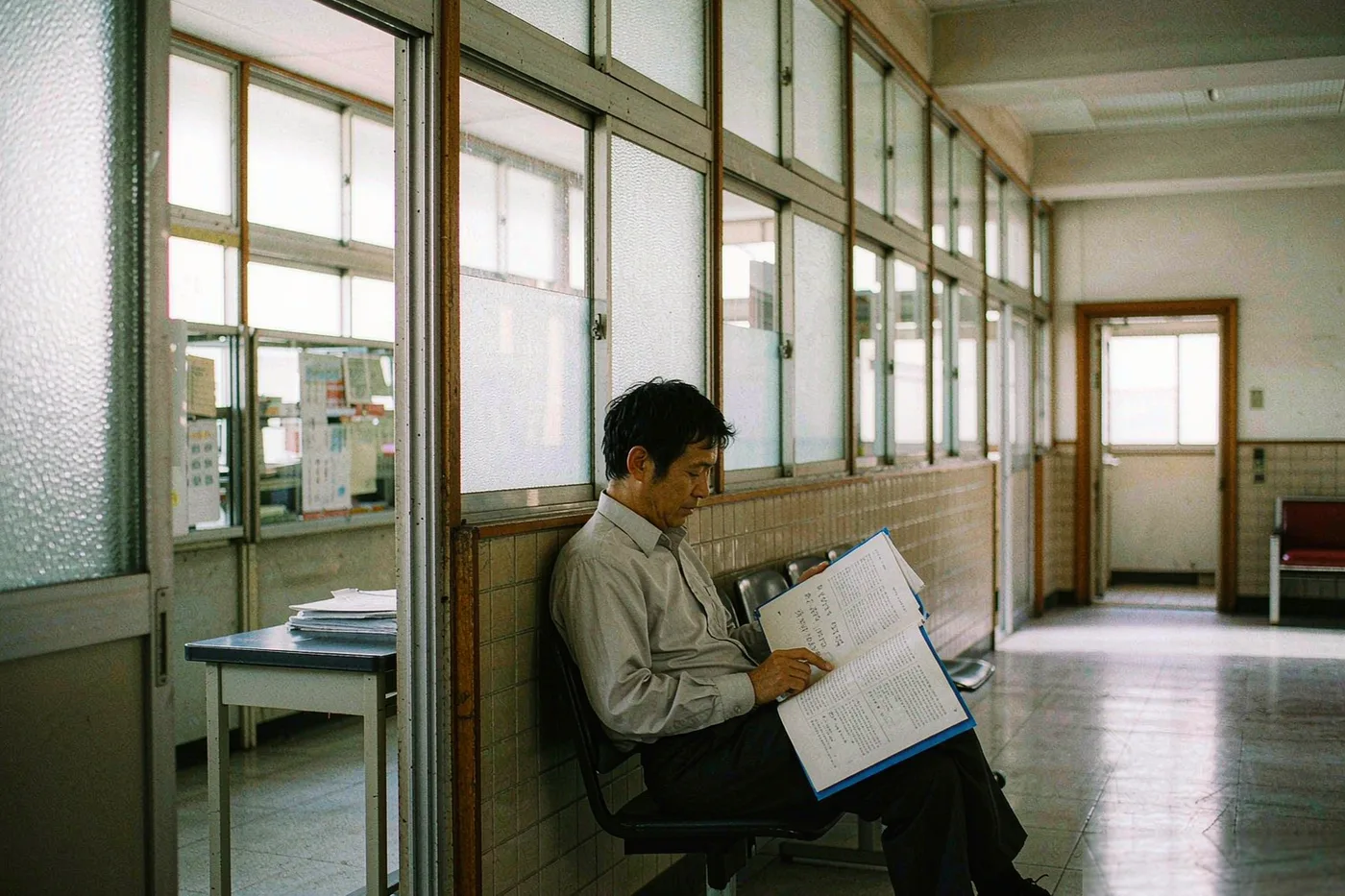
Police report, passport loss certificate, embassy, replacement visa — the four steps in the order that works, what each office asks for, and how to get through the days in between.
Losing your passport in Beijing is frightening mainly because the sequence is unclear. People queue at the wrong office, get sent away for a missing photo, and burn three days doing what takes two. The real process is four steps and they must happen in order: police report, passport loss certificate from the exit-entry office, a new document from your embassy, then a replacement Chinese visa. Do them out of order and every counter sends you back to the previous one. Below is that order, what each office actually asks for, realistic timings, and how to handle hotels, trains and money while you have no passport at all.
Report only once it is genuinely gone, because a found passport needs no paperwork at all. Work backwards through the last three places you used it — a hotel check-in, the Forbidden City gate, airport security, a bar that took a card. Call the hotel front desk and ask them to check lost property; Beijing hotels keep things for months and staff are used to this call. Restaurants and bars hold phones and wallets behind the counter far longer than you would expect. If you were in a ride-hailing car, open the trip in the Didi app and use the lost-property flow attached to that specific trip — it dials the driver without exposing either number. For a metered taxi, the receipt (发票, fāpiào) carries the cab number, which is why you should always take one. At metro stations, ask at the service desk rather than the gate staff. If it turns up, stop: no report, no certificate, no fee. If it does not, start step one the same day, while the timeline is fresh and your hotel record still shows you as a guest.
Go to the police station (派出所, pàichūsuǒ) for the place where the passport was lost — not the one nearest your hotel. Beijing's own published procedure states this explicitly: the loss is reported at the station closest to the location of loss, processing is immediate, and there is no fee. Bring whatever proves who you are: a photocopy or phone photo of the passport data page, a home driving licence, national ID card or student card. Ask for the written report receipt — 报警回执 / 报失证明 — and keep the original; the next two offices ask for it. If the passport was stolen rather than dropped, say so clearly, because it is recorded differently. English is not guaranteed at a neighbourhood station. Have your hotel write 「我的护照丢了,我来报案」 on paper, or hand the officer your phone with the front desk on the line; a translation app with data works fine as a fallback.
Take the police receipt to an exit-entry administration service centre (出入境管理局) and apply for the passport loss certificate. This is the paper your embassy will want before it will issue anything. Beijing publishes the required materials; go with all of them in one trip, because a second trip costs a day.
The certificate is free. Beijing runs 21 exit-entry service centres for foreign nationals, so you are rarely far from one; the main hall is 北京市公安局出入境接待大厅 at 2 Andingmen East Street, Dongcheng District (东城区安定门东大街2号). Most halls keep Monday to Saturday hours, roughly 09:00–17:00, and some district halls require an online appointment before they will see you — ⚠️ 待人工确认 before you travel, and confirm on the Beijing PSB portal or by calling 010-12367. Counters handle foreign applicants every day, but the forms are in Chinese, so bring someone who reads it or the hotel's phone number. Get at least two copies of the certificate once it is issued; you will hand an original to the embassy and another to the exit-entry office later.
With the loss certificate in hand, contact your embassy or consulate in Beijing. Nearly all of them sit in Chaoyang District, concentrated around Sanlitun and Liangmaqiao, and most require an online appointment for passport services. There are two possible outcomes: a full replacement passport, which for many nationalities takes several weeks because it is printed abroad, or an emergency or temporary travel document, which is often issued in one to three working days and sometimes the same day for a genuine emergency. Which you get depends on your country and on how much identity evidence you can produce — a phone photo of the old data page makes an enormous difference here, which is the whole argument for the prevention kit further down. Fees, forms and hours are set by your own government: check your embassy's site before you queue — ⚠️ 待人工确认 for your specific nationality. Before you leave, ask for a written note confirming the new document replaces the lost passport; you need it at step four.
The visa that was in your old passport died with it, so it has to be re-issued into the new document. China's immigration authority says to apply within 10 days of receiving the new passport; Beijing's published service standard is a decision within 7 working days of acceptance. Materials listed by the Beijing authorities: the original passport loss certificate or your embassy's note, the new passport or travel document, a valid Beijing accommodation registration, and one recent 2-inch white-background colour photo (3.5 × 4.9 cm). Book in advance through the Beijing Municipal Public Security Bureau service portal at zwfw.gaj.beijing.gov.cn, under 政务服务 → 我要办 → 出入境业务 → 外国人签证、停留许可、居留许可. A visa fee applies and varies by nationality and visa type — ⚠️ 待人工确认. If you were in China on a visa or residence permit, do not fly out before the replacement is in the passport you are actually holding; departure immigration checks the two against each other. If you entered under a visa-free or transit-exemption policy, call 010-12367 and ask how the exemption transfers to the new document before you book anything.
Every foreigner in Beijing sits on an accommodation registration (临时住宿登记). Hotels file it for you at check-in from your passport; if you are in an apartment or a friend's home, you or your host must register at the local police station within 24 hours, or online through the Beijing PSB portal at zwfw.gaj.beijing.gov.cn/zsdj/zsdj-w/, which is available in English, French, Korean, Japanese and Russian. The registration is tied to the passport number, so a new document invalidates it — re-register, and do it within 24 hours of getting the new passport. Skipping this is what turns an unlucky week into a fine and an awkward conversation on the way out. One practical move while you have no passport at all: ask your hotel's front desk to print their registration record for you. That single sheet, plus the police receipt, is often what convinces a counter that you are lawfully in the country and not someone who walked in yesterday.
You will have gaps where you hold no passport. Plan around them rather than testing each one at a barrier.
Almost every lost-passport story is slow for the same reason: there was no copy anywhere. This takes a minute before you leave home and it is the difference between two days and two weeks.