Explore Beijing / Beijing Live Music: Livehouses, Concert Halls and How to Buy Tickets
Beijing Live Music: Livehouses, Concert Halls and How to Buy Tickets
From hutong livehouses to the National Centre's concert halls: where Beijing's music clusters, what tickets really cost, the Chinese apps you need before you land, and a sample night that gets you home before the last train.
8 min read · KOULING's Beijing Travel Guide
Beijing looks like a monuments city on a three-day itinerary, but it also runs one of Asia's busiest live-music scenes: tiny hutong rooms where a punk band plays to 200 people, a titanium concert-hall dome beside Tiananmen Square, small jazz rooms inside courtyard houses, and arena tours that stop here on almost every Asian leg. The difficulty for visitors isn't finding music — it's that nearly everything is listed in Chinese, sold through Chinese apps, and paid for with a mobile wallet you may not have set up yet. This guide closes that gap: which areas the venues cluster in, what tickets realistically cost, which apps to install before you fly, and a sample night that ends in time for the last train.
What Beijing Does Well
Match the music to the kind of night you want. The scale runs from a 150-person basement to an arena, and the booking mechanics are completely different at each end.
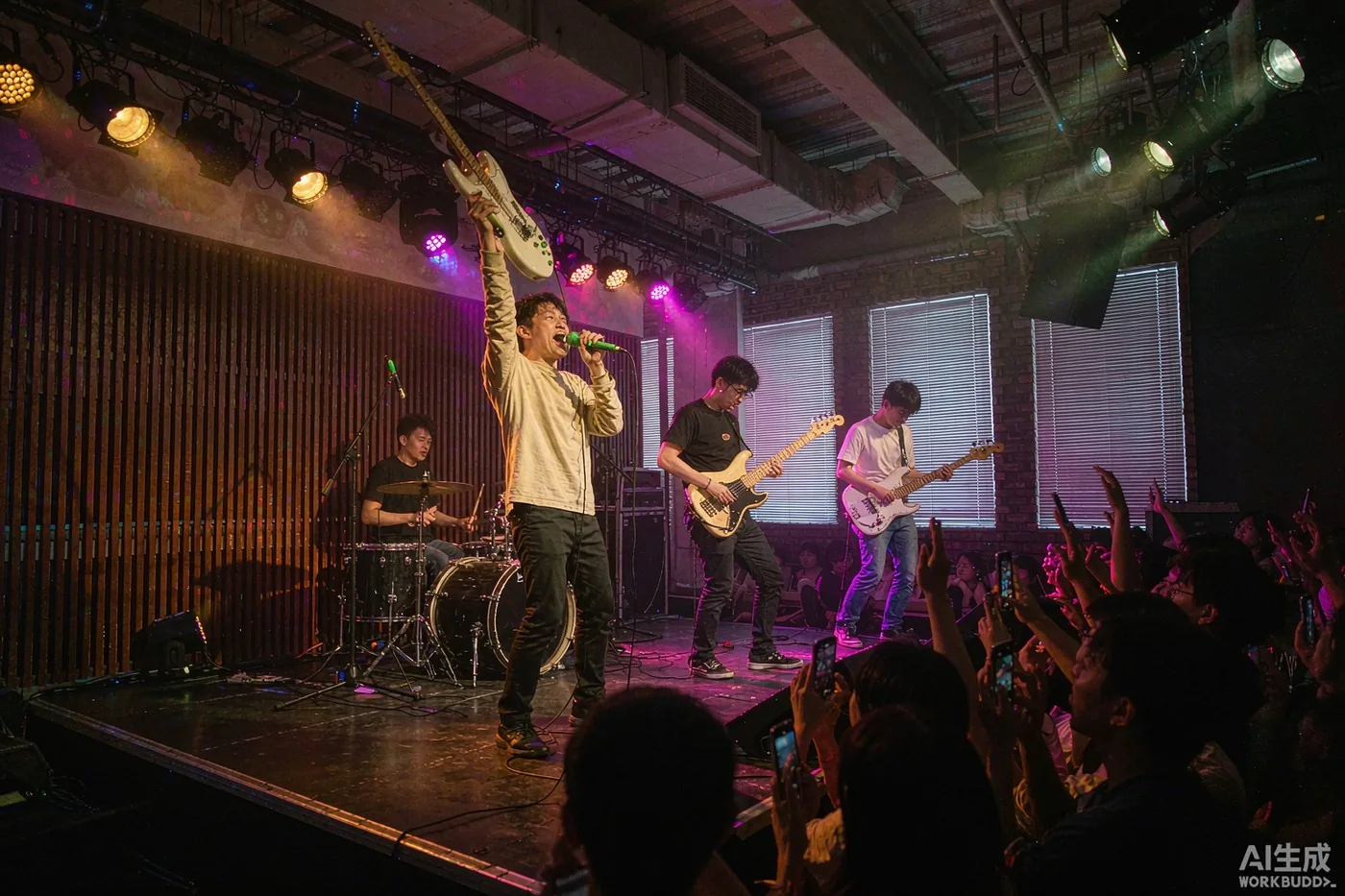
Livehouse rock, punk and indie — Standing rooms holding roughly 150-1,000 people, mostly Chinese-language bills with occasional touring bands. Presale tickets commonly run CNY 80-180; international touring acts cost more [verify before travel].
Classical, opera and ballet — The big halls programme full orchestras and international soloists at prices well below Western capitals for comparable seats.
Jazz and small-ensemble rooms — A handful of dedicated rooms and hotel bars run nightly sets; cover charges and minimum spends vary widely.
Arena and stadium tours — International pop and rock acts play the big western venue at Wukesong and the Olympic-area stadiums. These are the only shows where an English-language listing is usually easy to find.
Traditional and folk — Peking opera, acrobatics and Chinese classical performance are a separate world — see our dedicated performance guide for those.
Where the Music Actually Is
Venues cluster rather than scatter. Pick one area per night and you can walk between shows instead of crossing the city.
Gulou and Nanluoguxiang — The livehouse heartland. Ride Line 2 or Line 8 to Gulou Dajie (鼓楼大街), or Line 6/8 to Nanluoguxiang (南锣鼓巷), then walk [verify before travel]. Small rooms, late doors, and plenty of bars for afterwards.
Wudaokou — The university district in the northwest, on Line 13 (Wudaokou). Student crowds, cheaper tickets, and the scrappiest rooms in the city.
Sanlitun — Beijing's bar and club district — Line 10 to Tuanjiehu (团结湖) or Line 6 to Dongdaqiao (东大桥). More DJs and cover bands than original acts, but the easiest area to combine with dinner.
Tiananmen and Qianmen — The formal concert halls sit around and just south of the square. Line 1 to Tiananmen West (天安门西) covers the main ones.
Wukesong and the Olympic north — Arena-scale shows. Line 1 to Wukesong (五棵松) in the west; Line 8 to Olympic Park (奥林匹克公园) for the northern stadiums.
National Centre for the Performing Arts (NCPA)
The glass-and-titanium 'Giant Egg' beside Tiananmen Square is Beijing's flagship classical venue, with an opera house, a concert hall and a theatre under one dome. It is the smoothest high-quality concert experience for a visitor: classical programmes carry recognisable titles, opera performances use surtitles, and the building itself is worth arriving early for. An evening here pairs naturally with a walk along the square while it is still lit.
Metro
Line 1 to Tiananmen West (天安门西); the entrance is a short walk from the square [verify before travel]
Opening hours
Performance times vary by date — evening shows usually begin around 19:30, with occasional matinees. Check the official schedule before booking.
Tickets
Commonly CNY 80-680+ depending on programme and seat category; the cheapest seats sell out first [verify before travel]
How long
2-3 hours including an interval
Forbidden City Concert Hall (中山公园音乐堂)
Inside Zhongshan Park just west of the Forbidden City, this hall hosts chamber music, Chinese classical ensembles and touring recitals in a setting you cannot reproduce anywhere else — you walk through an old imperial park to reach the seats. Arrive early and the park becomes part of the evening.
Metro
Line 1 to Tiananmen West (天安门西), then walk through Zhongshan Park; note the park has its own closing time [verify before travel]
Opening hours
Evening concerts typically start around 19:30; the monthly programme is published in advance
Tickets
Often CNY 80-480, with some recitals cheaper still [verify before travel]
How long
Around 90 minutes to 2 hours
The Apps You Need Before You Land
This is where most visitors get stuck. Listings, ticket sales and payment all live inside Chinese apps — install and verify them while you still have hotel Wi-Fi and your passport in hand.
Damai (大麦) — The main ticketing platform for concerts, theatre and arena shows. English support is limited and many listings are Chinese-only.
Showstart (秀动) — The livehouse platform — this is where small rock and indie gigs are listed and sold.
Maoyan (猫眼) — Another large platform that carries some concert and event inventory.
A wallet, not a card — Set up Alipay or WeChat Pay with your foreign card before booking. Most platforms and venues are effectively cashless — see our payment guide.
The concierge shortcut — If an app won't accept your passport or phone number, hotel staff can usually book a mainstream concert for you. For tiny livehouse gigs, they often cannot.
Real-Name Tickets and Getting Through the Door
Chinese events increasingly use real-name ticketing: the ticket is tied to an identity document and staff check ID at the entrance. A few habits save a wasted evening.
Bring the passport — If the ticket was booked against your passport, carry the physical passport that night — a photo on your phone is not always accepted [verify before travel].
Arrive 30 minutes early — Queues, ID checks and bag screening are normal, and small venues have a single door.
Screenshot the QR code — Basement rooms have unreliable reception. Keep the ticket QR code available offline.
Know the end time — Livehouses inside residential hutongs usually finish earlier than Western clubs, often around 22:00-23:00 because of local noise rules [verify before travel].
Age and alcohol rules — Some rooms restrict entry for under-18s later in the evening. Carry ID if you look young.
Night-Of Practicalities
Cash and cards — Bring a little cash for the bar and merch table, but assume QR payment is the default.
Earplugs — Small rooms are loud and hearing protection is rarely handed out. Foam plugs from a pharmacy cost almost nothing.
Coats and bags — Cloakrooms are inconsistent in hutong venues. Travel light and keep valuables zipped.
Language — Announcements and between-song patter are in Chinese. Knowing the set time is enough — the music needs no translation.
Photography — Phone photos are usually tolerated; professional cameras and video recording often are not. Watch what locals do.
Getting home — Check the last train for your line before the encore. Most Beijing subway lines stop around 22:30-23:30, and ride-hailing prices surge right after shows let out.
A Sample Live-Music Night
17:30
Dinner in the hutongsEat near Gulou before doors open. The area is full of small restaurants, and you will want food in you before a standing show.
19:00
Doors and a drinkArrive when doors open. Small venues have no reserved seating; standing near the sound desk gives the best balance of sound and space.
19:45
Support actChinese livehouses usually run one or two opening acts before the headliner.
20:45
Headliner setMost headline sets run 60-90 minutes.
22:15
Out and heading backLeave with enough margin for the last train, or share a car with people from the queue.
Arena and Stadium Shows
For international touring acts the ticketing gets easier and the logistics get harder. Big shows sell through the mainstream platforms with event pages that are easier to read, and tickets are QR-based with real-name ID checks. The venue is the challenge: the main western arena is at Wukesong (Line 1, Wukesong station), and the Olympic-area stadiums sit in the north of the city on Line 8. Allow 45-60 minutes in each direction, and expect heavy crowds and temporary road controls when everyone leaves at once. Large open-air music festivals are usually held outside Beijing or in other cities entirely — confirm the actual location before you book a hotel near 'the festival'.
When Chinese-Only Listings Block You
Hitting a wall is normal: a venue's schedule may exist only on a WeChat account, or a ticketing page may reject a foreign phone number. Four workarounds, in order.
Get the Chinese name written down — Ask hotel staff to write the venue's Chinese name in your phone. You will need it to search listings and to show a taxi driver.
Follow the venue's official account — Most rooms publish a monthly schedule on WeChat. Scan the poster QR code at the door with your phone camera.
Walk the area and ask — In Gulou and Wudaokou, several venues sit a few streets apart. Staff at one room will usually tell you what is on nearby that night.
Keep a no-booking backup — If ticketing fails entirely, hutong bars and the lakeside rooms around Houhai have live music most nights with no reservation at all.
Related Beijing guides
If you found this useful, these cover the next question most visitors ask: