Explore Beijing / Beijing Hutongs and Courtyard Life: Walking the Old Lanes
Beijing Hutongs and Courtyard Life: Walking the Old Lanes
Step off Beijing's grand boulevards and into the hutongs — narrow lanes of gray brick, courtyard homes, and everyday life. This guide covers where to walk, what to see, and how to do it respectfully.
6 min read · KOULING's Beijing Travel Guide
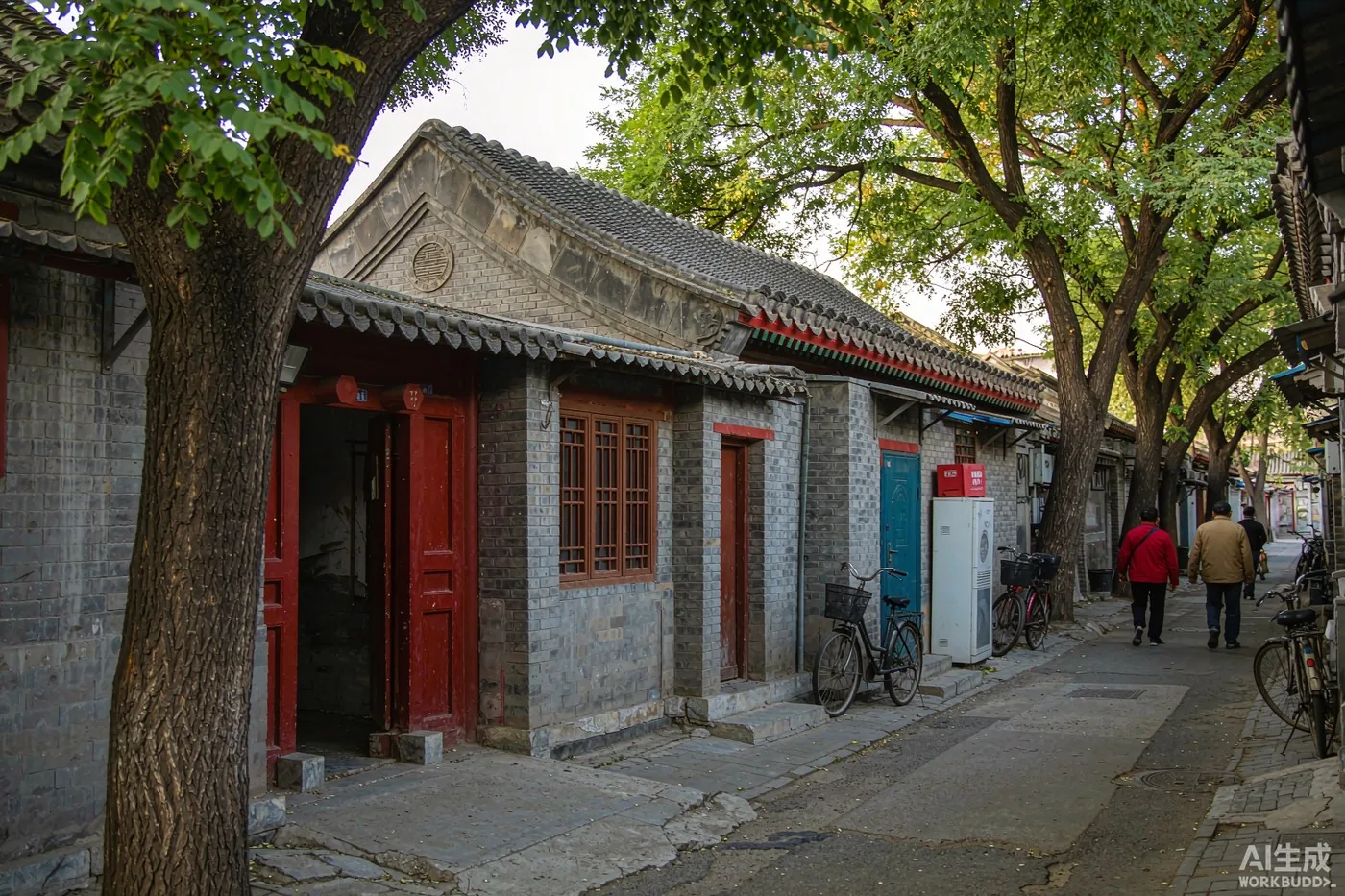
Hutongs are the narrow lanes and alleyways that made up old Beijing, lined with siheyuan — traditional courtyard homes shared by several families. While many were demolished over decades of redevelopment, several historic districts survive and are now among the most rewarding places to wander in the city. Expect gray brick walls, red doors, elderly residents playing chess, bicycles, cats, and small shops selling everything from steamed buns to secondhand books. Hutong walking is free, endlessly photogenic, and best done slowly on foot.
What Exactly Is a Hutong?
The word hutong comes from a Mongolian term for water wells, dating to the Yuan dynasty (13th century) when Beijing's grid of lanes was laid out. A traditional courtyard home (siheyuan) faces south, with rooms arranged around an open central yard. Over the 20th century, most courtyards were subdivided so that multiple families shared one property — look for shared courtyards with laundry lines, potted plants, and bird cages. Today some courtyards have been renovated into boutique hotels, cafes, and galleries, while others remain ordinary homes. Remember: hutongs are living neighborhoods, not open-air museums.
Siheyuan (四合院) — A courtyard house with rooms on all four sides of an open yard. Once single-family homes, most now house several households.
Gray brick and red doors — The classic look. Gate size and style once signaled the owner's rank — keep an eye out for ornate doorways.
Public toilets — Many older hutong homes lack private bathrooms, so you'll see small public toilet blocks — one reason residents spend lots of time outside.
Etiquette: You're Walking Past Someone's Home
This is the single most important thing to understand. Hutong residents live ordinary lives — cooking, napping, raising kids — often within arm's reach of the lane. A few habits will make you a welcome visitor rather than an intrusion.
Don't peek through open doors — An open gate is not an invitation. Only enter courtyards that are clearly businesses (hotels, cafes, shops).
Ask before photographing people — A smile and a gesture toward your camera usually works; respect a shake of the head.
Keep your voice down in residential lanes — Especially around midday and after 9 PM, when many residents rest.
Buy something small — Purchasing a drink or snack at a family-run shop is a friendly way to support the neighborhood.
Nanluoguxiang (南锣鼓巷)
The most famous — and most touristy — hutong, an 800-meter (about half a mile) lane packed with snack stalls, souvenir shops, and cafes. It's a good first taste because it's easy to reach and clearly signposted, but come early or on a weekday to avoid heavy crowds, then duck into the quieter side alleys (like Mao'er Hutong or Ju'er Hutong) that branch off it.
Metro
Nanluoguxiang Station on Line 6 and Line 8 — confirm current line access before travel [verify before travel]
Opening hours
Lanes are public and open 24 hours; shops roughly 10:00–22:00 [verify before travel]
Tickets
Free to walk; snacks and drinks typically CNY 10–40 (USD 1.50–6) [verify before travel]
How long
1–2 hours including side alleys
Shichahai & Yandaixie Street (什刹海 & 烟袋斜街)
Three linked lakes (Qianhai, Houhai, Xihai) ringed by willows, bars, and hutongs. Yandaixie Street ('Tobacco Pipe Lane') is a short, lively sloping lane of craft shops leading toward the Drum and Bell Towers. Walk the lakeshore in the late afternoon, then explore the hutongs to the north and west, which feel more residential and relaxed than Nanluoguxiang.
Metro
Shichahai Station on Line 8 — confirm current station exits before travel [verify before travel]
Opening hours
Public area open 24 hours; lakeside bars and shops generally open from late morning into the evening [verify before travel]
Tickets
Free to walk; boat rides and tower visits cost extra [verify before travel]
How long
2–3 hours
Drum & Bell Towers (钟鼓楼)
For centuries these towers marked time for the whole city, using drums by day and bells by night. You can climb the Drum Tower for a drum performance and views over the surrounding sea of low gray rooftops — the best vantage point for appreciating the hutong grid. The neighborhood around them (including Wudaoying Hutong to the east) is great for cafes and independent shops.
Metro
Shichahai or Gulou Dajie stations — confirm the current best stop and exit [verify before travel]
Opening hours
Typically open roughly 09:00–17:00 or 17:30; last entry may be earlier — confirm current times [verify before travel]
Tickets
Roughly CNY 20–30 (USD 3–5) per tower; combination tickets may exist [verify before travel]
How long
1–1.5 hours
Wudaoying & Guozijian (五道营 & 国子监)
A quieter pairing east of the towers. Wudaoying Hutong is a relaxed lane of cafes, bakeries, and design shops popular with young Beijingers. One block south, Guozijian Street holds the Confucius Temple and the Imperial College — a national academy where scholars once studied — giving you a dose of history between coffee stops.
Metro
Yonghegong (Lama Temple) Station on Line 2 and Line 5 — confirm current exits [verify before travel]
Opening hours
Streets open 24 hours; temples and museums typically roughly 09:00–17:00 and often closed Mondays — confirm before visiting [verify before travel]
Tickets
Streets free; Confucius Temple/Imperial College admission historically around CNY 30 (USD 4–5) [verify before travel]
How long
2–3 hours
A Half-Day Hutong Walking Route
09:00
Start at the Drum & Bell TowersArrive early to climb before the heat and crowds; catch a drum performance if scheduled [verify before travel].
10:30
Wander Yandaixie Street and the Shichahai lakeshoresBrowse craft shops, then loop around Qianhai and Houhai lakes.
12:00
Lunch in a hutong courtyard restaurantLook for small restaurants around the north lakeshore; a simple meal runs about CNY 40–80 (USD 6–12) per person [verify before travel].
13:30
Walk south through quiet lanes to NanluoguxiangTake the back alleys (Mao'er, Ju'er) rather than the main drag.
15:00
Coffee stop or pedicab tour, then wrap upPedicab tours negotiated locally vary widely in price — agree on the fare (typically CNY 100–300 / USD 15–45) before getting on [verify before travel].
Related Beijing guides
If you found this useful, these cover the next question most visitors ask:
Wear comfortable shoes — Lanes are cobbled or uneven, and a good wander easily covers 5–8 km (3–5 miles).
Download an offline map — Hutong alleys confuse GPS and are poorly signposted; a map app (such as Amap or Baidu Maps, which work better locally than Google Maps) helps a lot.
Set up mobile payment in advance — Many small shops prefer WeChat Pay or Alipay over cash; set up an international version of one app before you arrive [verify before travel].
Consider a guided tour — A local guide (roughly CNY 200–500 / USD 30–70 depending on group size) can get you into renovated courtyards and explain what you're seeing [verify before travel].
Watch for scooters and bikes — Lanes double as streets. Walk single file and stay alert.