Where to buy over-the-counter medicine and antibiotics in Beijing, what paperwork you may actually need, and how to avoid the pitfalls that catch first-time Western visitors.
Getting sick mid-trip is bad enough without a pharmacy mystery on top. China's rules around medicine — especially antibiotics — have tightened in recent years, and the easy 'just ask at the counter' days are partly gone. Here's how pharmacies in Beijing actually work for foreigners, which option suits your situation, and what to bring with you before you go.
China formally classifies drugs as prescription (处方药) or over-the-counter (OTC, marked as 甲类/乙类 non-prescription on the box). Painkillers like ibuprofen, cold remedies, antihistamines and stomach medicine are widely sold OTC. Antibiotics, however, are officially prescription-only, and enforcement has tightened considerably — many pharmacies will now refuse to sell them without a doctor's note [verify before travel]. The workaround locals and visitors use is simple: see a doctor (a clinic visit can cost as little as a few dozen CNY, roughly US$5–15 [verify before travel]), get a prescription on the spot, and buy the medicine at the attached pharmacy. Do not plan on buying antibiotics casually over the counter; policies vary by chain, city district, and even the individual clerk.
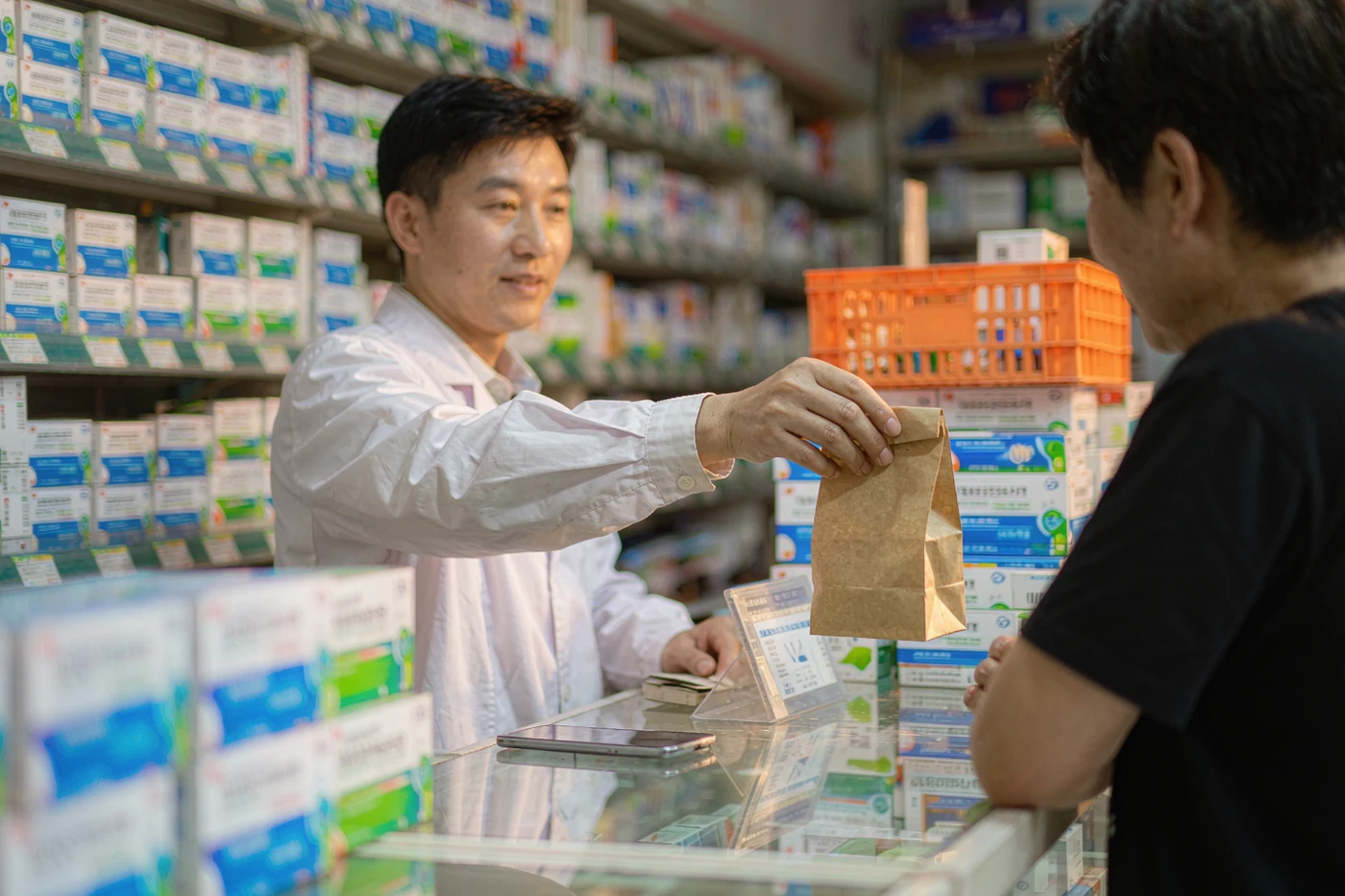
Chains like Yifeng (益丰), Dashenlin (大参林) and Tongrentang (同仁堂) branch stores are on practically every commercial street, often open late — some 24 hours [verify before travel]. For straightforward OTC needs they're your fastest and cheapest option: usually a fraction of Western prices. The catch is language. Large chains near tourist areas increasingly have staff with basic English or a translation app will bridge the gap, but bring the packaging of any medicine you already use, or know the generic (international non-proprietary) name — brand names differ completely between countries. Staff will often recommend traditional Chinese medicine alternatives; it's fine to politely decline and ask for the Western-equivalent generic.
If you need prescription drugs — antibiotics, a repeat of your regular medication, anything stronger — the hospital pharmacy route is the reliable one. Register at the outpatient desk (bring your passport; registration for a basic consultation is typically CNY 10–100 / US$1.50–15 [verify before travel]), see a doctor, and fill the prescription at the in-hospital pharmacy. International departments at larger hospitals have English-speaking staff [verify before travel — confirm which hospitals near you have an international clinic]. It takes longer, but you get a proper diagnosis, a genuine prescription, and fixed hospital pricing. For serious symptoms, skip the pharmacy entirely and go to a hospital.
Pharmacies increasingly accept Alipay and WeChat Pay linked to foreign cards, and larger chains take Visa/Mastercard [verify before travel — confirm your card works, as acceptance varies by store]. Carry some cash (CNY) as backup. China's pharmacy regulation is strict and counterfeit risk at licensed chain pharmacies is low, but avoid unlicensed stalls or online sellers. Check expiry dates, keep your receipt, and if you take regular medication, bring enough from home plus your original prescription — some medicines legal in the West (certain ADHD medications, codeine combination drugs) are restricted in China [verify before travel against current customs rules].
Your default stop for painkillers, cold medicine, plasters and travel stomach remedies. Fast, cheap, no appointment. Point, translate, pay, done — as long as you don't need anything prescription-only.
The dependable route for antibiotics and prescription refills: register with your passport, quick consult, fill prescription on site. Head for the international department if you need English support.
The famous 350-year-old TCM brand. Worth a visit as much for culture as for shopping — expect herbal remedies, staff advice in Chinese, and beautiful storefronts. Better for mild complaints and souvenirs than acute illness.