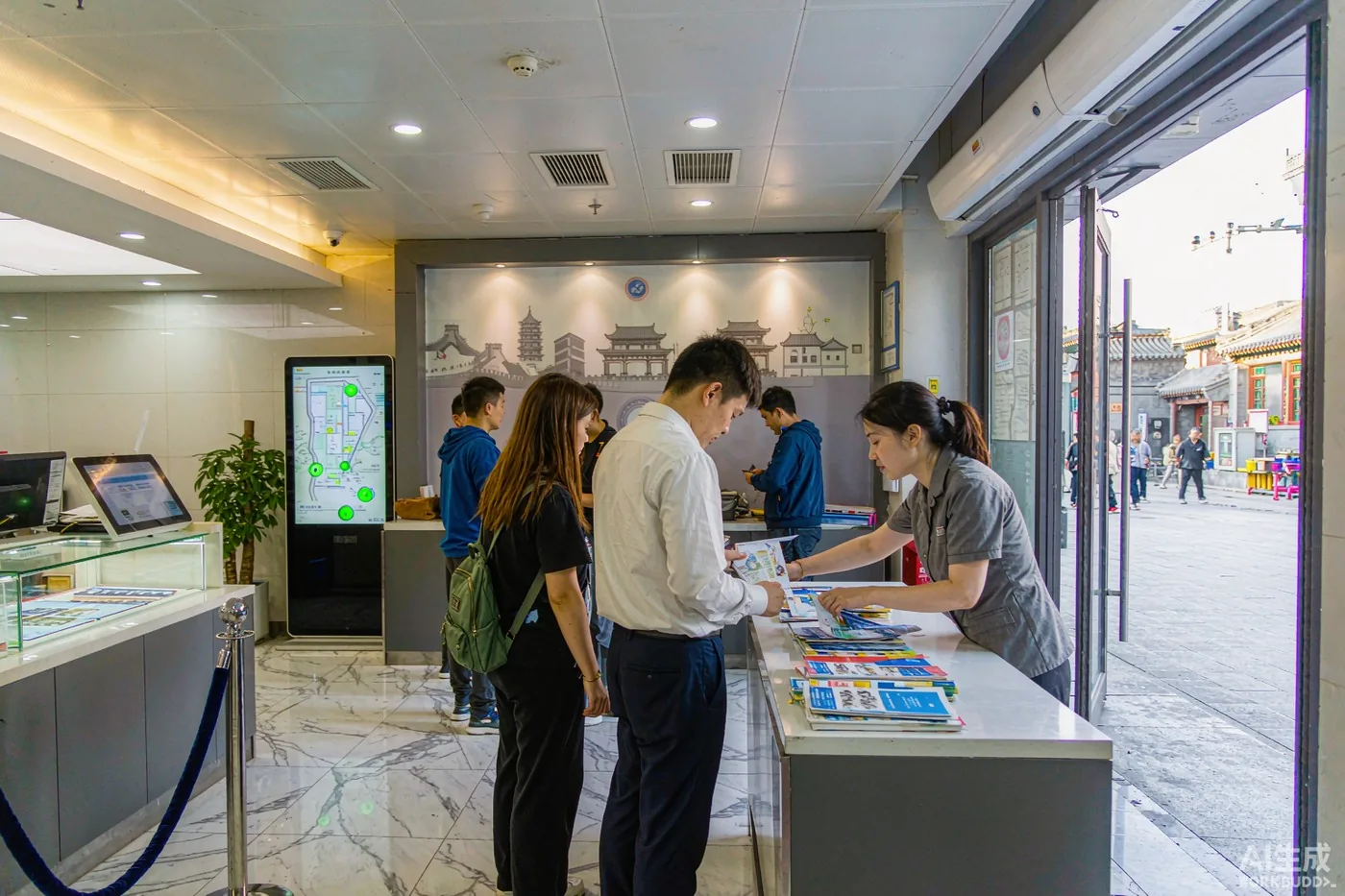
The city built free, official help for visitors: the GO BEIJING app, Beijing Service airport desks, and Tap-to-Go subway. What each does and when to use it.
Beijing rolled out a stack of official, free services for international visitors in 2025-2026 — all in multiple languages, no agency, no fee. They solve the three classic arrival pains: getting online, paying, and getting around. Here is what each one is and when to reach for it.
GO BEIJING is an Alipay mini-program (search 'GO BEIJING' inside Alipay) with around 39 services in roughly 16 languages: maps and transit, attraction tickets, hospital registration, a no-fee Travel Wallet for small sums, and an AI guide called 'Jingjing' you can chat with in plain language. If you only set up one thing on arrival, make it this.
Both PEK (Capital) and PKX (Daxing) have Beijing Service counters in the arrivals hall. Staff help you get a local SIM or eSIM, link a foreign card to Alipay or WeChat Pay, and even lend AI translation devices. If your phone setup stalled before the flight, do it here on the spot — signs are in English and several other languages.
Tap-to-Go lets you tap a foreign Visa or Mastercard straight on Beijing subway and some bus readers — no transport card, no app, no Chinese number. It is the fastest way to start riding the moment you leave the airport, and it pairs naturally with the airport desks above.
For tourism questions in the city, the 12345 hotline and visitor centers offer multilingual help; major stations and sights have staffed info points. Keep your hotel's card handy — front desks routinely help with bookings, translation and directions, which is where our two hotels come in.
Tap-to-Go and Beijing Service solve transit and information, but plenty of daily spending still trips visitors up. Small restaurants, market stalls, and many pharmacies run almost entirely on Alipay or WeChat Pay; the good news is that both now accept foreign Visa, Mastercard, and, for Alipay, Amex and JCB cards linked through the international version of the app. Set this up before you land, because hotel Wi-Fi registration and some ticket vendors will ask for a Chinese payment method on the spot. Expect a roughly 3% foreign-card fee on Alipay transactions above a certain monthly threshold — check the current limit in the app. Cash still works for taxis and larger stores, but drivers rarely carry change for 100-yuan notes, so pay by app or break large bills at a convenience store. A chargeable portable Wi-Fi rental desk sits near the Beijing Service counters if you skip an eSIM.
The Beijing Service counters are most useful at certain hours and nearly empty at others. Arriving on an overnight US or Europe flight lands you in the 5:00-9:00 am wave, when both PEK and PKX desks are fully staffed — the best moment to sort a transit pass, ask about the Daxing Express, or get help installing GO BEIJING before you reach the metro. Mid-afternoon arrivals from Southeast Asia collide with tour groups and domestic banks of arrivals, so queues at the counters and immigration both stretch. If you land late morning at Daxing, note the express train to Caoqiao on Line 19 takes around 19 minutes but runs roughly every 8-10 minutes; check the timetable on the day, as frequencies shift with season. Trains stop around 23:00, so a landing after 22:30 realistically means a taxi or ride-hailing app, which needs a working Chinese payment method — one more reason to set up Alipay before departure.
If you land after 21:30, plan on ground transport rather than the subway. The Airport Express from both PEK and PKX stops running around 22:30-23:00 (check the day's schedule on GO BEIJING or the Beijing Subway app), and connecting subway lines generally close between 22:30 and 23:30, depending on the line and direction. Tap-to-Go will work fine at that hour — the gates don't care — but the trains won't be there. Official taxi queues at both airports operate all night; expect roughly 100-150 yuan from PEK to central districts and 150-200 yuan from PKX, which is farther out. Didi works with international cards and is usually the cheaper option, though the pickup points at Daxing are a short walk from arrivals. If your flight is delayed into the early hours, the Beijing Service desks may be closed, so sort your Alipay or DiDi setup before you fly.
If you found this useful, these cover the next question most visitors ask: