Explore Beijing / Beijing Festivals & Seasons: A Month-by-Month Calendar
Beijing Festivals & Seasons: A Month-by-Month Calendar
Temple fairs at Spring Festival, lantern festivals, cherry blossom, autumn leaves and the National Day crush — what happens when, and how to plan around it.
5 min read · KOULING's Beijing Travel Guide
Beijing runs on two calendars: the solar one and the lunar one. Most of its best events — temple fairs, lantern festivals, Mid-Autumn — follow the lunar calendar, so the dates move every year. This guide is a season-by-season map of what actually happens, with 2026 dates as a worked example, plus how to plan around the two weeks you should avoid (National Day and Spring Festival peak).
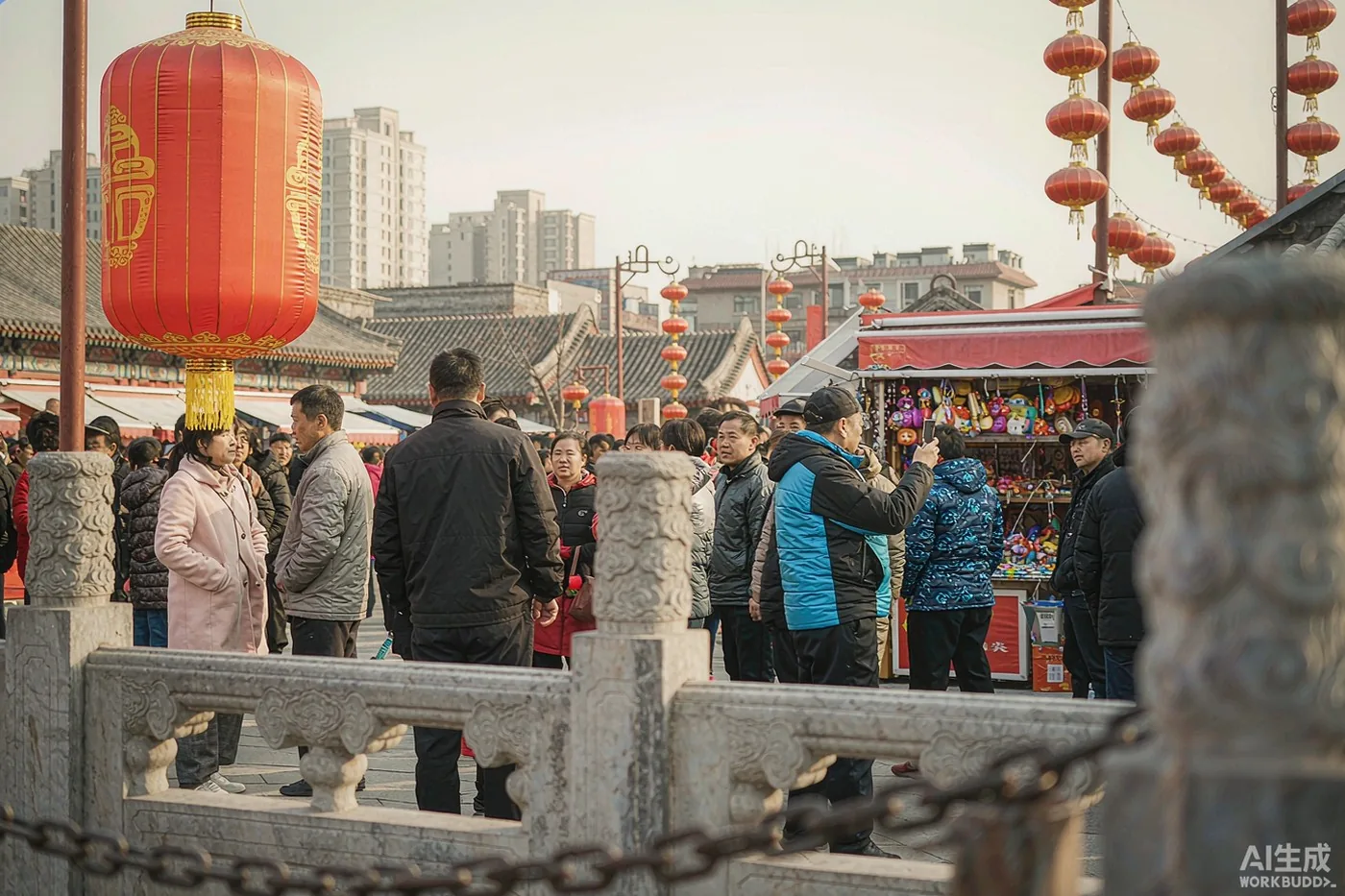
Spring Festival temple fairs (春节庙会)
The biggest event on the Beijing calendar. Fairs run from Lunar New Year's Day to the seventh day, roughly 08:30–17:30 depending on the venue. In 2026 that fell on 17–23 February. Expect crowds, street food, folk performances and free calligraphy blessings.
地坛 Temple Fair — The classic. Themed on ritual and music, with a re-created ancient 'earth sacrifice' performance daily around 9:00–9:30, folk flower shows and old-Beijing street-crier parades. 2026: 17–23 Feb, 08:30–17:00.
龙潭 Temple Fair — The louder, younger one: robot performances, AR check-ins, a 'mecha dragon king' parade and 270+ food and craft stalls; the park's ice-and-snow festival runs alongside. 2026: 17–23 Feb, 08:30–17:00.
厂甸 Temple Fair — Over 400 years old, a national intangible-heritage item and Beijing's only 'literary' fair — held on Liulichang's East and West streets with a hundred-metre river of poetry lanterns and free handwritten 'fu' (blessing) characters from calligraphers. 2026: 17–23 Feb, 10:00–17:30.
Other fairs — Dongyue Temple fair (Beijing Folk Custom Museum), Badachu and Dadu (indoor, ticketed) also run over the same week. Check the year's official listings before you go.
Lantern Festival (元宵节)
The fifteenth day of the first lunar month closes Spring Festival with lanterns and tangyuan (sweet rice balls).
Where to go — Qianmen and Dashilan, the Beijing Garden Expo Park lantern fair, and major parks all stage lantern displays around the date.
What to eat — Tangyuan / yuanxiao — glutinous rice balls with sweet sesame or red-bean filling, sold everywhere that week.
Timing — The date moves each year (it follows the lunar calendar) — look it up for your travel year rather than trusting a fixed date.
Spring: blossom and Qingming
March to May is short, mild and beautiful — and the sweet spot before summer heat.
Cherry blossom — Yuyuantan Park's cherry blossoms are the city's spring ritual, roughly late March to April; go on a weekday morning.
Temple flowers — The Temple of Heaven and the Summer Palace fill with spring blossoms from late March; both pair well with a flat walk.
Qingming (early April) — A 3-day holiday — parks and transport get busy, so book trains early.
Autumn: the red-leaf season
Beijing's best season. Cool, dry, clear — and the hills turn red.
Fragrant Hills / Xiangshan — The famous red-leaf spot. Colour usually builds from mid-October and peaks late October into early November; go on a weekday and start early, because the crowds are serious.
Alternatives to Xiangshan — Pofengling and the Mutianyu Great Wall give you autumn colour with fewer people — Mutianyu pairs red leaves with the Wall.
Best city walking — October is also the best month for simply walking the hutongs and the central axis.
Mid-Autumn & National Day
Two very different reasons to plan carefully.
Mid-Autumn (15th day of 8th lunar month) — Mooncakes everywhere, family reunions, and parks lit for moon-viewing. A lovely, low-key festival to be in town for.
National Day (1–7 October) — The Golden Week. Every major sight is at capacity and hotel prices spike — if your dates are flexible, avoid it; if not, book tickets and hotels far in advance and go to sights at opening time.
Labour Day (1–5 May) — A smaller but still serious crush; same tactics apply.
Winter: ice, snow and New Year
Cold, dry and underrated — with the city's emptiest sights.
Ice skating — Shichahai and other park lakes open natural ice rinks when cold enough (usually January); the Summer Palace's frozen lake is a classic sight.
Ice & snow festivals — Longtan Park runs a snow festival alongside its temple fair, and Nanshan / Chongli ski areas are a couple of hours away.
Why come in winter — Clear light, low prices, and the Forbidden City and Great Wall almost empty — dress for dry cold around or below freezing.
How to plan around a festival
Practical rules that save the day:
Lunar dates move — Spring Festival, Lantern Festival and Mid-Autumn follow the lunar calendar — the solar date changes every year. Always check that year's dates.
Trust official listings — The Beijing Municipal Bureau of Culture and Tourism publishes the Spring Festival event table each year; use it instead of last year's blog post.
Avoid the peaks — If your trip can move, skip 1–7 October and Spring Festival week; if it can't, book everything early and sightsee at opening time.
Pay & crowd — Fairs are cash-free in practice — have Alipay/WeChat Pay working, and keep your passport on you for park checkpoints.
Festival checklist
Check the year's dates — Lunar holidays shift — confirm before booking flights or trains.
Book ahead in Golden Week — Trains, hotels and timed-entry tickets sell out days in advance.
Go at opening — Fairs and sights are calmest in the first hour.
Have payment ready — Alipay/WeChat Pay working before you arrive at the fair gate.