A practical, honest guide to navigating Beijing with a visual impairment — what the tactile paving is really like, which apps do the heavy lifting, and where guide dogs actually stand.
Beijing is more navigable with a visual impairment than many first-time visitors expect — but it rewards preparation. The city has one of the world's largest networks of tactile paving, a mostly accessible metro with audible door announcements, and screen-reader-friendly Chinese apps. The honest caveats: tactile paving is often blocked by parked bikes and street vendors, not all station exits have audible signals, and guide-dog access, while legally permitted, can still vary in practice. This guide tells you what to expect and how to plan around it.
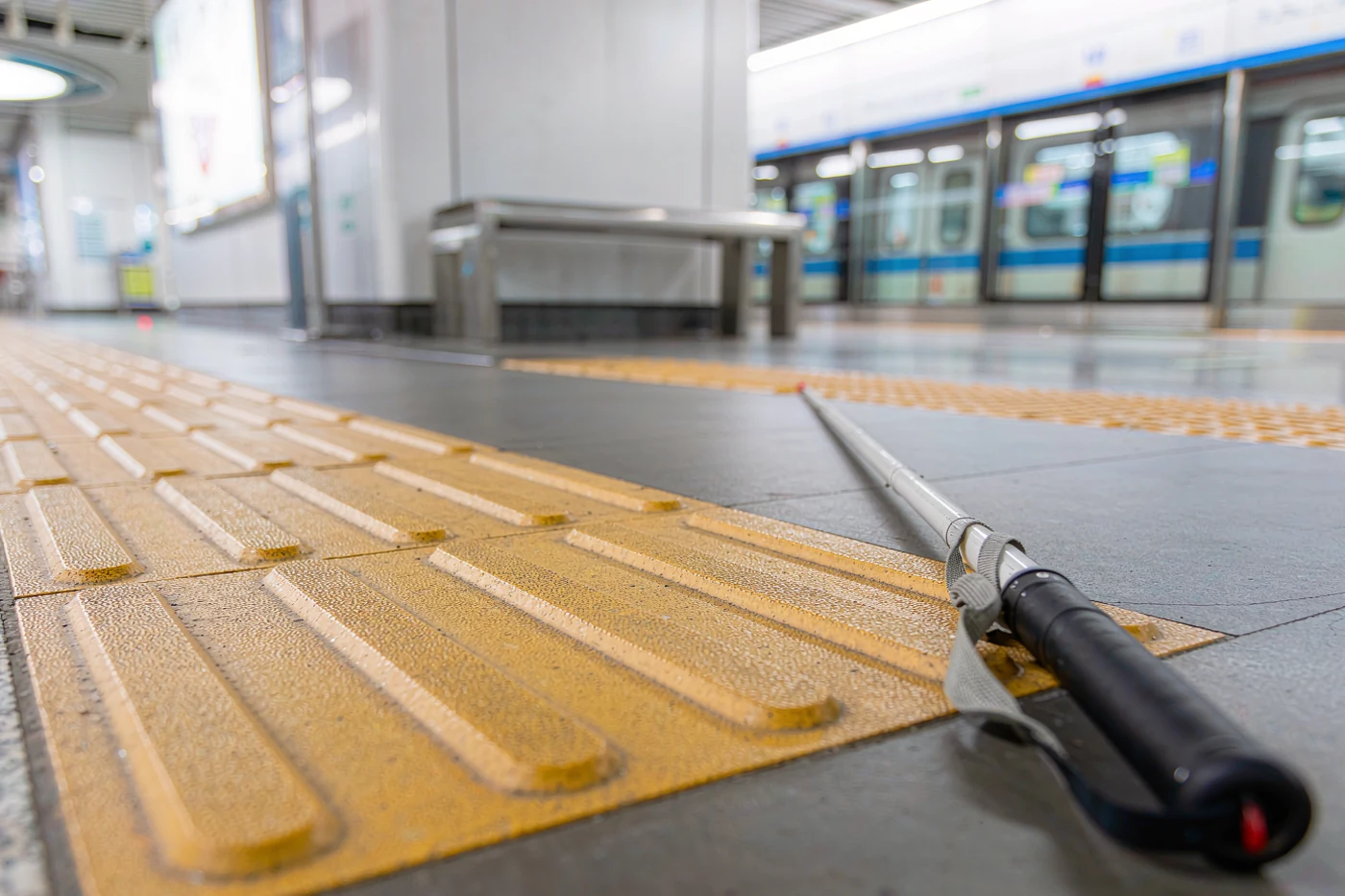
Beijing's yellow tactile strips run along most major sidewalks, through subway stations and around major attractions, and follow the Chinese convention: raised bars mean 'walk straight', raised dots mean 'caution or turn'. The frustration is that the network is inconsistent — paving frequently stops abruptly at intersections, and shared-bike parking, utility poles and street vendors commonly block the path. Treat tactile paving as one input, not your only one. Crossings in the city centre often have audible signal boxes, but coverage is patchy; ask your hotel which routes have them [verify before travel]. Travelling with a sighted guide or a local companion for the first day or two is worth the cost if it's an option.
Your phone is your most reliable guide in Beijing. Line up these tools before you fly, and set up a VPN or offline maps if your usual navigation apps don't work in China. Note that most Chinese apps now have English interfaces, though voice guidance quality varies.
The Beijing Subway is your best friend: all stations have lifts at designated accessible entrances, tactile paving on platforms, and trains announce stops audibly in Mandarin (and often English on newer lines). Staff are generally happy to escort you between the gate and the platform — flag someone down or use the station intercom. Buses announce stops audibly but are harder without vision; most visitors skip them. Taxis and ride-hailing solve the last-100-metre problem that tactile paving can't. Fares start around CNY 13 (US$2) for taxis [verify before travel]. Bring your passport for every transit payment and ticket purchase [verify before travel].
The vast, mostly flat outer courtyards are surprisingly manageable, with tactile paving along the central axis and audio-guide handsets available at the entrance. The audio guide adds useful spatial orientation. Expect crowds and uneven historic stone surfaces — a cane user or guide will want extra time. Tickets must be booked online in advance with your passport; foreign-card payment is supported but can be finicky [verify before travel].
Wide, well-paved loops, benches at regular intervals and a calm acoustic environment make this one of the city's most pleasant large sites for low-vision visitors. The famous Echo Wall and the surrounding cypress groves are experienced as much by sound as by sight. Tactile paving covers the main routes from the east gate [verify before travel].
Beijing's old alleyways are atmospheric but the hardest terrain in the city: no consistent tactile paving, bikes and scooters sharing narrow lanes, and irregular surfaces. Go with a companion or a guided hutong walking tour — several operators offer English-language tours and will adapt the pace [verify before travel]. Alternatively, experience the area by rickshaw, where a driver handles navigation.
Chinese national accessibility law permits guide dogs in public places and on public transport, and Beijing has provincial-level regulations supporting this [verify before travel]. In practice, expect questions and occasional refusals at smaller venues, restaurants and taxis; the metro and major attractions are generally the most cooperative, especially if you carry the dog's certification and a rabies vaccination record. Importing a guide dog involves quarantine and documentation requirements that take months to arrange — contact Chinese customs and your airline well ahead [verify before travel]. Many visitors find a combination of a white cane, apps and occasional sighted assistance more practical than bringing a dog.