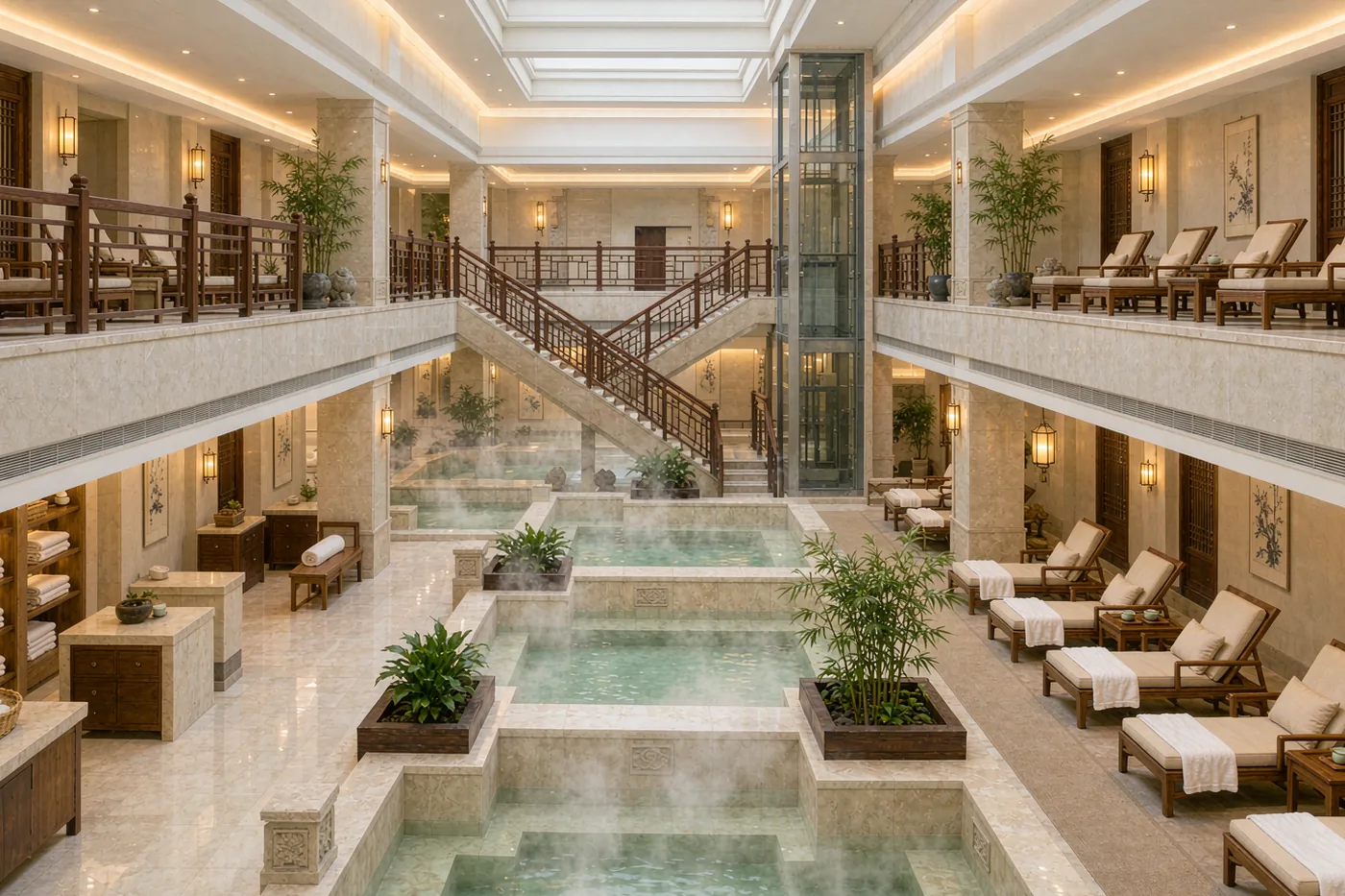
From no-frills neighborhood bathhouses to sprawling multi-floor spa complexes, Beijing's wash culture is a genuine local experience. Here's what to expect, what it costs, and how to behave.
In northern China, a trip to the bathhouse (澡堂, or the larger modern version, a 洗浴中心 'bathing center') is not just about getting clean — it's a leisure ritual. Locals soak, get a vigorous full-body scrub (搓澡), nap in recliner lounges, watch movies, and sometimes stay all day or even overnight. For a first-time Western visitor it can feel intimidating: communal showers, full nudity in the wet areas, and scrubs that are far more intense than any back massage you've had. But it's safe, cheap, and one of Beijing's most authentically local experiences. Most larger spas are gender-segregated in the locker and wet areas, with mixed-gender common lounges afterwards.
You'll check in at reception, pay an entry fee that usually includes locker, towel, and showers, then head to your gender's locker room. Everything happens nude in the wet zone — showers are open, without stalls, so be mentally prepared. The classic sequence: shower first (always wash before entering pools), soak in hot pools, try the sauna or steam room, then book the signature 搓澡 (cuo zao) scrub. The scrubber uses a rough mitt and works over your entire body on a padded table, removing dead skin in visible rolls — it's bracing, not painful, and your skin feels astonishing afterwards. Afterwards, put on the disposable shorts and t-shirt provided, and move to the mixed-gender lounge area where you can eat, nap in a recliner, play board games, or watch TV.
The rules are simple and mostly common sense, but breaking them marks you immediately. Never enter a pool or soak tub without showering first. Keep your phone in your locker — no photos anywhere near the wet areas, ever. Walk, don't run, on wet floors. Keep noise moderate; locals come to relax. In the mixed lounge, shoes go in the provided shoe cabinets at the entrance, and slippers are worn throughout. If someone offers you tea, fruit, or a snack in the lounge, it's often already on your bill — ask before accepting if you're unsure.
Neighborhood bathhouses are the cheapest: entry is often CNY 30–80 (US$4–11) [verify before travel]. Large spa complexes typically run CNY 100–300 (US$14–42) for entry, with scrubs, massages, food, and overnight recliner stays billed on top — a full evening can total CNY 200–500 (US$28–70) [verify before travel]. Most Beijing venues now use mobile payment (WeChat Pay or Alipay); foreign visitors should set these up with an international card before going, and carry some cash as backup since a few older bathhouses are cash-on-counter [verify before travel]. Many spas operate late or 24 hours — an overnight recliner ticket is cheaper than a hotel and a genuinely local way to end a late night [verify before travel].
Beijing's big multi-floor spa complexes are the best entry point for foreigners: clear signage, food courts, lounges, and staff used to walk-ins. Names and locations change with the market, so search a maps app for '洗浴中心' or '汗蒸' near you and check recent reviews rather than relying on a specific venue name.
The traditional tiled bathhouse is fading but still exists in older hutong and southern-Beijing neighborhoods. Expect bare-bones facilities, a resident scrub master, retirees playing chess after their soak, and prices that make it the cheapest wash in town. Facilities and hours vary widely; treat each one as a discovery and confirm it's still open before making the trip.
If communal nudity is a step too far for day one, upscale hotel spas and Korean-style saunas (汗蒸房) offer private treatment rooms, robes, and mixed-gender areas you can enjoy with a partner. Prices are higher — often CNY 300–800 (US$42–110) for treatments [verify before travel] — and English is more likely. Book by phone or through hotel concierge, and confirm whether the wet areas are communal or private before you go [verify before travel].